Who Zhengding Fits, and Who Should Ride Past
Zhengding suits travelers who want one dense, low-key historic town rather than a route of highlights, and who are content to build a day around two or three buildings. If you have an interest in timber halls, brick pagodas and large Buddhist sculpture, the town offers a strong return for relatively little travel time from Shijiazhuang. It also works well as a deliberate contrast to a bigger China itinerary: quieter streets, modest signage, and the sense of a place where people still use the old core rather than perform it.
It is the wrong choice if you want lantern-lit ancient-town atmosphere, café-lined alleys and easy English interpretation at every door. Travelers who need step-free movement, guaranteed indoor climate control or a tightly curated museum experience will find the town uneven and occasionally frustrating. So will anyone with a single spare day who wants scale rather than subtlety. And if you are hoping for an untouched film set of timber and worn stone, recalibrate: parts of Zhengding are restored, rebuilt or simply ordinary, and the pleasure lies in the specific buildings rather than in a whole-town illusion.
Arrival, Stations and the Base That Saves You Time
Zhengding is a county-level destination north of Shijiazhuang's urban core, not a neighborhood you can assume is within walking distance of every station in the city. High-speed services and the regional airport do not all land in the same place, and the airport sits closer to Zhengding than to downtown Shijiazhuang. Check the exact station or terminal printed on your booking before you plan the first morning, then confirm the current onward connection — taxi, ride-hailing or local bus — when you arrive, since services and pickup points change.
For a two-day visit, staying in or near the old core of Zhengding removes the daily commute and lets you start at Longxing Temple before the day warms up. If evening restaurants and city amenities matter more, base yourself in Shijiazhuang and treat Zhengding as a full-day excursion, but budget realistic transfer time in both directions and confirm how you will return after dark. Whichever you choose, keep your hotel's name and address written in Chinese; it makes taxi conversations much shorter than pronunciation attempts.
Day One: Longxing Temple, Read at Half Speed
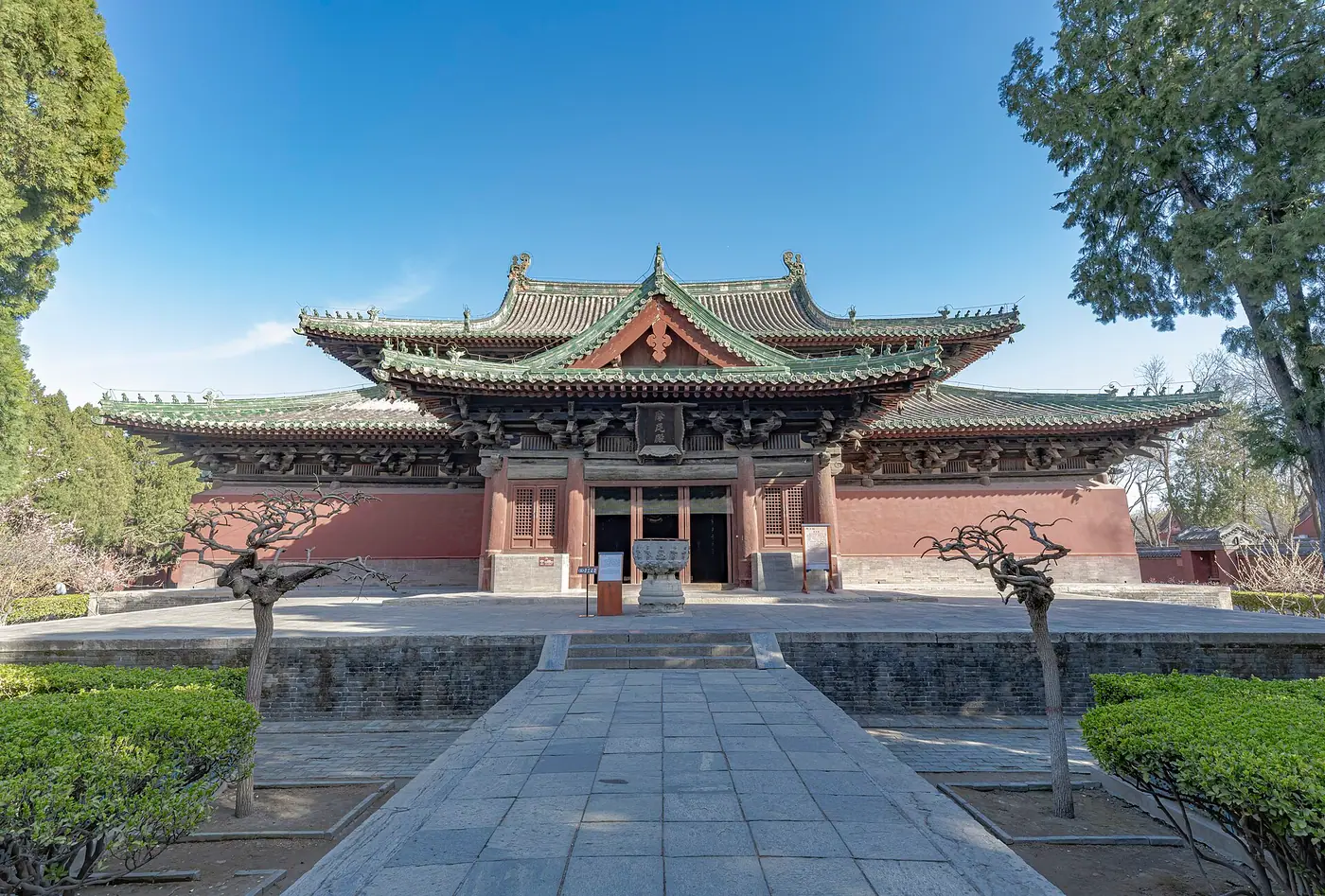
Make Longxing Temple the anchor of your first day and give it the morning, when courtyards are cooler and your attention is fresher. The compound unfolds in a sequence of halls and paved courts, and the reward comes from walking it in order rather than hunting individual photo spots. The Moni Hall, which houses the great Guanyin image traditionally dated to the Song period, is the interior most travelers hope to see; the municipal government's English pages name Longxing Temple, the Moni Hall and the Huata Pagoda among the town's defining monuments. What survives here matters for the scale of the sculpture and for the age of the timber framing around it, not for spectacle.
Plan on a couple of hours at minimum, longer if you read the displays and sit between halls. Present-day access is the caveat: individual halls, images and side rooms open and close according to conservation needs, religious use and the day's staffing, so treat any account of a specific room being viewable as provisional and confirm at the entrance. This is an active religious site as well as a heritage one — keep voices low, follow photography notices, dress with a little care, and do not stage group photographs in front of worshippers. The afternoon can stay deliberately loose.
Day Two: One Pagoda Cluster, Then a Stretch of Wall
Resist the urge to collect every pagoda. Choose one cluster and study it: the Huata of Guanghui Temple, which the city's heritage pages single out alongside Longxing, has a silhouette unlike anything else in town, while the Lingxiao and Xumi pagodas offer a different lesson in brick and stone. Pick one direction, not both. Distances look small on a map, but Zhengding's streets are wide, traffic-heavy in places and interrupted by walls and gates, so short taxi hops are the honest way to link sites rather than a single flat walking circuit.
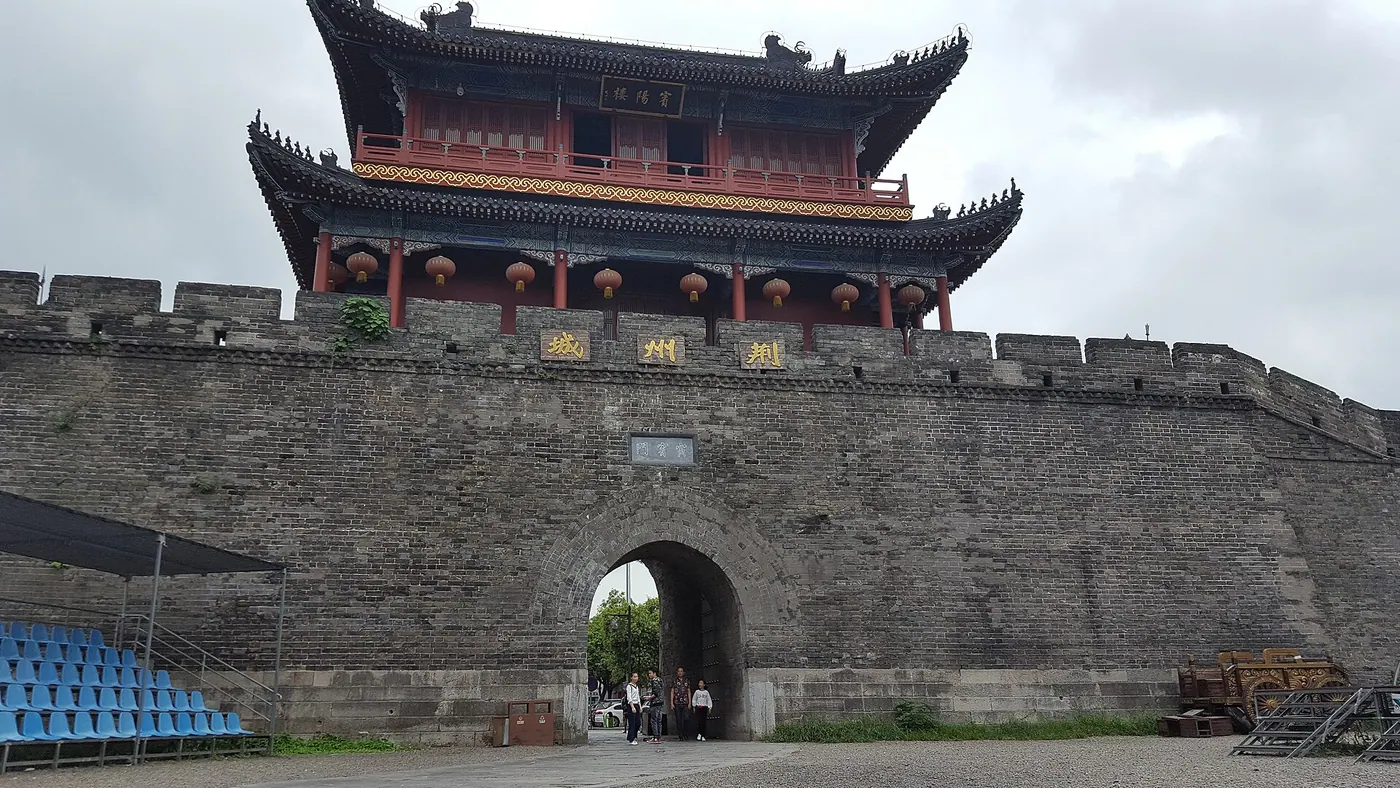
Finish with a segment of the city wall and one gate, ideally in late afternoon light when the temperature drops and the rooflines read clearly. Be clear-eyed about what you are climbing: parts of the wall and its gate towers have been rebuilt in recent decades, so the appeal is the broad view across tiled roofs and the shape of the old town, not weathered original masonry. Steps, ramps and gate access vary along the length, so choose your entry point on arrival rather than committing to a full circuit. Then descend into the older lanes for a slow lunch.
Heat, Wind, Rain and a Lower-Walking Version
Zhengding's climate is a plain climate: strong summer sun with little shade in the temple courts, and a sharp winter wind that makes an exposed wall walk feel much colder than the number suggests. Spring and autumn are the comfortable windows, but no season is guaranteed. Build in a contingency that does not depend on the outdoors — a long lunch, an indoor hall, a tea stop — and carry water in warm months. Rain is not a disaster here; it simply moves the day's weight from courtyards and wall to halls, arcades and the town's ordinary commercial streets.
If walking is limited, the most workable version is Longxing Temple plus one pagoda reached by a direct taxi drop close to the entrance, with the wall gate viewed from the street rather than climbed. That keeps the day to two sites and two transfers. Even so, expect uneven paving, thresholds, a few steps and long standing stretches inside the temple grounds; ask staff at each ticket point about step-free routes or ramps rather than assuming they exist. Seating in courtyards is scarce, so plan rest stops around meals rather than benches.
Eating Locally, and the Mistakes That Eat Your Day
The food is northern-plain food: wheat noodles, dumplings, steamed buns, sesame flatbreads, braised meats and lamb or beef broths, with vegetables appearing more often as cold dishes or stir-fries than as the centre of the plate. It is hearty and usually inexpensive. Ingredient cautions are worth carrying in translation: sesame paste and sesame oil, peanuts, chili oil, cilantro, wheat gluten, dried shrimp in broths and lard in vegetable dishes are all common. Ask for less salt or less oil if that matters to you, and confirm whether a broth is meat-based. Vegetarian eating is possible but rarely assumed, so be specific rather than hopeful.
The common planning errors are predictable and avoidable. Trying five temples in a day produces a blur and sore feet, not understanding. Booking a Shijiazhuang hotel without a transfer plan turns a two-day visit into two commutes. Assuming the famous Guanyin image will be visible on your date sets you up for disappointment. Expecting an unmodernized historic town misreads what Zhengding is. And treating any published schedule as current — including old government pages — is the easiest mistake of all: check tickets, reservations and hall access through present-day channels before you go.
Further reading and onward planning
For background and current visitor notices, consult Shijiazhuang Municipal Government: Zhengding ancient town and Shijiazhuang Municipal Government: heritage protection in Zhengding. This guide was prepared on November 5, 2026. Background pages do not establish current entry hours, reservations, transport or weather-related access; confirm those with the venue and your accommodation for your dates. Cover photograph: 正定隆兴寺摩尼殿2026.3.jpg by ScareCriterion12, via Wikimedia Commons, licensed under CC BY-SA 4.0. This adapted photograph is shared under the same licence.
To extend the trip, compare Taiyuan's Jin Temple and Shanxi food and Chengde's mountain resort and temples. For railway planning, see China by high-speed train, and always match station names to the ticket you actually book.