Arriving in Taiyuan and Getting Your Bearings
Most international visitors reach Taiyuan either through Taiyuan Wusu International Airport or by high-speed rail from neighbouring hubs such as Beijing or Xi'an. Both the airport and the main rail stations connect to the city by metro, taxi and ride-hailing apps, and the metro is the simplest option if you are carrying luggage during busy periods. Schedules, terminal assignments and which station serves which line change with the seasons, so confirm the current details on official railway and airport channels before you book.
The city sits in a broad basin on the Fen River, laid out on a grid that is easy to read once you understand that most things you want run north–south or along the river. Set up a mobile payment app and a transit card before you arrive, and save your hotel name and key destinations in Chinese characters — English signage is inconsistent outside major sights. Expect dry air, strong sun and considerable summer heat; water, sunscreen and lip balm earn their place in your day bag.
Day One: The Shanxi Museum and the Fen River
Begin with the Shanxi Museum, which stands near the river and holds one of the strongest regional collections in China. The bronze vessels, Buddhist sculpture and material on Jin merchant culture give you the context that makes everything else in the province legible, and it is the right first stop precisely because it is curated: objects are framed, labelled and explained rather than simply displayed. Plan on half a day, and check the current reservation system, closing day and entry arrangements on official channels, as these are the details most likely to have changed since any guide was written.
In the late afternoon, walk the Fen River parklands. The landscaped promenades and bridges are where residents jog, fly kites and take the evening air, and the light on the water is at its best in the last hour before dusk. This is deliberately a low-effort introduction: no tickets, no queues, no need to be anywhere. It also gives you a sense of the city's scale before you spend a full day outside the centre.
Day Two: Jin Temple and Respectful Temple Etiquette
Jin Temple, known locally as Jinci, lies southwest of the city and is the reason many travelers come to Taiyuan at all. Founded to honour a Zhou-era noble and expanded across dynasties, it preserves genuinely old timber halls, stonework and sculpture alongside later repairs, repainted beams and reconstructed elements. Read it as a palimpsest rather than a single moment in time: the pleasure is in noticing which surfaces are worn by centuries and which are recent, and in asking rather than assuming.
Go early on a weekday if you can, and verify current opening hours, ticket arrangements and any shuttle service to the site before setting out. Inside the halls, keep your voice low, avoid flash photography, do not touch carvings or pillars, and follow any posted restriction on photography or incense. Modest dress is appreciated, thresholds are traditionally stepped over rather than on, and if a space is roped off it is roped off for a reason. Respectful behaviour is not a formality here; it is what keeps these places open to visitors.
Day Three: Noodles, Aged Vinegar and a Calm City Walk
Shanxi is one of China's great noodle provinces, and Taiyuan is a good place to eat your way through it. Look for knife-cut noodles, hand-pinched wheat noodles and oat preparations, served in small neighbourhood shops rather than polished dining rooms. Aged vinegar from the surrounding region is the local obsession — dark, sharp and almost sweet at the edges — and it is worth tasting on its own at a vinegar shop before you meet it again in a bowl of noodles. Ask what is good that day rather than ordering from a photograph.
Balance the eating with a slow walk through the older part of the centre, around the Bell Tower streets and the quieter courtyards of the city's surviving monasteries. Taiyuan's historic fabric is patchy, with pockets of genuine old building set among newer commercial blocks, and an unhurried loop lets you see the difference without expecting a preserved old town. Verify opening hours for any religious site before you go, and treat active temples as places of worship first and attractions second.
Taiyuan as a Gateway to Pingyao and Datong
Taiyuan's high-speed rail connections make it a useful hinge for a longer Shanxi route. Pingyao, the walled city, lies a manageable ride to the south, while Datong and its rock-cut grottoes and monastery architecture sit in the opposite direction. Many travelers link two of the three rather than rushing all of them. Train timetables, station choices and seat availability change, so check current official railway information when you plan the sequence rather than relying on any fixed advice.
The gateway logic argues for depth over volume. Three days in Taiyuan is enough to see two anchors a day without exhaustion, and it gives you the grounding to understand Pingyao's merchant history or Datong's Buddhist sites when you arrive. If you have a week, consider an open-jaw route that starts or ends in Taiyuan, and if you have only three days total, stay put — the city is more interesting when you are not sprinting through it.
Planning links and cover photo source
For related planning, read Datong in 4 Days, Pingyao three-day itinerary, China food travel guide. Check each operator's current visitor notice before paying, because access, reservations, transport and weather procedures can change.
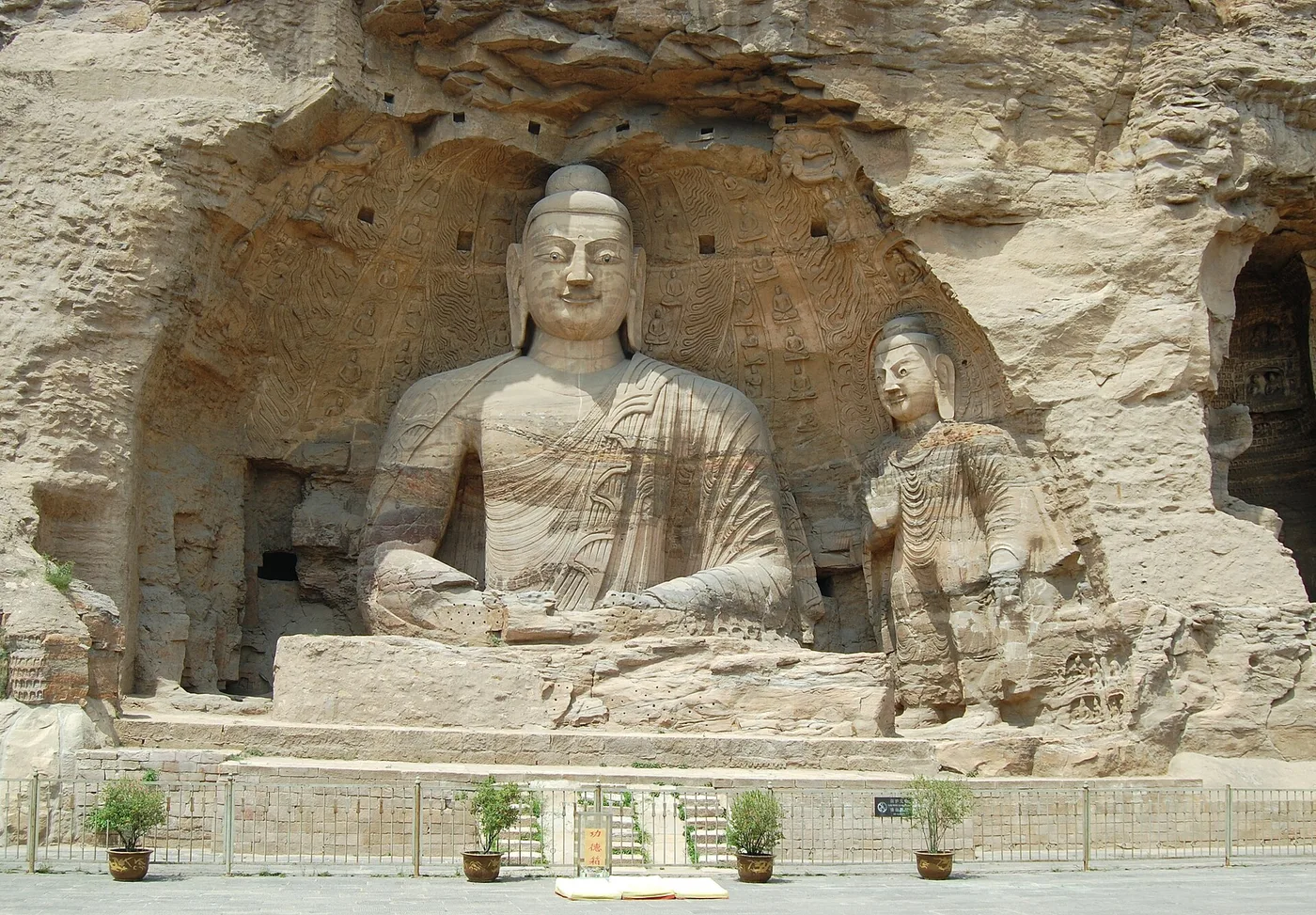
Cover photograph: Cave 20 at Yungang Grottoes by Marcin Bialek (Sfu), via Wikimedia Commons, licensed under CC BY-SA 4.0. The photograph was resized and converted to WebP; it is a neutral Shanxi heritage image, not a photograph of Taiyuan.


