Who Jingzhou Suits, and Who Should Skip It
Jingzhou rewards travelers who like reading a place in layers rather than being shown a single highlight. The old city is a working district inside a long brick circuit; the museum carries the region's deeper archaeology; the streets are ordinary and pleasant rather than curated. It suits independent travelers with three spare days between Wuhan and Yichang, anyone who plans trips around provincial museums, and people who would rather eat a river-plain lunch than watch a reenactment.
It is a poor fit if you want a compact ancient town where every sight sits inside one photogenic lane, or if you expect guaranteed headline objects on display. Jingzhou's pleasures are spread out and slightly administrative: you check which gate is open, you reserve the museum, you take short rides between them. Travelers with very limited walking, or with fixed accessibility needs, should read the practical notes below before committing. With only one night, choose a different stop.
Arrival, Stations and Choosing a Base
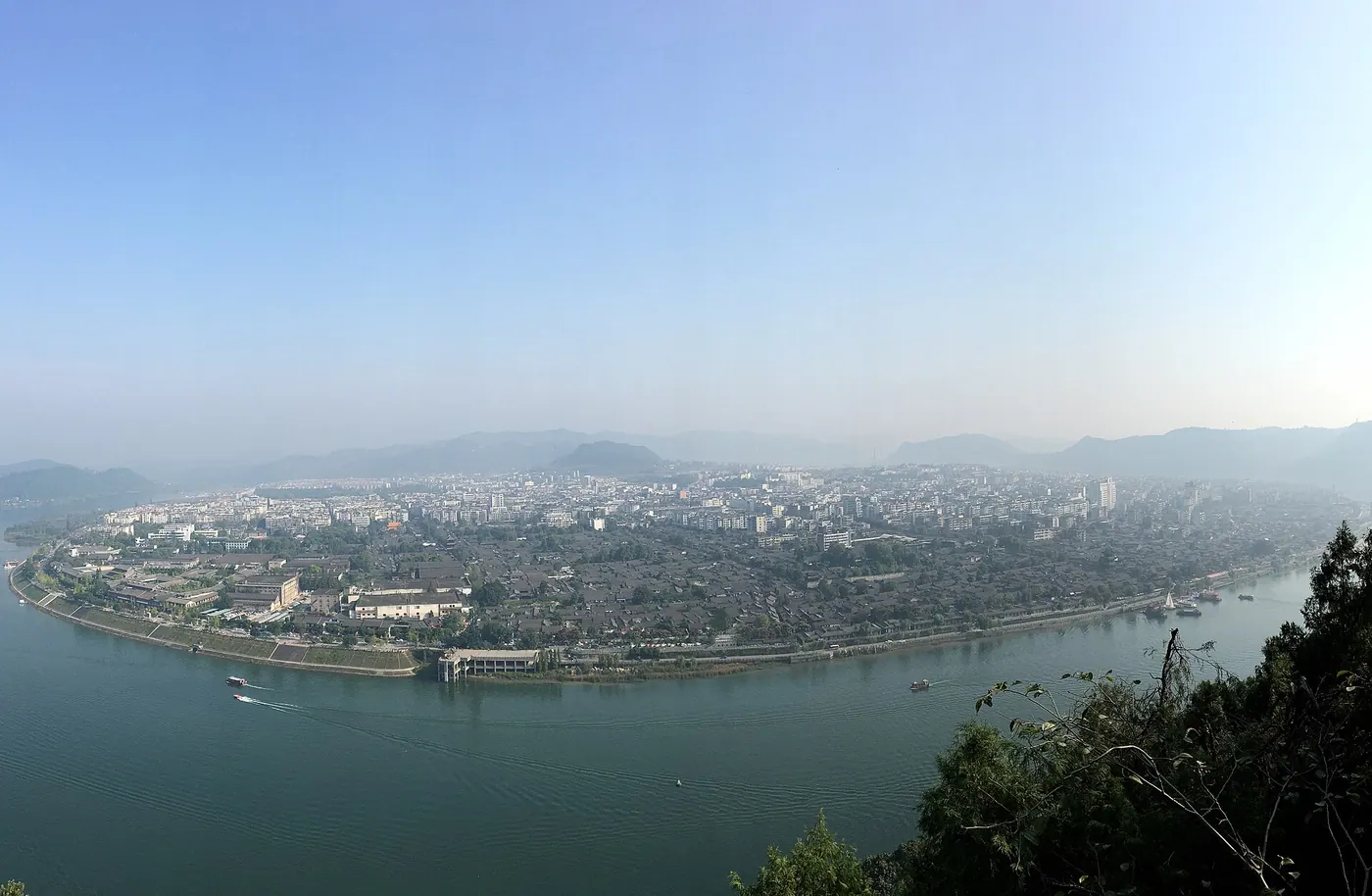
Jingzhou sits on the middle Yangtze in Hubei, on the flat Jianghan Plain. The name printed on your ticket is the one that matters, because the old city and museum are not beside the rail station. Before booking, put the station name and your hotel on the same map, then decide whether the transfer is worth a taxi or ride-hail rather than a bus.
Base yourself near the old city if the wall and the museum are the priority: morning starts get simpler and evening walks stay short. The trade-off is a longer run to the station, so the alternative is a hotel near your arrival station for a late-night arrival or an early departure, with a daily ride into the center. Either way, use taxis or ride-hail apps for the hops between wall, museum and food streets; roads that look walkable on a map often follow fast traffic with little shade.
Day One: First Contact With the Wall
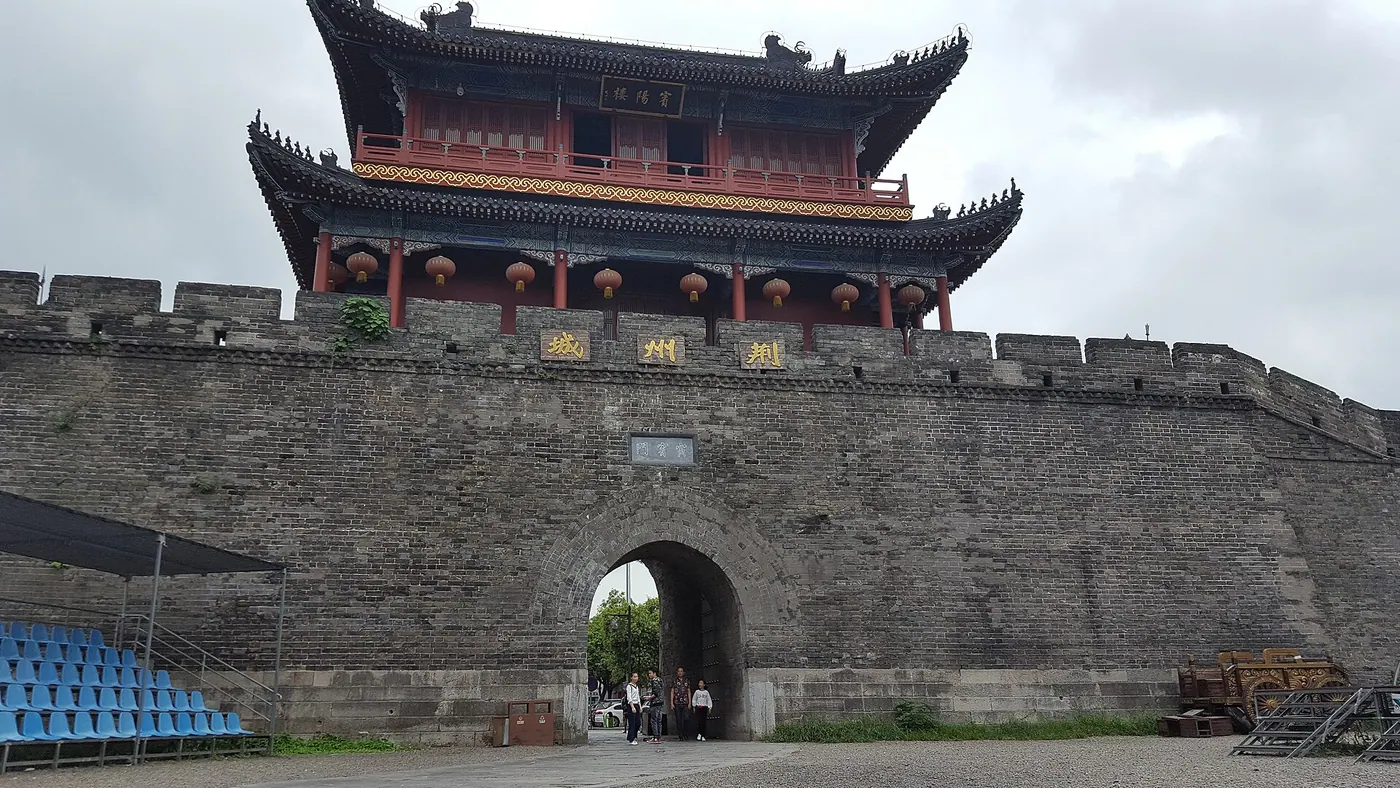
Arrive, drop the bags, and spend the first afternoon orienting rather than conquering. The old city is a walled grid with gateways, and the official visitor site describes the wall attractions and Binyang Tower, but access arrangements at individual gates change with maintenance and season. Check what is currently open and how tickets work before you set out, either on arrival or through your hotel, then walk one short stretch. A single gate-to-gate segment is enough for day one.
Treat the wall honestly while you're on it. What stands today incorporates many periods of building and repair, and it has been restored more than once; it is not an untouched surface, and it is not uniformly ancient. The pleasure is the shape of the thing, the moat, the brick courses, and the fact that a real city still lives inside. Eat early and close to the old city, because day two is the long one.
Day Two: The Museum Half-Day, Then One Old-City Slice
Give Jingzhou Museum a genuine half-day. Established in 1958 and described in its own introduction as a national first-grade museum, it is where Chu culture and the region's archaeology stop being abstractions. Reserve through the museum's own current channel, carry whatever identity document your booking requires, and read the display notices on site. Exhibitions rotate, so no specific object should be assumed to be on view, including the well-known preserved Western Han figure many travelers ask about. Ask at the desk what is actually showing.
After lunch, choose one old-city section rather than attempting a circuit. Pick either a wall segment you skipped on day one or a gate area with a tower view, then add a slow street behind it. Resist the urge to finish the wall on foot; the full loop is a hike, often in sun. For context, the Chu capital lay in this region, and Jingzhou's later fame owes as much to literature as to excavation, so Guan Yu's association belongs to the cultural and storytelling layer.
Day Three: A Second Gate and the Train Out
Use the morning for whatever you missed: a different gate and stretch of rampart, a quiet park by the water, or a return to a gallery you hurried through. Keep it within one district so the return for luggage stays short. If your train leaves in the early afternoon, buy the ticket for the station that matches your hotel's side of town, and confirm the exact station name the day before; on this itinerary the station name matters more than any timetable.
With a late departure, an unhurried lunch and one final wall viewpoint make a better last act than a rushed third attraction. Build in a buffer. Traffic around the old city, the wait for a ride-hail, and the walk from a drop-off point to the correct station entrance all consume time quietly. Aim to reach the station earlier than feels necessary, and keep your museum booking confirmation and identity document handy in case they are asked for again.
Rain, Heat, Low-Walking Versions and Mistakes That Cost Time
Spring and autumn are the comfortable windows. Summer heat and humidity on the river plain are serious, and rain can make brick steps and wall tops slippery, so plan by weather rather than by stubbornness. On a wet or stifling day, swap the wall for the museum's seated galleries, a covered old-street wander and a long lunch. A lower-walking version means choosing one confirmed wall viewpoint instead of a segment, using museum seating, and taking a taxi between the two; confirm step-free or ramp access directly, because it cannot be assumed.
The common mistakes are predictable. Travelers assume a famous preserved body or a named treasure is on display, attempt the entire wall on foot, or treat Three Kingdoms stories as documented history rather than storytelling. Others book a train from the wrong Jingzhou station, schedule the museum and the wall back-to-back with no ride between them, arrive without the identity document the reservation requires, or leave no buffer for the station run. Each is easy to avoid with one planning pass.
Eating the River Plain: Fish, Freshwater and Ingredient Cautions
This is river-plain cooking: freshwater fish and shellfish, lotus root and other water vegetables, rice, and braised, steamed or pickled flavors rather than heat for its own sake. Hubei's breakfast culture travels well, with noodles, dumplings and fried dough served fast and early, and a busy neighborhood shop is a better introduction than any single celebrated venue. There is no guaranteed signature restaurant here, and you do not need one; look for a full room, a short menu and a steady flow of local customers.
Fish arrives whole, in pieces, and often with bones still in, so ask how it is prepared and whether it has been boned before ordering for children or anyone cautious. Ask plainly about freshwater shellfish and about raw or lightly cured preparations if you have health concerns, and state allergies clearly in writing if language is a barrier. Spice levels vary by kitchen rather than by region, so say "not spicy" simply and expect the message to be interpreted loosely.
Further reading and onward planning
For background and current visitor notices, consult Jingzhou Ancient City official visitor site and Jingzhou Museum official visitor introduction. This guide was prepared on November 5, 2026. Background pages do not establish current entry hours, reservations, transport or weather-related access; confirm those with the venue and your accommodation for your dates. Cover photograph: 荆州古城宾阳楼.jpg by Fxqf, via Wikimedia Commons, licensed under CC BY-SA 4.0. This adapted photograph is shared under the same licence.
To extend the trip, compare Wuhan's three-day city route. For railway planning, see China by high-speed train, and always match station names to the ticket you actually book.