Who this route suits, and when to choose a different trip
This pairing works best for travellers who like their history in two registers: a provincial capital with a serious museum and an everyday city centre, then a small town at the foot of Songshan where Buddhist and Confucian sites sit within a short drive of each other. It suits people who would rather sleep in Dengfeng than backtrack to Zhengzhou, and who accept that a mountain day is a choice rather than a collection. Couples, solo travellers comfortable with a prearranged car, and families with teenagers tend to do well here.
Choose elsewhere if the trip you actually want is a long-distance hiking holiday. Songshan offers walks, but this itinerary treats them as a complement to the monuments, not the main event. If you prefer public transport, confirm the current outbound and return connections before booking; a one-day organised excursion is another option. Holiday peaks need additional road and entrance buffers. And if guaranteed martial-arts spectacle is the point of your trip, compare currently bookable performances separately rather than expecting the monastery visit to supply one.
Arrival points, station names and the base that saves you a day
Zhengzhou is not a single arrival. The older central railway station, the much larger Zhengzhou East high-speed station and the airport south of the city are three distinct places, and a hotel described as near the station may be a poor fit for the one you actually booked. Check the exact station printed on your ticket, confirm current services yourself on 12306 rather than trusting an old blog post, and agree your pickup point precisely — terminal, level, exit — before you land.
The base plan is simple and worth protecting: one night in Zhengzhou, one night in Dengfeng. Booking three nights in the capital and commuting is the most common way this trip goes wrong, because the return road journey empties the day you meant to spend slowly. In Dengfeng, stay in the town rather than at a mountain property, so your evening meal and your morning departure are both uncomplicated. Arrange secure luggage storage with your hotel or driver before visiting Shaolin; keep passports and valuables with you.
Day one: Zhengzhou, one museum, and an early bowl of huimian
Arrival day is deliberately light. The Henan Museum is the one indoor anchor worth building an afternoon around, but treat it as conditional: reserve ahead and confirm the current opening days and hours yourself before you commit, since booking systems and schedules change. If the reservation does not come through, resist the urge to improvise a punishing substitute. Walk a little, find a teahouse, and bank your energy for the next two days, which are the ones that genuinely need it.
One regional dinner option is huimian, the wide hand-pulled wheat noodle in a long-simmered broth that anchors Central Plains eating. Ordering is straightforward: one bowl each is usually plenty, and the broth is rich enough that a cold vegetable dish or a plate of braised greens rounds out the table better than a second noodle course. Ask for the chilli oil on the side if you are unsure of the heat. Eat close to your hotel, then sleep early.
Day two: the road to Dengfeng, Shaolin, and a night in town
A prearranged car is the simplest option for this overnight route; a confirmed coach or organised tour can also work if its stops and luggage arrangements suit. The distance is modest, but traffic on the way out of Zhengzhou varies and the day has a fixed shape; a driver also solves luggage and the awkward gap between the temple and your Dengfeng hotel. On the way the city thins and Songshan rises. Shaolin Temple (少林寺) is usually associated with fifth-century Buddhist meditation practice here and with later martial training, while the Pagoda Forest nearby is a field of brick and stone memorial pagodas built across centuries. UNESCO lists the Dengfeng monuments as eight clusters and eleven sites around the mountain, including Shaolin and Songyang Academy — a serial property, not one complex and not one ticket.
At the temple, keep two experiences separate in your mind. A monastery visit is a walk through working religious space — halls, courtyards, incense, worshippers — and it asks for quiet and modest dress. A martial-arts performance is a staged show with its own schedule, and nobody can promise you a particular slot; if one coincides with your visit, treat it as a bonus rather than the reason you came. The commercial training schools scattered around the area are schools, not the monastery. Afterwards, drive into Dengfeng and sleep there instead of retracing the road.
Day three: choose Songyang Academy or a separate mountain day
Songyang Academy (嵩阳书院) is the calm counterweight to Shaolin: a Confucian academy of courtyards, stone paths and old trees, listed by UNESCO as its own cluster within the wider Dengfeng property. A shorter academy visit can reduce walking compared with a mountain hike, but entrances, paving and steps still need checking if mobility is limited. Add a short marked walk nearby if the weather is settled, then eat lunch in town before you commit to anything more ambitious.
The strenuous option is a genuinely separate outing, not an extension of the academy morning. Shaoshi and Sanhuangzhai involve steep stair sections and sustained ascents, and they are subject to closures for weather, maintenance or seasonal restrictions. Take this on only if you have confirmed access on the day, you are honest about your fitness, and the forecast is stable. Either way, finish with an onward transfer and a generous buffer — mountains and traffic both have opinions.
Wet weather, small-town meals and the mistakes that cost you a day
For the Dengfeng evening, find a meal near your hotel and check kitchen hours directly. Do not rely on a distant restaurant after a tiring temple day. Vegetarian cooking near the temple is not automatically monastic food — ask, or keep expectations loose. If you want a proper sit-down dinner, decide that before the afternoon walk rather than after it, when the appetite arrives and the kitchens are closing.
The costly mistakes are consistent. Assuming everything is walkable, or that one admission covers Shaolin, the academy and the mountain. Treating all of Songshan as a single park with one entrance. Attempting Shaolin as a return day trip from Zhengzhou and arriving at the temple already tired. Booking a Zhengzhou hotel without checking which station you arrive at. On wet days, shorten the academy visit if it is open, or stay close to your Dengfeng hotel for an indoor break. The Henan Museum is back in Zhengzhou and requires a separate transfer and reservation; when a trail or site is closed, accept the substitution rather than looking for an unofficial way up.
Background and onward planning
Background references and visitor-information channels: UNESCO: Historic Monuments of Dengfeng. This itinerary was prepared on November 4, 2026. Background pages and government portals are not live opening or ticket notices. Confirm current entry, exhibitions, local transport and weather-related access with the venue and your accommodation for your travel dates.
To extend the route, compare Luoyang's heritage itinerary. For rail booking details, see travelling China by high-speed train; check the exact station name on every ticket before arranging a transfer.
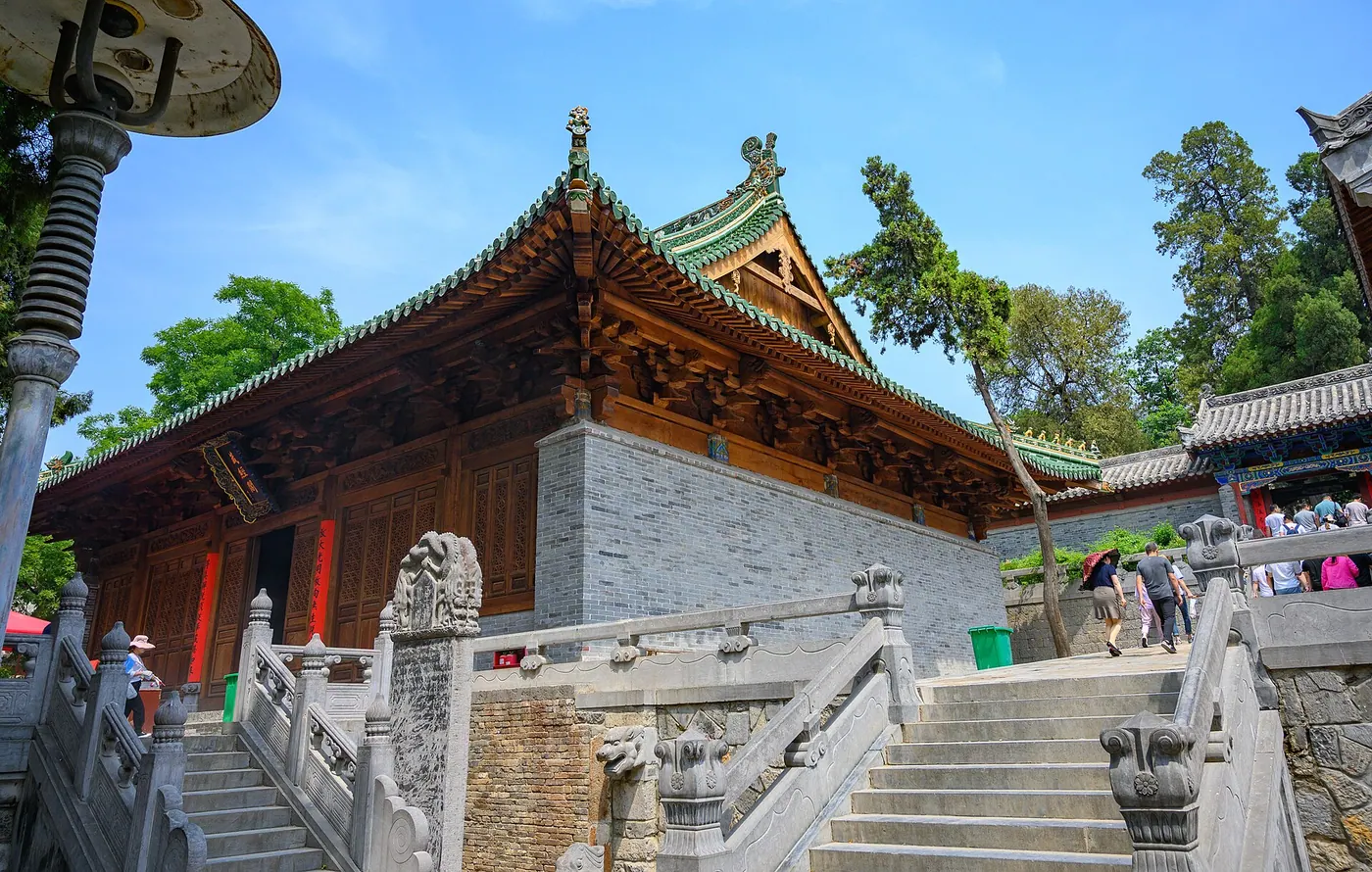
Cover photograph: Shaolin Temple 15386-Dengfeng (48757384188).jpg by xiquinhosilva, via Wikimedia Commons, licensed under CC BY 2.0. Resized and converted to WebP.