Who Liuzhou Suits, and Why It Is Not Luzhou
Liuzhou rewards travelers who are happy to build a trip around a mid-size river city instead of a headline monument. If you like walking waterfront paths at dusk, reading industrial history in a museum, and eating something with a strong point of view, three days here fit together neatly. Consider skipping it, or shortening your stop, if you want a compact old town you can cross in an afternoon, expect English signage everywhere, or are traveling with someone who finds pungent food aromas genuinely unpleasant.
First, the spelling. Liuzhou in Guangxi is frequently confused with Luzhou in Sichuan. They are different provinces, different rivers and different food cultures: Liuzhou sits on the Liu River in Guangxi, ringed by limestone peaks and known for rice noodles, while Luzhou is a Sichuanese river town associated with baijiu. Check the province on your train and hotel confirmations rather than trusting the pinyin alone. Confusing the two is one of the most common planning errors for this part of China.
Arrival, Stations and Choosing a Base
Check which station your ticket uses and compare that arrival point with your hotel before booking. Confirm the pickup point and match your base to it rather than assuming a short walk. Rail connections to other Guangxi cities and onward to larger hubs are the usual approach for international visitors, but schedules change, so treat any plan as provisional until your tickets are issued.
For a three-day city stay, a base near the central riverfront keeps Day 1 and Day 3 genuinely low-effort. Districts spread out, so budget for taxis or ride-hailing rather than assuming a metro network will cover your route. Treat Sanjiang's Dong villages as a separate county trip to the north that needs its own night, not something to squeeze into the city itinerary. Trying to bolt it onto three days is where most itineraries fall apart.
Day 1: The Liu River Bend, Bridge by Bridge
The Liu River makes a pronounced loop through central Liuzhou, and that bend is the city's signature. Start with a slow orientation walk along the designated public riverfront paths, then use the bridges to close a loop rather than retracing your steps. Morning is quieter and cooler; late afternoon brings softer light and a different crowd. Keep the day deliberately light so you finish it with energy for dinner rather than a taxi back to the hotel.
Practicalities matter more than they sound. Riverside promenades offer little shade in the middle of the day, mosquitoes gather near water at dusk, and stone surfaces can be slick after rain. Pack water, sun protection and repellent. Do not build your day around a river cruise: if any boat service is operating, it will be advertised locally, and you should confirm details on the spot. The walk itself is the reliable pleasure.
Day 2: Longtan Park and the Southern Karst
Da Longtan, usually referred to in English as Longtan Park, sits in the southern part of the city and requires a proper transfer rather than a stroll from the center. Its draw is the combination of karst peaks, water and greenery that gives Liuzhou its distinctive silhouette. Give it a half day at minimum and treat the journey there and back as part of the plan. Do not chain it with far-flung factory or industrial-tourism sites unless you have confirmed both are open and reachable on the same day.
The terrain is the thing to plan around. Paths wind, some sections involve steps, and wet stone after rain demands care. Choose a shorter loop if the weather is heavy or your group includes slower walkers, and carry water and mosquito protection. Verify current park access through official city or venue channels before you set out, since maintenance, weather and local notices can change what is open on any given day.
Day 3: Industrial Heritage, or a Quieter Green Hour
The Liuzhou Industrial Museum is the strongest single stop for understanding how a river town became a manufacturing city. Check opening days and any reservation requirement directly before visiting, and set expectations: this is a place to read, look and piece together context, not to watch live production lines. English interpretation may be limited, so a translation app helps. Pair the visit with a straightforward meal nearby and keep the rest of the day unambitious.
If the weather turns or your legs are tired, Liuhou Park is the calmer alternative, with shade, gentler paths and a slower rhythm. It suits a low-walking day far better than attempting Longtan's full terrain in the rain. Either way, leave the afternoon loose. A museum plus a long lunch, or a park bench plus an early bowl of noodles, is a better use of Day 3 than a rushed dash between distant districts.
Luosifen: Aroma, Broth and Ordering Without Surprises
Luosifen is rice noodles served in a sour, spicy broth, and its most talked-about element is fermented bamboo shoot, which gives the bowl a strong, sharp aroma that travels across a dining room. Toppings and broths vary by shop, so avoid assuming a fixed recipe. What is clear is that the dish has become both a local staple and a serious industry; city government material notes the craft's place on the national intangible cultural heritage list in 2021, and the industrial scale is part of the story.
Before ordering, ask what the broth is based on, whether it contains snail or shellfish, how hot the chili really is, and whether peanuts or other common allergens are involved. Vegetarian broths exist in some shops but are not universal, so confirm rather than hope. You are under no obligation to enjoy the aroma. The most common planning mistake is treating Liuzhou as a quick stop between trains, which leaves no room for the food, the river or the karst.
Further reading and onward planning
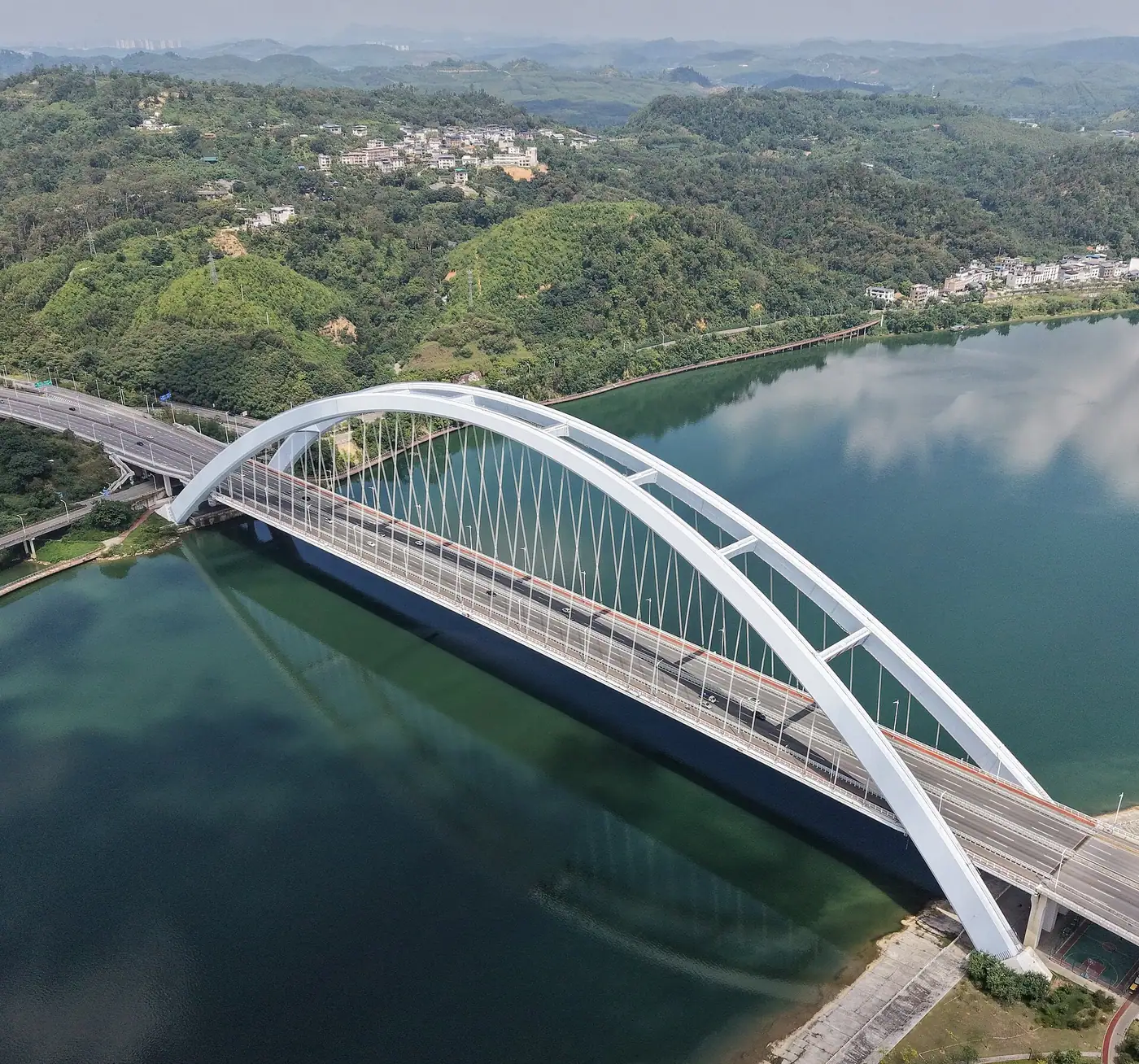
For background and current visitor notices, consult Liuzhou municipal government portal and Liuzhou Culture, Radio, Television and Tourism Bureau and Liuzhou municipal government: luosifen industry background. This guide was prepared on November 5, 2026. Background pages do not establish current entry hours, reservations, transport or weather-related access; confirm those with the venue and your accommodation for your dates. Cover photograph: The Guantang Bridge in Liuzhou, Guangxi.jpg by Glabb, via Wikimedia Commons, licensed under CC BY-SA 3.0. This adapted photograph is shared under the same licence.
To extend the trip, compare Guilin and Yangshuo's karst route and Nanning and Detian. For railway planning, see China by high-speed train, and always match station names to the ticket you actually book.