Guilin or Yangshuo: how to divide the trip
Guilin and Yangshuo share the famous karst landscape but serve different purposes. Guilin is a working city with airport and railway connections, city parks, and more indoor options. Yangshuo is the smaller base for the Li and Yulong rivers, villages, cycling, and evenings around West Street. This four-day route uses one night in Guilin and two in Yangshuo. If you arrive late on day one, add a night: a four-day label should not disguise three days of sightseeing after long transfers.
The region fits naturally into a wider route with Guangzhou, Shenzhen, or other southern cities. Use our China itinerary planner to decide whether the transfer time is worthwhile, and check the China travel by month guide before choosing a season. The landscape is beautiful in different kinds of weather, but a river cruise, bicycle ride, and mountain viewpoint all depend on current conditions.
Before you arrive: tickets, hotels, and the right river experience
Choose a Guilin hotel near the central lakes or the station you actually use, with straightforward taxi or bus access; Guilin does not have a metro network to rely on. In Yangshuo, choose between West Street convenience, a quieter Yulong River guesthouse, or a rural stay with arranged transport. Ask about road noise, lifts, air conditioning or heating, and foreign-guest registration. Save directions in Chinese. Our China hotel booking guide covers practical checks before payment.
The official Li River scenic-area website identifies classic cruise routes from Mopanshan or Zhujiang toward Yangshuo. Those departure piers are outside central Guilin: hotel pickup and pier transfer need their own allowance. A shorter Li River sightseeing trip near Xingping is not the same product, and the Yulong River is a different river with separate raft operations. Confirm the exact route, pier, boat type, luggage policy, and return transfer. The China attraction ticket guide offers a reservation checklist.
Day 1: arrive in Guilin and see the city around the lakes
Use the first day to arrive, settle in, and explore Guilin at a gentle pace. The Two Rivers and Four Lakes area, Elephant Trunk Hill area, and nearby city parks can introduce the landscape without requiring a long transfer. Check current entry rules and opening hours because parks and scenic areas may use timed tickets, temporary closures, or different gates. Leave luggage at the hotel before heading out and carry water, sun protection, and a small power bank.
Guilin is a good place to try local rice noodles, stuffed vegetables, river fish, and regional breakfast dishes before you move on. Menus can use local names and ingredients that are not obvious in translation, so show allergies clearly and ask whether a dish contains peanuts, shellfish, pork, alcohol, or strong chili. Our China food guide covers practical ordering phrases and food-safety habits.
Finish with a walk around the lakes or a quiet dinner rather than adding a late show or a distant viewpoint. If you arrive by high-speed train, confirm whether your next transfer leaves from Guilin, Guilin North, or another station. Station names matter in this region, and a hotel that looks close on a map may be far from the correct departure point. The high-speed train guide explains how to check the station and passport details.
Day 2: take the Li River route toward Yangshuo
Treat the Li River day as a full transport and landscape experience: a conventional cruise often takes around four to five hours on the water, plus pier transfers, but your operator's schedule controls. Confirm check-in, boarding pier, luggage, meal inclusion, and arrival point the evening before. Carry the original passport used for booking and ask for a human booking channel if the app cannot handle foreign documents. Bring water, a light layer, and sun protection; follow crew instructions rather than leaning over railings for a photograph.
The scenery changes gradually: working riverbanks, limestone peaks, villages, farms, and bends where the view opens and closes. Let the journey breathe instead of trying to photograph every minute. If you prefer a shorter or quieter day, compare a Guilin-to-Yangshuo transfer with a local river or village excursion rather than booking a cruise simply because it appears in every package. Weather, water level, and maintenance can change the operating plan, so official notices remain final.
Confirm the Yangshuo arrival dock before arranging hotel pickup; different boats can use different landing points. Meet a pre-arranged driver only after checking the plate, meeting point, and total price. If you choose rail instead of a cruise, Yangshuo railway station is near Xingping, outside Yangshuo town and requiring a substantial road transfer: you still need a bus, taxi, or hotel transfer. Do not book it as though it were walking distance from West Street. The getting around Chinese cities guide explains transport and pickup precautions.
Day 2 evening: West Street with realistic expectations
West Street is convenient for food, shops, and an easy first Yangshuo evening, but it is also the busiest and most commercial part of town. Walk through once, then choose a restaurant with visible prices and a menu you can understand. Try beer fish only after asking about portion size, cooking method, and weight-based pricing; the same name can describe very different restaurants and bills. Rice noodles, stuffed dishes, local vegetables, and fruit are useful alternatives if you want a lighter dinner.
Keep the evening short if you plan to cycle or take a raft the next morning. Yangshuo lanes can be dark outside the main streets, and scooters, tour vehicles, and uneven surfaces share narrow roads. Carry only what you need, keep payment backups ready, and avoid invitations to bars, private rooms, or tours with no written itinerary. Our China travel safety guide covers common pressure tactics and transport precautions.
Day 3: Yulong River, cycling, and villages
Start day three with a route along the Yulong River or a nearby countryside road, choosing the distance and surface that match your experience. Bicycle and electric-bike rental conditions vary, so inspect brakes, lights, helmet availability, deposit terms, and the return time before leaving. If you are not confident on a scooter, choose a bicycle, private car, or guided transfer instead. Traffic can include tour buses, farm vehicles, and pedestrians, and rural roads are not always separated from motor traffic.
For a Yulong River bamboo raft, confirm the launch and landing points, passenger limits, life-jacket rules, weather policy, and onward transfer; routes are not interchangeable. Age, height, health, and mobility restrictions can exclude some children and older guests, so get explicit operator confirmation before paying. Rafts may cross low weirs, making this more than a motionless photo platform. Keep electronics secured, do not swim from the raft, and ask about boarding steps. Our accessible China travel guide helps with terrain and transfer planning.
Choose one short section around the Yulong River and a village lunch instead of cycling the entire scenic corridor. Ask your hotel for an open, manageable route toward a bridge such as Fuli or Yulong, and do not add a distant hill merely because it appears nearby on a map. River crossings, construction, and slopes can change the ride. Ask before photographing residents or entering courtyards, and return before dark. A taxi-supported village day is a good substitute if cycling conditions are poor.
Day 3 evening: choose a calm riverside finish
A riverside dinner or a short walk near your hotel is often better than another large performance after an active day. If you choose a ticketed night show, verify the current venue, transport, language or subtitle options, seating, cancellation policy, and return plan before booking. Rain, river conditions, and seasonal programming can affect outdoor productions.
Use the evening to check the next day's weather and transport. If the forecast shows heavy rain, replace outdoor activities with a locally arranged cooking class, a covered cafe near your hotel, or another short indoor activity in Yangshuo. Do not make a long return trip to Guilin simply to fill a rainy afternoon. A flexible plan protects the quality of the trip and avoids pushing tired travelers onto wet mountain roads.
Day 4: a second landscape route or return to Guilin
Let your departure time decide day four. With no same-day onward deadline, a trip to Xingping offers an old-town walk and Li River views distinct from the Yulong River; use an established riverside viewpoint and skip a steep hill climb in rain. If your next train or flight is already booked, keep the morning near the hotel or transfer directly to Guilin. Confirm whether you need Guilin Station, Guilin North, Guilin West, or the airport; the names are not interchangeable. Do not combine Xingping sightseeing with a tight departure buffer.
Travelers with an extra day can consider Longji Rice Terraces, but it is a separate mountain excursion with winding roads, seasonal appearance, and more walking. Check the current route, ticket, weather, and luggage plan before adding it. Combining Guilin, Yangshuo, and Longji in four days can create more transfers than scenery. The China travel planning timeline helps place transport buffers and reservations in a realistic schedule.
Use your final meal to revisit a dish you understood better after several days of travel. Keep receipts and small amounts of cash until you leave, and download transport details while you still have reliable data. If you are moving to another city, pack rain gear and protect camera equipment; river humidity and sudden showers are common even when the morning looks bright.
Practical Guilin and Yangshuo details: weather, money, and responsible access
Spring and autumn often balance temperatures and outdoor comfort, but no season guarantees clear skies; spring rain can be substantial. Summer is hot and humid, and winter can be misty and chilly in unheated rooms. Check weather and river notices each morning. Heavy rain, thunderstorms, or suspended operations mean postponing a boat trip or exposed hill climb, not searching for an unofficial operator. Wear shoes that grip wet stone and carry a rain shell. The China packing list is useful for a broader route.
Set up mobile payment before arriving in the countryside and keep a backup card and modest cash reserve. Smaller shops, raft operators, bike rentals, and village restaurants may have different payment or deposit expectations. Confirm prices for boats, fish sold by weight, bicycle damage, private transfers, and photo services before committing. Save hotel and station addresses offline in both English and Chinese.
The Li and Yulong river landscapes are working environments as well as scenic backdrops. Follow marked paths, wear the provided safety equipment, do not litter, and never enter restricted water or farmland for a photograph. Avoid feeding animals, climbing fragile rock formations, or blocking village roads. Respectful, slower travel leaves the landscape and its communities in better condition for the next visitor.
Planning sources and cover photograph
Reviewed on October 8, 2026. For route descriptions and operational notices, use the Li River scenic area's English website and its Chinese route page. The Yangshuo railway station guide is a secondary reference for location; confirm your actual ticket and local transfer with the operator. Prices, availability, weather decisions, and raft restrictions are not guaranteed by this article.
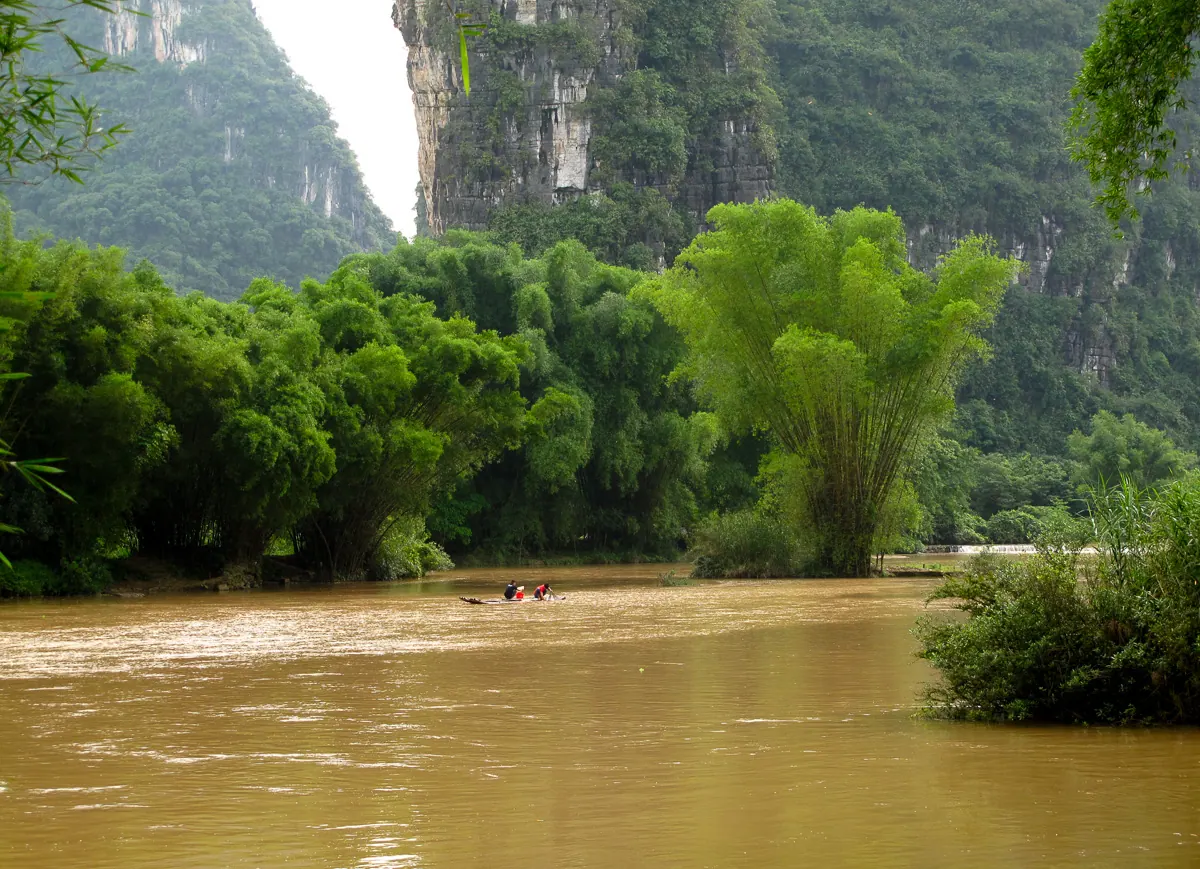
Cover photograph: Yulong River by Rutger van der Maar, via Wikimedia Commons, licensed under CC BY 2.0. The real photograph shows Yangshuo's Yulong River landscape and was resized and converted to WebP for this site.


