Who Zhenjiang Suits, and When to Go Elsewhere
Zhenjiang is a working Yangtze city in Jiangsu, sitting roughly where the Grand Canal's southern section meets the river, and it makes sense as a two-day stop for travellers who like stone lanes, a single good hill and a food identity built on noodles and vinegar. The historic core around Xijin Ferry is compact enough to cover on foot, and popular lanes and temple entrances can still draw groups, especially on weekends and holidays. It suits independent travellers who are comfortable setting their own pace and skipping the headline circuit.
Choose somewhere else if these two days are your only time in the region and you want the biggest set pieces: Nanjing's museums and city walls, or Suzhou's classical gardens, deliver more per hour. Zhenjiang's pleasures are modest and cumulative, an alley that curves uphill, a bowl of noodles eaten at a simple table, so it rewards people who have already seen the famous stops or who simply prefer smaller cities. If you need constant stimulation or a dense café scene, look elsewhere.
Arrival, Stations and Choosing a Base
Two main passenger stations relevant to this visit are Zhenjiang (镇江) and Zhenjiang South (镇江南). Check what your actual ticket says before you plan the last mile, because the two sit in different parts of the city and one is noticeably less convenient for the old quarter. Services differ by origin and by line, so confirm that a direct train exists from where you are travelling rather than assuming a connection will work. Arriving late, a taxi from either station is simpler than working out local buses with luggage.
Where you sleep shapes the trip more than any single sight. Staying in or beside Xijin Ferry buys atmosphere, old lanes at night and a short walk to breakfast, but old streets mean slopes, steps and uneven stone, and hauling a case over them is the least romantic part of the day. A practical compromise is a hotel on a vehicle-accessible street within walking distance of the quarter, so a car can reach the door. Compare noise levels, and ask directly how a taxi can approach the entrance.
Day 1: Xijin Ferry and a Slow Evening
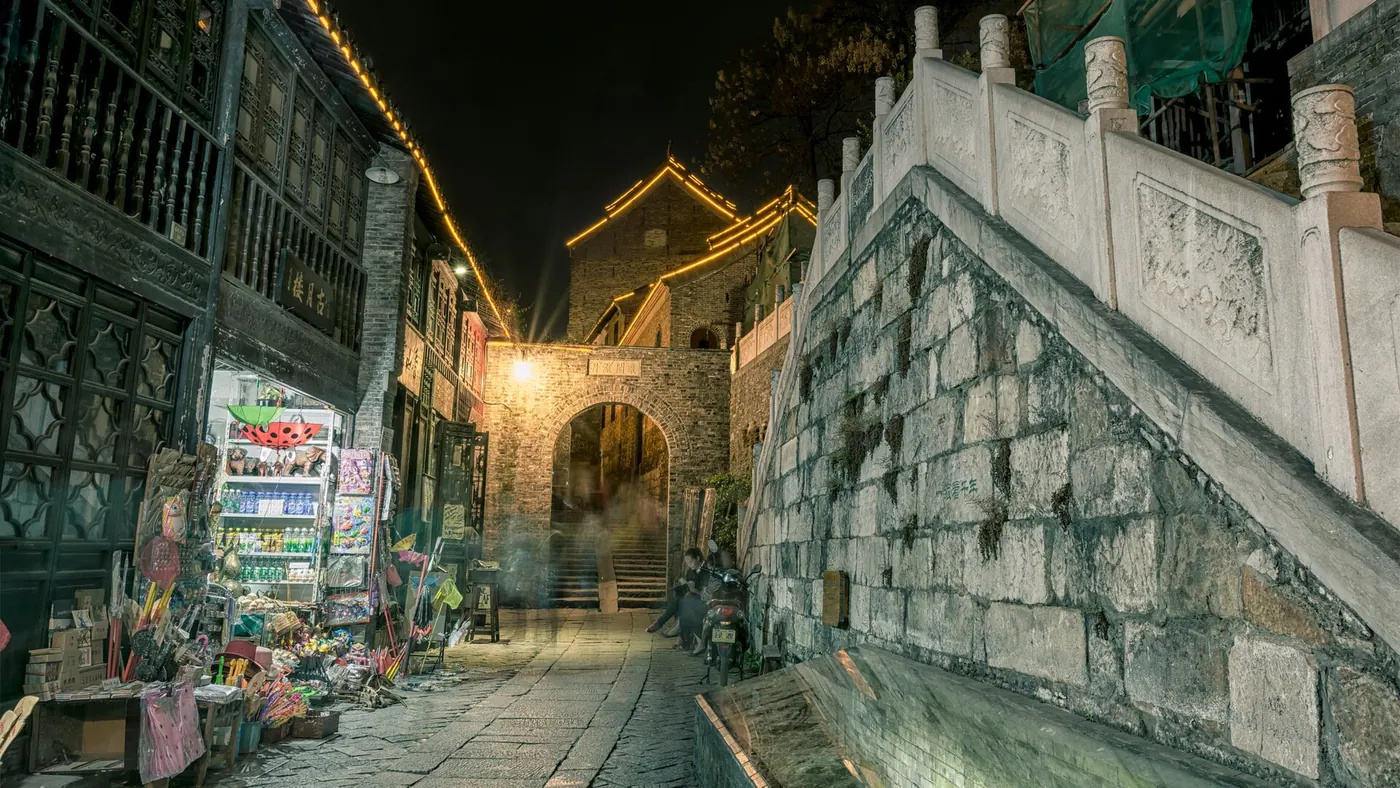
Day one is deliberately low-effort. Arrive, leave bags, and walk down to Xijin Ferry, which is a historic place-name and a preserved quarter rather than a working pier; there is no water crossing to book and no river transport to plan around. The lanes climb in short flights of steps past old shopfronts and retaining walls, and the district's history as a crossing point is legible in the way the streets fold into the slope. Wander uphill without a fixed route, then come back down for lunch.
Pot-cover noodles, or guo gai mian, are the local benchmark: noodles cooked in a pot with a small wooden lid floating on the water, served in a savoury broth with toppings of your choosing. It is everyday food rather than a ceremony, eaten quickly and without fuss. Spend the afternoon slowly, with side alleys, a tea stop and a small temple or exhibition if one happens to be open, then keep dinner relaxed. An overnight lets you return at a different time of day, although popular dining lanes can remain lively after dark.
Day 2: One Hill, Chosen Honestly
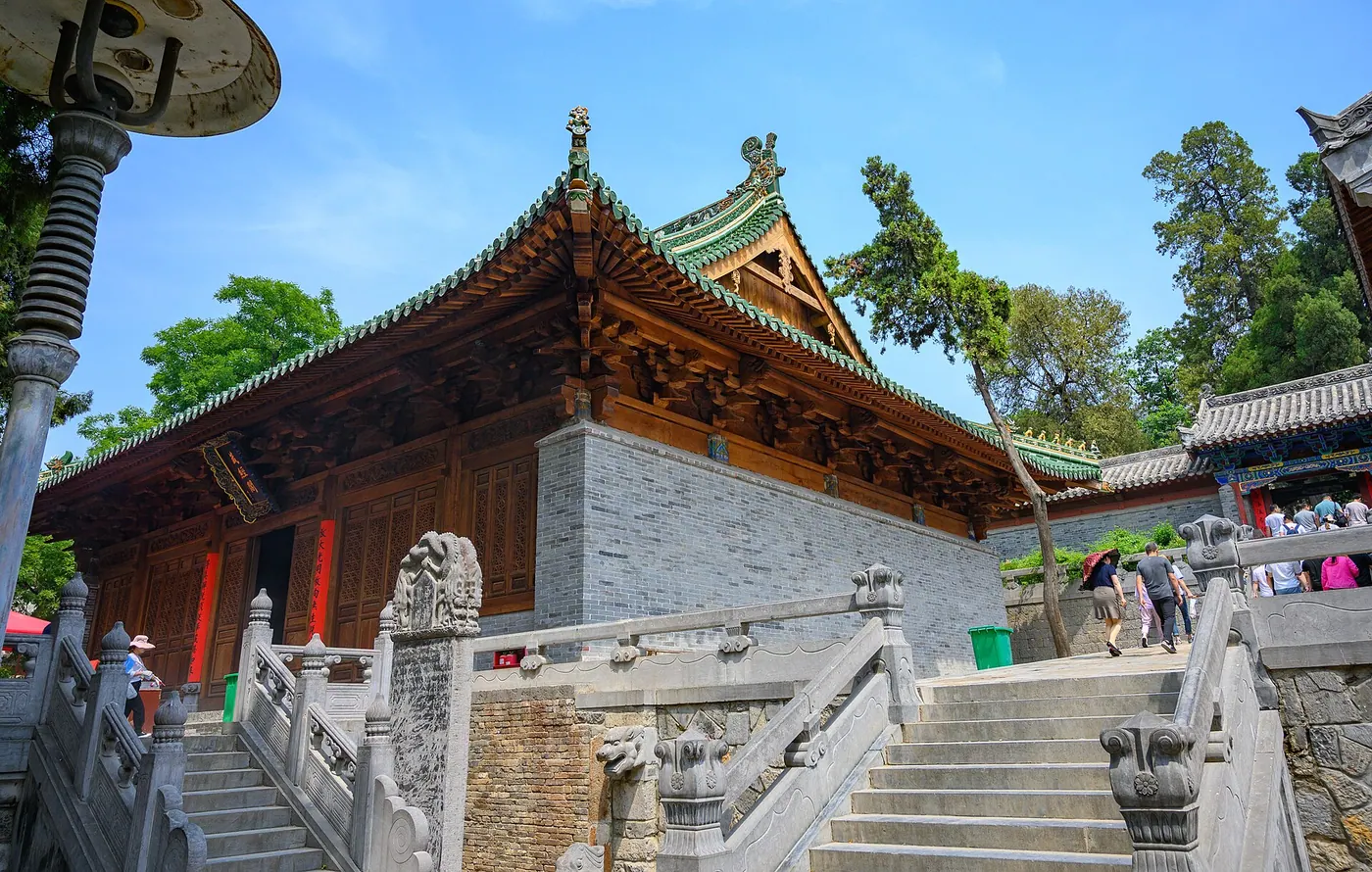
Day two asks you to pick one hill, not two. Jinshan is the larger, greener option: a wooded rise with a temple complex and pagoda, long associated with the White Snake legend and busy with domestic tourists at weekends. It suits travellers who want a couple of hours of wandering among gardens and halls, and who are comfortable with crowds and steps. Check current entry arrangements when you arrive rather than relying on older guides, which go stale quickly.
Beigushan is smaller, steeper and closer to the river, with historic associations that run through classical poetry and Three Kingdoms-era storytelling. It reads as a shorter visit, an hour or two, and it can suit a shorter heritage visit, but a shorter route is not necessarily easier: its stairs may still be unsuitable for limited mobility. Neither hill promises a step-free route or a sweeping view from every point. Do not add Jiaoshan on top; it is a separate island hill and deserves its own trip.
Eating Zhenjiang: Noodles, Vinegar and Ordering Well
Ordering breakfast is straightforward once you know the shape of it. You choose a bowl of pot-cover noodles, then a topping, often pork, eel or vegetables, and whether you want it in broth or dressed. Portions are generous, so one bowl per person is normally enough, and you can ask for a lighter broth or less oil without drama. Look for shops with a steady local queue rather than the smartest frontage; turnover is a better signal than decoration, and the menu is usually short enough to order by pointing.
Zhenjiang's black rice vinegar is genuinely part of the city's food identity, and the easiest way to meet it is in small quantities: a spoonful stirred into noodle broth, or a dip alongside dumplings and the local cured pork served cold. Treat it as an optional tasting exercise rather than a routine, and skip it if sour flavours are not for you. If you want a bottle to take home, a grocery shop is simpler than a gift store, and airline rules on liquids still apply.
Rain, Slopes and the Mistakes That Cost You
Riverside humidity is the local weather story: spring and autumn are the comfortable windows, while summer heat makes an afternoon hill feel like a chore and winter damp chills the lanes. Wet paving in the old quarter turns slick, and stone steps deserve more care than they appear to need. If rain settles in, swap the hill for a museum, a long lunch and a tea stop, or take a taxi to a low-lying park instead of climbing. A lower-walking version of the same two days keeps to the bottom of Xijin Ferry, uses short taxi hops and drops the hill entirely.
The recurring planning mistakes are easy to avoid. People book Zhenjiang South and then discover it is not the station nearest the old quarter, or they treat Xijin Ferry as a ferry terminal and build a river crossing into the itinerary. Others try to fit both hills plus Jiaoshan into one day, or bolt on Nanjing and Yangzhou as extra sights when those work better as separate stops before or after; both are logical broader connections, not additions to squeeze in. Check opening days on arrival, avoid major public holidays, and pack for rain.
Background and onward planning
Background references and visitor-information channels: Background: Zhenjiang and Zhenjiang municipal government portal. This itinerary was prepared on November 4, 2026. Background pages and government portals are not live opening or ticket notices. Confirm current entry, exhibitions, local transport and weather-related access with the venue and your accommodation for your travel dates.
To extend the route, compare Yangzhou's gardens and food and a first Nanjing visit. For rail booking details, see travelling China by high-speed train; check the exact station name on every ticket before arranging a transfer.
Cover photograph: Xijin Ferry Ancient Street (152713255).jpeg by Znonymous, via Wikimedia Commons, licensed under CC BY-SA 3.0. Resized and converted to WebP. This adapted photograph is shared under the same licence.