Who Shenyang Suits, and When to Choose Somewhere Else
Shenyang suits travellers who want early Qing history at a human scale and a northern Chinese city that feels lived-in rather than staged. If you like walking a palace courtyard in the morning and sitting down to a long lunch an hour later, the city rewards that rhythm. It also works as the main city stop on a wider Northeast China trip, before or after smaller places. Come for imperial architecture, Manchu history and food. Two nights can support three sightseeing days if arrival and departure times allow; add a third night if either travel day is short.
Choose another base if your priority is a dense historic core where monuments follow one another on foot. Beijing and Xi'an do that more convincingly. If you are chasing a winter spectacle, plan that as its own trip rather than treating Shenyang as a substitute. Shenyang is also not an afternoon you bolt onto a Harbin itinerary; it deserves its own days. Late spring and early autumn give the most comfortable walking weather, while winter visits are workable but need daylight planning, warm layers and indoor breaks written into the route.
Arrival, Rail Stations and Choosing Where to Sleep
Shenyang has more than one mainline station, and Shenyang and Shenyang North are separate places. Choose the train that fits your schedule, then plan the transfer from the station named on that ticket rather than assuming one arrival point is always right. Both connect into the city by metro, and a taxi covers the final stretch to a hotel door. Leave slack for a bag check at a museum or a queue at a station, and keep your first evening light instead of booking a timed entry for the day you land.
For a three-day visit, base yourself in the old centre within walking distance of the palace and the Zhongjie shopping streets. That puts Day 1 entirely on foot and makes an evening meal simple. Use the metro for longer cross-town moves and a taxi for the last few blocks, which matters most in cold, wind or rain. If anyone in your group needs step-free access, confirm entrance arrangements directly with the hotel and the venue rather than relying on general assumptions.
Day 1: The Imperial Palace and the Old Centre on Foot
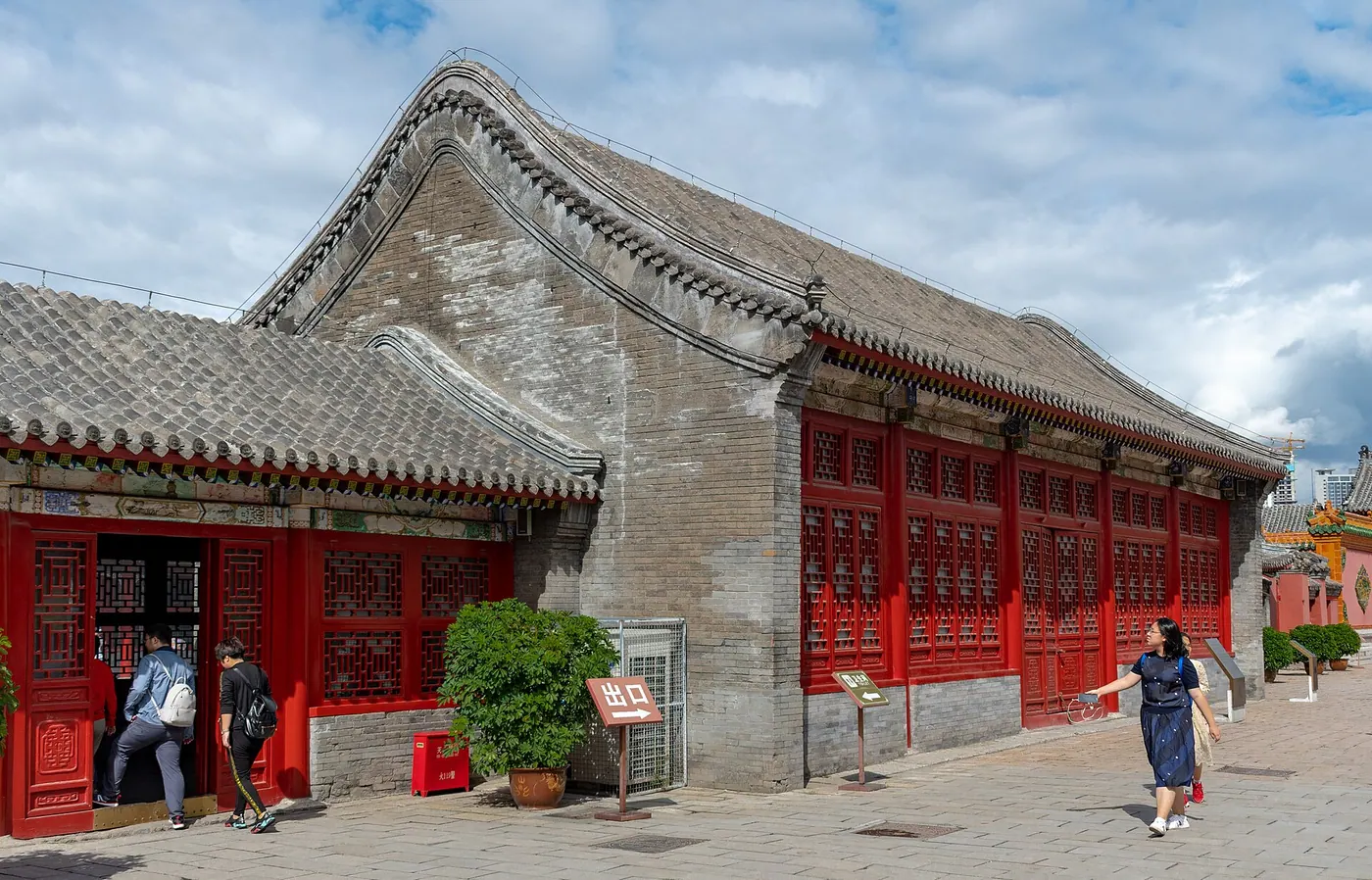
Start at the Shenyang Imperial Palace, the early Qing complex at the centre of the old city. It belongs to a joint World Heritage listing with the imperial palaces of Beijing, and the Shenyang extension was inscribed in 2004. Expect a more compressed layout than the Forbidden City, with Manchu architectural and cultural details that give the site its own identity rather than making it a smaller copy. Two to three hours covers it comfortably, and a morning start leaves the rest of the day open.
The remainder of Day 1 belongs to Zhongjie and the blocks around it. This is a busy commercial spine rather than a preserved film set, and that is exactly the point: department stores, snack counters and side streets that open into older corners. Walk without a fixed list, stop for dumplings or a bowl of noodles when hunger arrives, and keep the afternoon deliberately loose. Finish with an early dinner so that Day 2's park and tomb visit starts on fresh legs.
Day 2: Beiling Park and the Qing Zhaoling Mausoleum
Beiling Park sits in the north of the city and holds the Qing Zhaoling mausoleum within its grounds. Treat these as two layers of one visit: general park access on one hand, and the separately controlled heritage area on the other. Check how entry is handled on the day you plan to go, and expect that the inner monument may have its own arrangements rather than being covered by a single park entrance. Read the signage at the gate and ask at the counter instead of assuming.
The park is large, and the walk from an entrance to the mausoleum is part of the experience rather than a formality. Wear shoes that handle gravel and long paths, carry water, and agree a meeting point if your group splits up. Clear mornings suit the site; wind on exposed paths makes it feel colder than the city centre ever does. Follow the visit with a long indoor lunch, and keep the late afternoon free so you are not hurrying through courtyards.
Day 3: The Museum in Hunnan, or a Slower Neighbourhood Day
The Liaoning Provincial Museum is in the southern Hunnan area, well away from the old centre. Do not fold it into a Zhongjie afternoon; the transfer alone turns it into a half-day commitment. Check the museum's current reservation process and which galleries are running before you commit, because a strong temporary exhibition can justify the journey while a closed wing may not. If the collection and access suit your interests, go in the morning, eat nearby, and treat the return as the second event of the day.
If the forecast is poor, the paving is icy, or someone in your group is running out of walking energy, swap the museum for a neighbourhood day closer to the hotel: a market hall, a long lunch, a bookshop, a coffee stop and an early return. Winter daylight is short, so schedule indoor breaks and finish outdoor stretches by mid-afternoon; spring and autumn are far kinder for strolling. Confirm step-free entrances where they matter, and accept bag checks as a normal part of museum and station visits.
Eating Well in Shenyang, and Mistakes That Cost You a Day
Northeast cooking is generous and arrives in sharing sizes. Order fewer dishes than there are people at the table to begin with; you can always add another round. Dumplings are an easy anchor, guobaorou is a regional standard, and sauerkraut-based dishes appear widely through the colder months. Pork, meat broths and wheat are common, so ask directly about ingredients and allergens rather than assuming a dish is vegetarian or halal. Build in time as well: a family-style meal here is an occasion, not a fuel stop.
The costliest mistakes are logistical rather than cultural. Do not plan the Liaoning Provincial Museum as a stroll from Zhongjie, and do not book a train without checking whether it leaves from Shenyang or Shenyang North. Do not expect the palace to deliver Beijing's scale, and do not attempt palace, park and museum in a single day. Over-ordering at dinner and then rushing the next morning is another common own goal. Above all, resist treating Shenyang as a transit stop for a colder destination; three unhurried days show you far more than five squeezed ones.
Background and onward planning
Background references and visitor-information channels: UNESCO: Imperial Palaces of Beijing and Shenyang and Background: Mukden Palace. This itinerary was prepared on November 4, 2026. Background pages and government portals are not live opening or ticket notices. Confirm current entry, exhibitions, local transport and weather-related access with the venue and your accommodation for your travel dates.
To extend the route, compare Dalian's coastal route and Anshan and Qianshan. For rail booking details, see travelling China by high-speed train; check the exact station name on every ticket before arranging a transfer.
Cover photograph: Mukden Palace 24556-Shenyang (30572867337).jpg by xiquinhosilva, via Wikimedia Commons, licensed under CC BY 2.0. Resized and converted to WebP.