Who Should Build a Trip Around Nantong
Nantong suits travellers who have already done the marquee Jiangnan water towns and want something with a different shape. Here the water is a working moat rather than a preserved canal lane: Haohe rings the historic core, and the pleasure is in walking a section, crossing a bridge, sitting down, then walking a little more. It also suits people who like small museums, textile history and craft with an actual process behind it. If your ideal day is gardens, galleries and a dense old town you can cross in twenty minutes, look elsewhere.
Be honest about the trade-offs. Nantong's points of interest are spread across a city, not gathered in one walkable quarter, so a museum visit, a moat stretch and a craft stop are separate moves that need transport or time. The city does not offer guaranteed quiet, and weekend afternoons along the water can be busy. If you are travelling with someone who needs step-free everything, or you want a compact historic core, compare the precise routes at potential bases; a smaller canal town can also contain bridges, steps and uneven paving.
Arrival, Rail Stations and Picking One Base
Nantong and Nantong West are different rail stations, not two names for the same place. Before you book, check which station your service actually uses and how you would reach your hotel from it, since transfer options and timings vary by service and season. Avoid planning around an assumed direct train or a fixed journey time from Shanghai or elsewhere; confirm current services when you buy tickets and leave slack on arrival day. For this two-day visit, choose one base near Haohe. One night works with an early arrival and late departure; add a night if your travel times are shorter.
If arrival is late, treat it as an orientation evening and allow another morning for the museum. With an early arrival, the Day 1 museum and Haohe plan can begin that day. Drop bags, walk the nearest stretch of moat, find where you will eat, and confirm the practical details of Day 1 while you still have time to adjust: current opening days, any reservation requirement for the museum, and which galleries or exhibition spaces are actually available on your dates. Keep Day 2 deliberately loose until you know what is open, because craft displays and small venues change more often than headline sights.
Day 1: Nantong Museum, Then Haohe in Short Sections
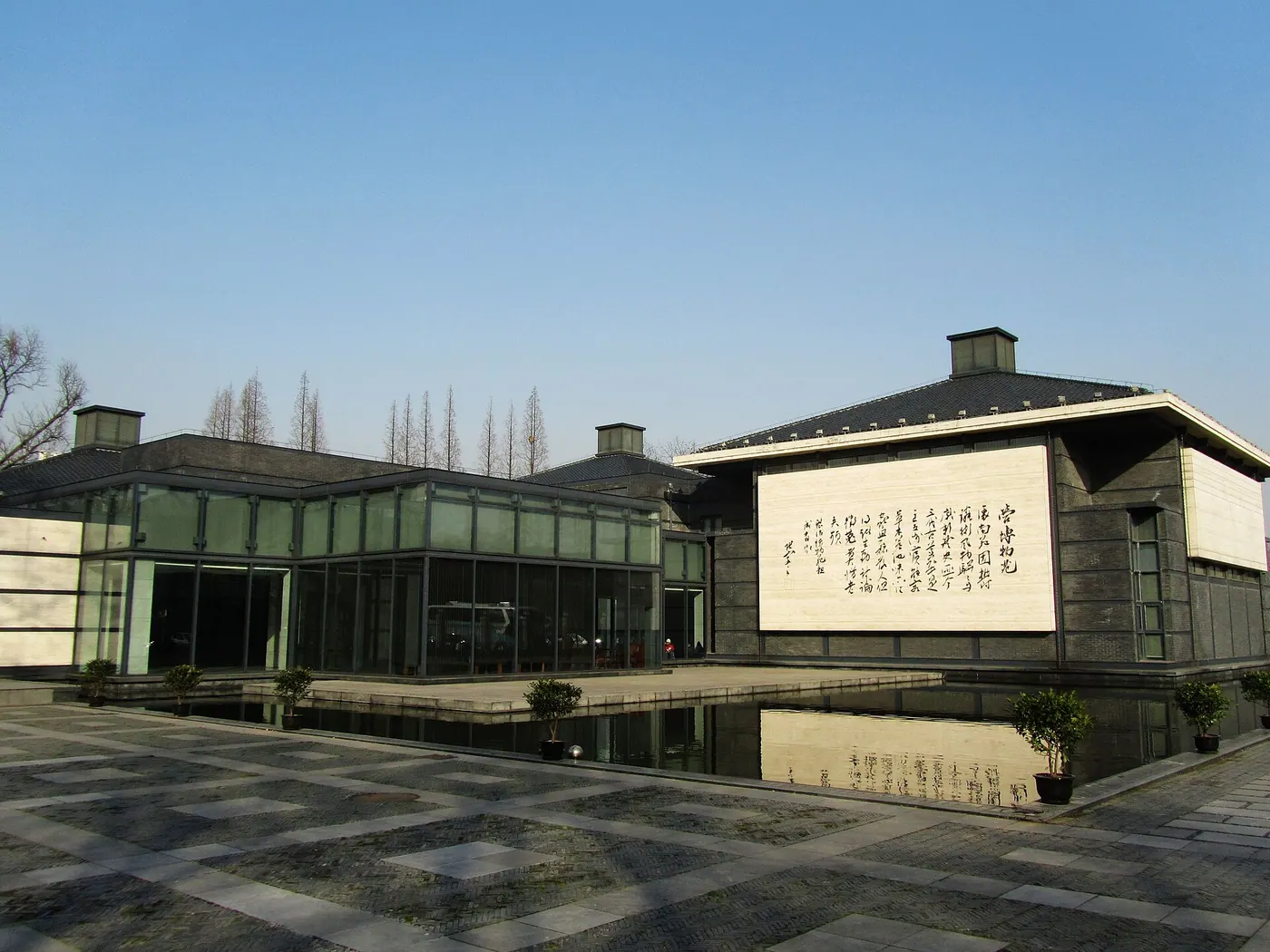
Nantong Museum was founded by Zhang Jian in 1905 and combines historic buildings with exhibitions. Its founding offers a way into Zhang Jian's wider civic vision: this is a story about education, local industry and public institutions. Because grounds and galleries may have different access arrangements, check current opening days and any reservation requirement in advance, and ask which galleries are open rather than assuming the whole complex is available.
After the museum, take Haohe in pieces. Pick one bank, walk for twenty or thirty minutes, cross a bridge and stop. The moat circuit does not need to be completed, and attempting it turns a pleasant waterside city into an endurance test. Sit in one of the parks along the water, watch the ordinary evening use of the place, and keep the walking short enough that you still want a stroll after dinner. Weekends bring crowds and noise, so plan your quietest moat time for a weekday morning if you can.
Day 2: Blue Calico Craft or Langshan and the River
For the craft option, look for a currently accessible blue calico exhibition or shop that explains the resist-dyeing process rather than only displaying finished cloth. Viewing and purchasing are separate goals: view to understand technique, then buy only what you have handled. Inspect the fabric and the evenness of the dye, ask what the material is, and check whether a piece is hand-finished or produced in larger batches. Ask before photographing people at work, and do not assume a workshop can accept walk-ins; confirm in advance if hands-on participation matters to you.
The alternative second day is Langshan and a riverside outing, which gives you a hill, a temple landscape and water in a single arc. The ascent is not step-free by default, so decide before you set out whether the climb suits everyone in your group, and plan to wait or divert rather than push on. Afterwards, a riverside walk and a long lunch make a gentler counterweight to Day 1's museum time. Pick one option, not both: squeezing a hill and a craft visit into one day leaves no room for either.
Wet Weather, Rest Stops and a Lower-Effort Version
Rain in Nantong does not ruin the trip, but it does change the order. If the forecast turns, move indoor time forward: the museum and any craft exhibition or gallery you have confirmed are the natural wet-weather anchors, and a longer lunch becomes part of the plan rather than a delay. Confirm current opening days by phone or on the venue's own channels the day before you go, since small exhibition spaces adjust schedules. Keep one flexible indoor option in reserve so a wet morning does not become a wasted morning.
For a lower-effort version, cut the moat walk to a single short stretch with a bench at either end, and use a taxi between the museum, the water and your craft stop instead of stringing them together on foot. Eat a proper sit-down lunch rather than grazing, and treat the afternoon as one activity plus a slow return. This version still delivers the city's character, and it works well for mixed-age groups or anyone recovering from a long travel day.
Eating Well and the Mistakes That Cost Time
Nantong cooking leans on Jiangsu-style noodles and river and coastal ingredients, so ordering is mostly a matter of asking before you commit. Check whether a broth is meat-based or shellfish-based if that matters to you, ask which dishes contain bones or whole fish, and be specific about dislikes rather than hoping for the best. Portions can be generous, so order across a table instead of one dish each. Avoid conservation-sensitive wild catch; ask what is farmed or ordinary rather than chasing rarity, and let the everyday local dishes do the work.
The costly mistakes here are mostly structural. Do not treat the city museum, the river and a craft site as one walkable attraction; they are separate stops that need transport or generous time. Do not assume the full moat circuit is the goal, that a workshop will take walk-ins, or that the two rail stations are interchangeable. Check museum arrangements before arrival, and combine Langshan with a craft visit only if opening times, travel and your walking pace allow. Two days rewards one clear choice per half-day.
Background and onward planning
Background references and visitor-information channels: Background: Nantong Museum and Nantong government visitor portal. This itinerary was prepared on November 4, 2026. Background pages and government portals are not live opening or ticket notices. Confirm current entry, exhibitions, local transport and weather-related access with the venue and your accommodation for your travel dates.
To extend the route, compare Wuxi's lake and canal route. For rail booking details, see travelling China by high-speed train; check the exact station name on every ticket before arranging a transfer.
Cover photograph: Nantong Museum 01 2013-01.JPG by 猫猫的日记本, via Wikimedia Commons, licensed under CC BY-SA 3.0. Resized and converted to WebP. This adapted photograph is shared under the same licence.