Who Rizhao Suits, and When to Go Somewhere Else
Rizhao works best for travellers who want a coastal city rather than a coastal resort. The draw is a sequence of small pleasures: a breezy promenade before dinner, a plate of shellfish, a pot of local green tea, an early night. Couples, slow-travelling friends and families who accept that the beach may be a two-hour stop rather than the whole day will settle in quickly. Anyone who needs warm water, bright turquoise views and dependable sunshine should be honest about that before booking.
Timing shapes the trip more than any single sight. Late spring and September give the most comfortable conditions for walking the waterfront, while high summer is when bathing is most plausible and the coast is busiest. Shoulder-season days can turn windy and damp with little notice, and an off-season walking break is genuinely a different holiday from a summer beach one. If swimming is essential, compare destinations and supervised beach seasons carefully; no location guarantees suitable conditions on your dates; if you want sea air, food and tea, three days is about right.
Arrival, Stations and a Base That Actually Works
Rizhao West is the name most rail travellers will see, but the station that matters is the one printed on your own ticket, so check it before you plan the final leg. No station in the city sits on the beach, and treating any of them as a beachfront arrival is the fastest way to start the trip badly. Decide in advance how you will cover the last stretch, keep an offline map saved and, where possible, arrive in daylight so the first transfer is simple.
Choose accommodation near one manageable stretch of coast with food shops and everyday services within walking distance, rather than chasing the cheapest room advertised with a sea view. A partial view two minutes from a beach entrance usually beats a panoramic one surrounded by empty streets. Before booking, look at recent reviews for construction noise and check the walking distance to the waterfront, whether there is a lift, and whether nearby restaurants stay open outside peak season.
Day 1: Arrive, Unpack, Then Walk the Lighthouse Coast
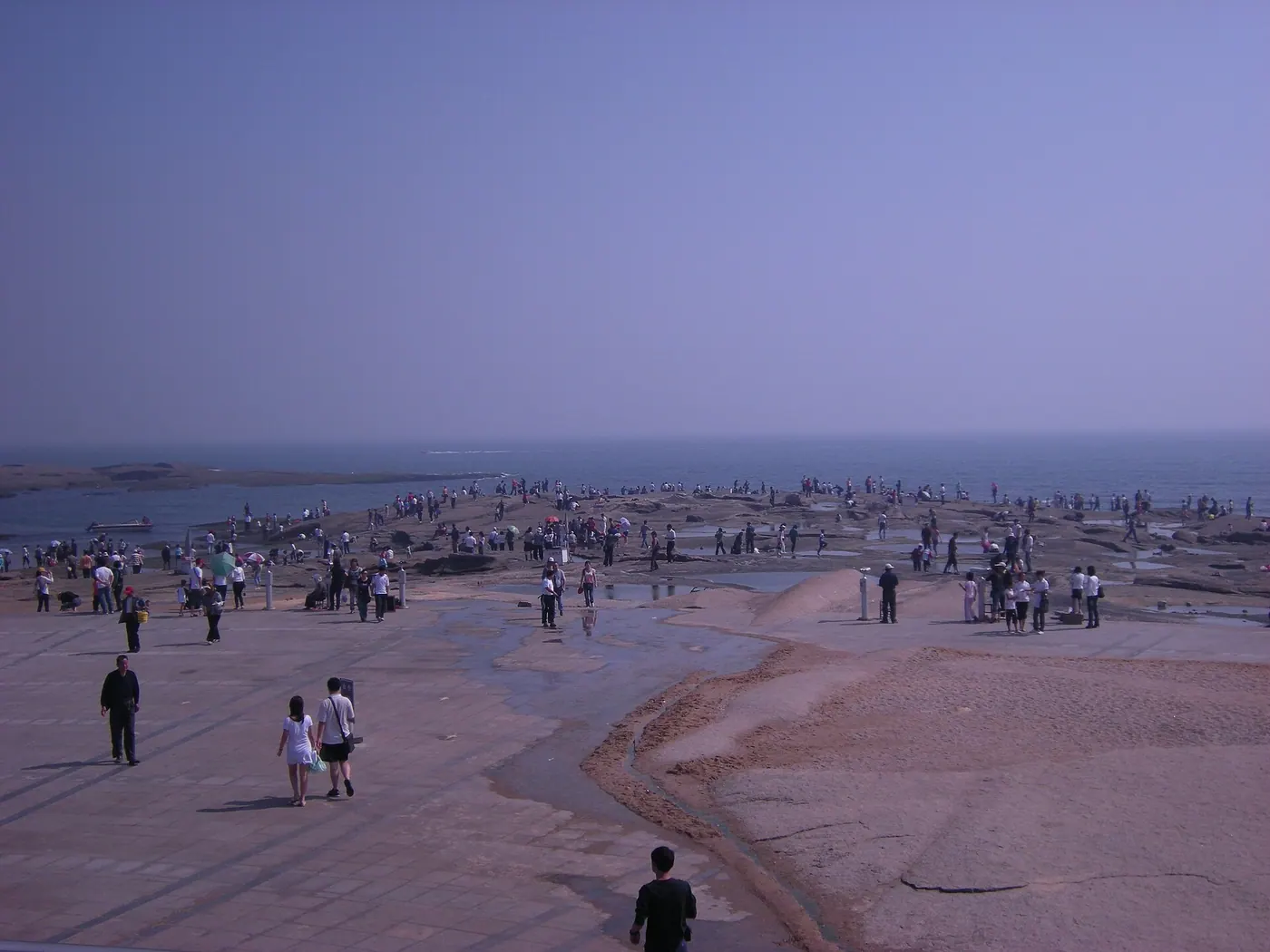
Keep arrival day light. Settle in, eat a proper lunch, then head to the Lighthouse Scenic Area in the late afternoon when the light softens and conditions may suit a short walk; wind can remain strong at any hour. This is a headland for walking and looking, using the public paths that are open on the day. The lighthouse itself is a landmark and a viewpoint rather than something to plan around, so do not build the afternoon on the assumption that you will go inside it.
Walk only on authorised paths and paved surfaces. The rocks around the headland are not a swimming spot, and the shoreline here is not the place to scramble onto tidal flats or poke around rock pools for marine life. Take a windproof layer even on a mild day, as the exposed sections feel cooler than the streets behind them. Families should plan a shorter loop with a snack stop rather than a full circuit.
Day 2: Wanpingkou, With the Beach Kept Optional
Wanpingkou is Rizhao's best-known beach area and the natural anchor for a second day. Think of it as a promenade walk with a possible beach window attached, not an obligation to lie in the sun from morning to evening. If flags and lifeguard cover indicate that swimming is permitted, a short managed session in the morning or late afternoon is the sensible version; signage on the day decides, and conditions change quickly with wind and swell.
The Yellow Sea here is not reliably clear blue, and after rough weather it can be notably murky, so set expectations accordingly and let the water be what it is. If the wind picks up or bathing is closed, shorten the walk, find shade and shift to an indoor pause before an early dinner. For children, build in a rest-and-hydration rhythm rather than a single long block on the sand, and keep the day flexible enough to move.
Day 3: A Slow Waterfront Morning and Rizhao's Green Tea
Rizhao is a Shandong green-tea producing area, and that identity is a good reason to give the last morning some shape. Start with an easy stretch of waterfront, then find a tea shop in town for a tasting. The urban version is optional, unhurried and perfectly satisfying. Do not assume you can turn up at a tea-growing area and be shown around; visitor access is often arranged in advance and tied to the season, and harvest timing shifts from year to year.
If you have confirmed access to a tea-growing visit beforehand, day three is the natural slot for it, allowing time to return and pack. Otherwise, keep the morning local and treat tasting as a matter of flavour and craft rather than anything else. Finish with a last walk and a relaxed meal, then move towards your station with a comfortable buffer so the departure does not undo the calm.
Weather Plans, Seafood Ordering and Costly Mistakes
Have one bad-weather alternative ready before you need it. Wind and damp are common outside high summer, and a waterfront city loses some of its appeal in horizontal drizzle. A tea shop, a market wander or an early long lunch covers a half day comfortably, and a shorter indoor stop covers an hour. Sunrise over the sea is worth attempting only if you enjoy early starts and accept it is entirely weather dependent, not a guaranteed spectacle.
When ordering seafood, ask for the weight to be shown before cooking and confirm whether the price quoted is per weight or per portion, since portion sizes vary between kitchens. Mention allergies clearly and early. The costly mistakes here are mostly planning ones: booking a sea-view room far from any food, assuming a station opens onto the sand, expecting to enter the lighthouse, over-scheduling beach time, treating the headland rocks as a swimming spot, and leaving the last mile to chance.
Background and onward planning
Background references and visitor-information channels: Background: Rizhao. This itinerary was prepared on November 4, 2026. Background pages and government portals are not live opening or ticket notices. Confirm current entry, exhibitions, local transport and weather-related access with the venue and your accommodation for your travel dates.
To extend the route, compare Yantai and Weihai's coastal route. For rail booking details, see travelling China by high-speed train; check the exact station name on every ticket before arranging a transfer.
Cover photograph: Lighthouse Scenic of Rizhao.jpg by 风之清扬, via Wikimedia Commons, licensed under CC BY-SA 3.0. Resized and converted to WebP. This adapted photograph is shared under the same licence.