Why Yantai and Weihai Belong in One Trip
The two cities share a peninsula, a climate and a maritime outlook, but they don't repeat each other. Yantai is the busier, more layered sibling: a working port with a treaty-port history, a hilltop cluster of 19th-century consulate buildings and a waterfront that locals treat as a public living room. Weihai, further east along the coast, is quieter and more spacious, with a wide bay, long clean streets and a slower evening rhythm. Putting them together gives you contrast without a long transfer.
The glue is the high-speed rail line that runs along the northern coast of Shandong. Journey times are short enough that you lose only half a day moving between them, and schedules are frequent enough to allow a flexible departure. Exact timings, station choices and seat availability change with the season, so confirm them on the official railway app or at the ticket counter before you finalise your hotel nights. Build the trip as four days with two bases, not four days of constant motion.
Days 1 and 2: Yantai's Port History and Waterfront Walks
Start in Yantai's old port quarter, where the city's 19th-century role as a treaty port — it was long known to foreigners as Chefoo — is still legible in the architecture. Yantai Hill is the natural first stop: a compact park of steep lanes, red-roofed former consulates and a lighthouse, with views back over the harbour. Walk slowly, read the plaques, then descend towards the seafront rather than rushing on to the next sight. The old streets below the hill are residential, so keep voices low and treat doorways as doorways, not backdrops.
Spend the rest of day one and most of day two on the waterfront promenade, which is where Yantai feels most itself: early swimmers and tai chi practitioners in the morning, kite flyers and grandparents with grandchildren later, couples walking off dinner after dark. Choose one substantial indoor stop rather than three — the city's wine heritage is a genuinely local story, and the wine culture museum makes a good counterpoint to all that sea air. Opening days and ticket arrangements should be checked before you travel, since they can shift with the season.
Days 2 and 3: The Rail Transfer and Weihai's Different Rhythm
Take a late-morning or early-afternoon train to Weihai and arrive with daylight to spare. Note that Yantai has more than one station serving the high-speed network, and they are not in the same place, so check which one your ticket actually uses and allow a generous buffer for city traffic. Bring your passport, since foreign travellers usually need it for ticket collection and ID checks at the gate; the exact procedure is worth confirming on arrival rather than assuming. On the Weihai end, the station sits a short taxi ride from the central seafront.
Weihai was a British leased territory in the early 20th century, and the city's layout still carries a faintly colonial, planned feel — broad roads, sea views, a sense of space. Its centrepiece is the harbour and the island memorial offshore, reached by short boat crossings that are entirely weather-dependent. Beyond that, the pleasure is simple: the long coastal road, headland viewpoints, a bathing beach that is best enjoyed as a walk outside high summer, and parks where the city comes out to exercise at dusk. Distances are longer here than in Yantai's core, so mix walking with taxis or local buses rather than trying to cover the whole bay on foot.
Seafood, Small Streets, and Knowing When to Stop
This is excellent seafood country, and the most reliable approach is to eat near working harbours and wet markets rather than on the most scenic stretch of promenade. Look for restaurants where the tanks and trays are at the front, choose your fish or shellfish by pointing, and confirm the price and cooking style before it disappears into the kitchen. Ordering by weight is normal, so ask how a portion is measured if it isn't obvious. Shellfish, clams, prawns and simply steamed fish are the safe bets; if you are unsure how something is served, ask whether it comes in shell or with bones.
The other half of eating well here is knowing when to stop moving. A four-day trip cannot absorb Yantai, Weihai, the Penglai pavilions to the west and the offshore islands to the north without turning into a series of hurried car rides. Treat the islands as their own trip: crossings depend on wind and visibility and can be suspended at short notice, so a day-trip plan built around a single sailing is a fragile plan. Better to spend the last afternoon on a neighbourhood walk — quiet lanes, small shops, a tea stop — and leave with the feeling that you have been somewhere rather than merely passed through.
Wind, Weather, and Rain-Proof Alternatives
The Shandong coast is genuinely seasonal. Late spring and early autumn usually bring the most comfortable walking weather, while summer adds humidity, haze and domestic holiday crowds, and winter delivers a sharp, penetrating wind off the water. Wind is the constant: it shapes how the promenades feel, how long you linger at a headland, and whether boats run at all. Sea conditions can close ferries and sightseeing crossings with little warning, so never anchor a day to one specific sailing. Check the day's local notices, ask your hotel, and keep a flexible order of priorities.
For rain or heavy wind, swap the waterfront for interiors: the wine museum in Yantai, the island's history exhibits in Weihai, or simply a long seafood lunch that turns into an afternoon. Pack a light windproof layer even in summer, footwear with grip for wet granite paving, and sun protection for exposed promenades. Swimming should always be judged on the day — check posted local notices and beach conditions rather than assuming a beach is lifeguarded or that water quality is fine. Everything variable here — crossings, museum hours, seasonal closures — is worth verifying in the week before departure.
Planning links and cover photo source
For related planning, read Qingdao in 3 Days, Dalian coastal itinerary, China travel by month and region. Check each operator's current visitor notice before paying, because access, reservations, transport and weather procedures can change.
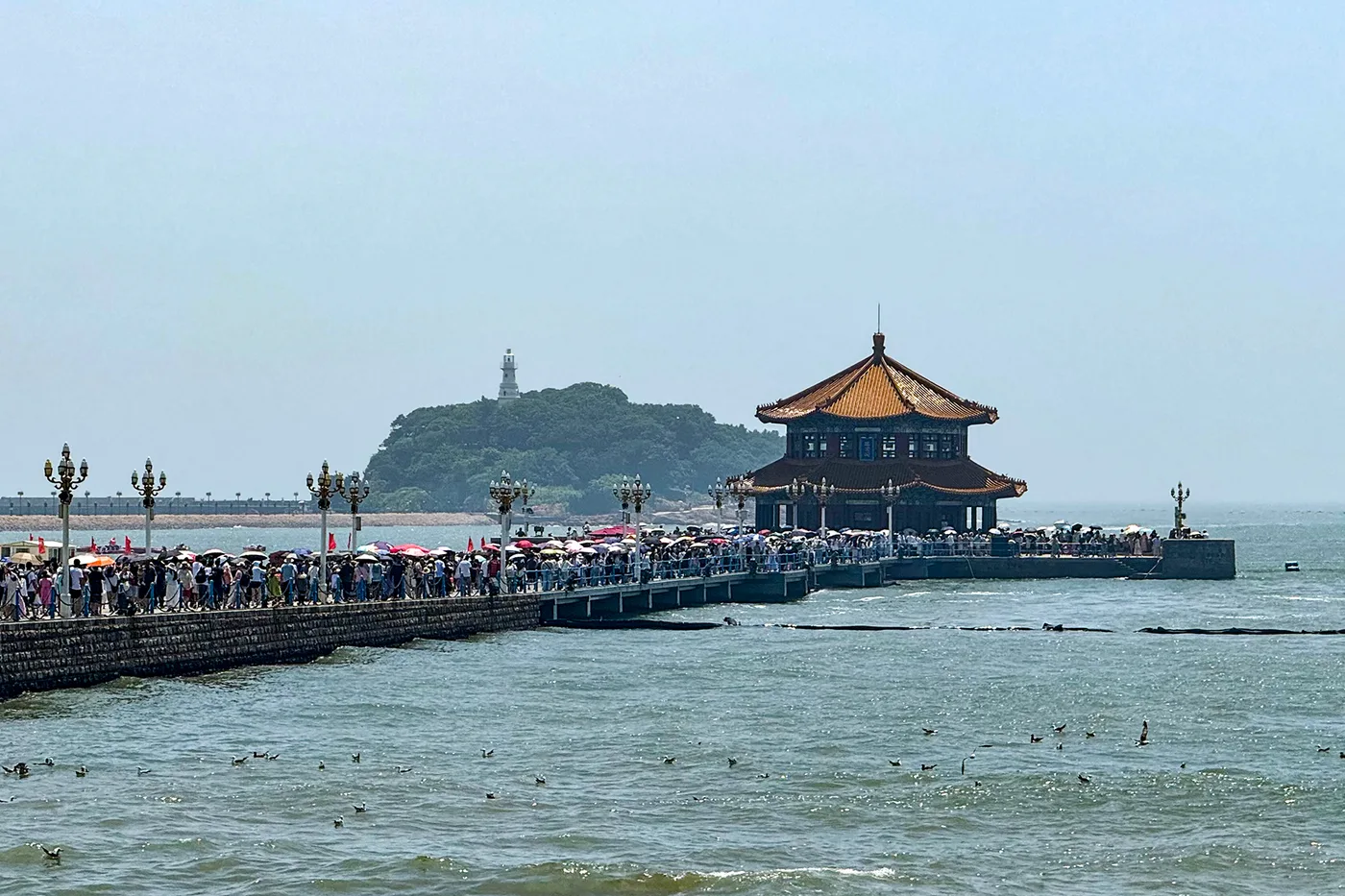
Cover photograph: Zhanqiao Pier and Little Qingdao Isle by Windmemories via Wikimedia Commons, licensed under CC BY-SA 4.0. The photograph was resized and converted to WebP; it is a general Shandong coast image, not a photograph of Yantai or Weihai.