Why Wuxi Fits a Slow Three-Day Break
Wuxi is a mid-sized Jiangsu city on the northern edge of Lake Tai, roughly 45 minutes from Shanghai and half an hour from Suzhou on the high-speed rail network. That position makes it unusually easy to slot into a longer China trip, but it also shapes the planning logic: you do not need a car, and you should not try to see everything. The city's sights cluster into three zones, the canal old town and central districts, the Lake Tai shoreline to the southwest, and the gardens and wooded hills around Xihui Park to the west, so a good itinerary groups each day around one zone rather than zigzagging across the map.
Your choice of arrival station matters more than it looks. Wuxi East Station handles most long-distance high-speed services and connects onward by metro, while the older Wuxi Railway Station is closer to the historic core and its canal streets. For a three-day stay, base yourself in Liangxi District, near Nanchang Street or the Sanyang Plaza area, where metro lines cross and evening walks come free. Staying out by the lake sounds romantic but leaves you dependent on taxis for dinner and for the gardens, and the in-between taxi rides eat the hours you came for.
Day 1: Canal Lanes and an Easy First Evening
Ease in gently. After dropping bags, walk the canal quarter around Nanchang Street and the Qingming Bridge historic district, one of the few stretches where the Grand Canal still threads through a lived-in city center rather than around its edge. The pleasure here is not a single monument but the texture: whitewashed walls, stone steps down to the water, arched bridges, laundry lines, small shrines and teahouses. Narrow lanes open onto the canal without warning, so leave the map in your pocket for an hour and follow whatever looks interesting.
In the evening, take a short taxi or metro ride to Huishan Old Town for clay figurine workshops and temple courtyards, or stay central and eat your way along the canal-side streets. Wuxi cooking is famously sweet, even by Jiangnan standards: braised spareribs glazed dark and sticky, soup dumplings, freshwater shrimp from the lake, eel, and seasonal vegetables. Order a couple of dishes to share, ask what is in season, and finish with a pot of local green tea. Dining rooms fill quickly at conventional meal times, so arriving slightly early is the simplest way to avoid a queue.
Day 2: Lake Tai and the Long View from Yuantouzhu
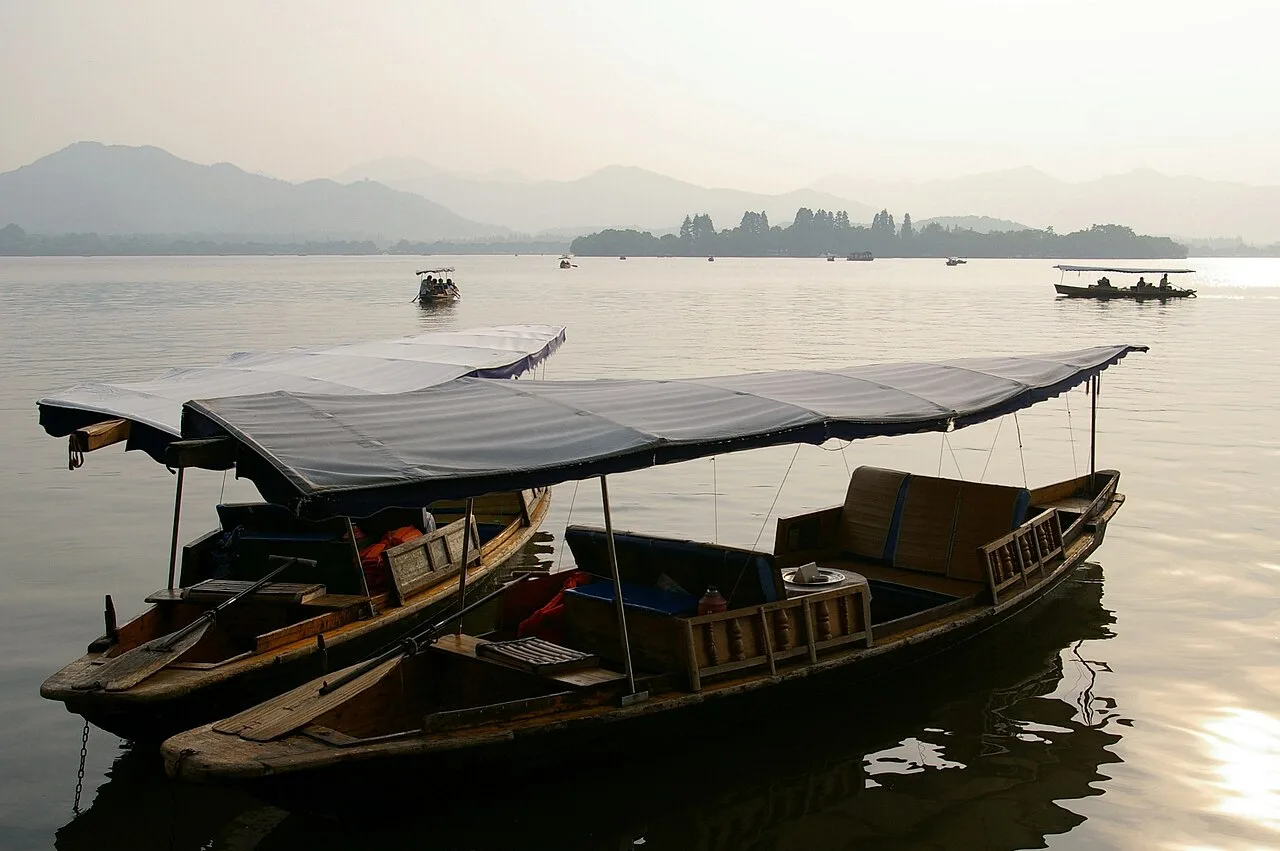
Give Lake Tai a full day. Yuantouzhu, the peninsula whose name means Turtle Head Isle, is the classic introduction: stone causeways reaching into the water, hills behind you, islands ahead, and boats that shuttle across to smaller islets and shrines. Plan on four to six hours including walking and a boat crossing. Arrive early for mist, birdlife and thinner crowds, or come late in the afternoon when the light softens and the tour groups thin out. Late March and early April bring the cherry blossoms that make this shoreline famous, and with them the heaviest visitor numbers of the year.
Choose one lake-area anchor per day rather than stacking several. The Lingshan Grand Buddha and the adjoining Nianhua Bay resort complex offer a very different, more monumental Buddhist experience and need at least half a day on their own; the Meiyuan plum garden is a February and March highlight. Either pairs awkwardly with Yuantouzhu in a single afternoon. If the weather turns, remember that the shoreline is exposed to wind, rain and summer sun, and that a lake in fog can be atmospheric for an hour and frustrating for four.
Day 3: Classical Gardens and the Xihui Hills
Save the gardens for your last day, when you know the city's rhythms and can slow down properly. Jichang Garden is the connoisseur's choice: a Ming-era composition of rockery, water and framed views, quieter than the headline gardens of Suzhou and all the better for it. Nearby, Li Garden spreads along the shore of Lake Li with bridges, corridors and pavilions built for looking out rather than looking at, and Xihui Park climbs wooded slopes above the Huishan springs, with a cable car for those who would rather ride than walk.
This is a day to sit down repeatedly. Gardens in Jiangnan are designed as sequences, and rushing through them flattens the experience into a series of photo stops. Visit at opening, when the light is low and the paths are empty, then take tea. The Donglin Academy and Huishan Old Town sit close by if you want more, and the city museum is a sensible wet-weather substitute. Keep your voice down, stay off the rockeries and do not touch the bonsai or the water, which is often a working part of the design rather than decoration.
Transport, Weather and Accessibility
Wuxi's metro is clean, inexpensive and signed in English, but it will not get you everywhere. Use it for the railway stations and central districts, then finish with a short taxi or ride-hailing trip for the lake and garden sights, which are spread out and often set back from main roads. Ride-hailing apps tied to international cards work well, and drivers generally expect them; keep your hotel's name and address written in Chinese characters to show. Canal boats are a pleasant way to see the old town from the water and cost little, but they are slow, so treat them as sightseeing rather than transport.
Weather planning shapes the whole trip. Spring is mild and blossom-driven, autumn brings clear light and comfortable walking, and the plum rain season of early summer delivers weeks of damp grey days. Late summer is hot, humid and occasionally brushed by typhoon remnants. Build one indoor fallback into each day, carry a light rain shell rather than an umbrella that turns inside out on the lake, and wear shoes with grip for wet stone. For accessibility, note that metro stations are generally step-free with lifts, but garden paths, canal lanes and old-town bridges are a different matter: cobblestones, thresholds and stairs are common. Li Garden and the flatter lakefront paths are more manageable than hill gardens, and staff at ticket offices are usually helpful if you ask about step-free routes before buying.
Eating Well and Treading Lightly
Food is not a side note in Wuxi; it is part of the itinerary. Start mornings with noodles or soup dumplings, graze through the day on lake shrimp, water chestnuts and seasonal greens, and make at least one dinner a proper sit-down meal with shared dishes. Autumn brings osmanthus into everything from cakes to wine, and the local tea culture is worth an unhurried hour in a teahouse rather than a takeaway cup. As a rule, eat where the room is full of local families, and be willing to point at what looks good on a neighboring table.
A few habits make you a better guest. Gardens and temples are contemplative places, so keep phone calls brief and voices low; ask before photographing worshippers or anyone at prayer, and never pose on altars or rockeries. Payment is overwhelmingly cashless, so set up a mobile wallet before you arrive, and carry your passport, since hotels are required to register foreign guests. Tipping is not expected. Carry tissues, expect occasional squat toilets in older neighborhoods, and step aside on narrow lanes. Wuxi's charm is that it is a working city, not a stage set, and the most rewarding moments are usually the quiet ones.
Further China Planning
For a wider route, compare this itinerary with China by high-speed train and China travel by month. Keep the order flexible when weather, reservations or transport conditions change.
Before departure, review the China entry guide and China travel safety guide. Confirm current opening hours, ticket rules and local transport through official channels.