Three Landscapes, Three Different Kinds of Effort
Zhangjiajie is vertical drama. Thousands of narrow sandstone pillars rise out of subtropical forest, often wrapped in cloud, and the viewing platforms sit on clifftops connected by shuttle buses and a handful of lifts. The walking is real but frequently broken up: you ride, you walk a rim path, you ride again. Jiuzhaigou is not a mountain climb at all in the traditional sense — it is a long, high valley of terraced lakes, waterfalls and travertine pools, toured mostly by park bus with boardwalk sections between stops. Huangshan is the most classical of the three: a granite massif of stepped stone staircases, twisted pines and sea-of-cloud viewpoints, where the ascent is the experience rather than something you skip.
That difference matters more than any ranking. A traveller who loves ridge walking may find Jiuzhaigou too passive; someone with unreliable knees may find Huangshan punishing; a photographer chasing mist and pinnacles will get more from Zhangjiajie in poor weather than from either of the others. Before comparing details, decide which of these three days sounds like yours: hopping between clifftop viewpoints, drifting through a lake valley on boardwalks, or climbing stone steps for two hours to reach a viewpoint at dawn.
Stairs, Altitude and What Your Body Will Notice
Huangshan is the stair-heavy option. Trails are cut as steep stone steps, sometimes irregular in height, and even visitors who take the cable car up will still cover a lot of up-and-down on the summit paths. Zhangjiajie is less relentlessly vertical thanks to its shuttle-and-lift system, but individual trails can still involve hundreds of steps, and the glass bridges and cliff walkways are not the place to discover a fear of heights. Jiuzhaigou's boardwalks are largely flat, making it the gentlest of the three on foot — though its altitude is the highest, with the valley sitting well above where most visitors sleep, so slow first hours and good hydration matter more than fitness.
Altitude is worth separating from effort. Jiuzhaigou can leave a fit traveller breathless while a steep Huangshan staircase mostly asks for patience and a sensible pace. If you are travelling with children, older relatives or anyone managing a heart or respiratory condition, treat the high-altitude valley as the one requiring the most caution and the most conservative first day. Whatever you choose, bring shoes with grip, plan for weather that changes faster than the forecast, and build in an easy day afterwards rather than scheduling a transfer the same evening.
Getting There, Gates and the Shuttle System
None of these parks is a walk-in from a city street. Each is a large scenic area with its own entrance gates, internal shuttle network and separate ticketing, and in some cases those tickets are timed or tied to a specific gate. Zhangjiajie's wider scenic area spreads across several distinct zones with their own entrances, so the gate you choose shapes your first morning; Jiuzhaigou funnels visitors through a main gateway into a bus system that runs up the valley; Huangshan has multiple approaches with cable cars that may or may not be running depending on season and maintenance. Assume you will need to reserve, and assume the reservation is for a specific date and entrance.
Transport to the regions is a planning question in itself. Zhangjiajie and Huangshan both have their own airports and rail access nearby, with the last stretch usually covered by bus, taxi or pre-booked transfer. Jiuzhaigou sits in a high Sichuan valley, reached by a scenic but long overland route or by air to a regional airport, with the final leg by road. Because schedules, seasonal closures and shuttle rules genuinely change, verify current entry requirements, ticket channels, transfer times and whether your chosen cableway or route is operating on your dates before you lock in hotels — and build a buffer day around any long transfer.
Weather, Crowds and Choosing Your Season
Spring and autumn are the safe recommendations for all three: milder temperatures, better visibility and more comfortable walking. Zhangjiajie's pillars are at their most atmospheric in mist and light rain, which is beautiful but can white out a viewpoint entirely, so give yourself more than one morning there. Jiuzhaigou's lakes are famous in autumn colour but that is also its busiest window, and winter can close sections or make access complicated. Huangshan is superb in clear autumn weather and genuinely dramatic in snow and rime ice, but winter conditions on staircases demand traction aids and a flexible plan.
Crowds follow predictable patterns: Chinese public holidays and summer school breaks are busy everywhere, and weekends are busier than weekdays. Within a park, the earliest shuttle or cable car of the day usually buys you a calmer first two hours, and the far end of a valley or trail is quieter than the entrance zone. Rather than chasing a perfect empty photograph, plan your days so the headline viewpoint happens early and the crowded middle hours are spent walking between stops. Check the official park channels close to departure for temporary closures, capacity limits and weather warnings.
Where to Sleep and How Long to Stay
Accommodation shapes the experience as much as the trails. At Huangshan, staying on the summit overnight is the classic move — it puts you at the viewpoints for sunrise and sunset, but rooms are limited and should be booked far ahead; the alternative is a hotel in the valley town with an early start. Zhangjiajie works well from a base town or village near your chosen gate, with several days letting you cover different zones without long daily transfers. Jiuzhaigou is usually paired with a stay in the nearby town and, often, a second day in the wider region, since the journey in and out is significant.
As a rule of thumb, give Huangshan two nights if you want a summit stay, Zhangjiajie three to four days to see more than one zone at a reasonable pace, and Jiuzhaigou two days in the park area plus travel days. A comfortable first trip is one park done properly rather than three done hastily; if you have more time, pair Huangshan with a nearby older town or Jiuzhaigou with other Sichuan highland scenery. Then run a simple checklist before booking: confirm which gate and ticket type applies to your dates, check whether your intended cable cars or trails are operating, match your daily walking to your group's ability, keep one weather buffer day, and pack layers, rain protection and grippy shoes.
Planning links and cover photo source
For related planning, read Zhangjiajie first-time itinerary, Jiuzhaigou and Huanglong route, Huangshan first-time itinerary. Check each operator's current visitor notice before paying, because access, reservations, transport and weather procedures can change.
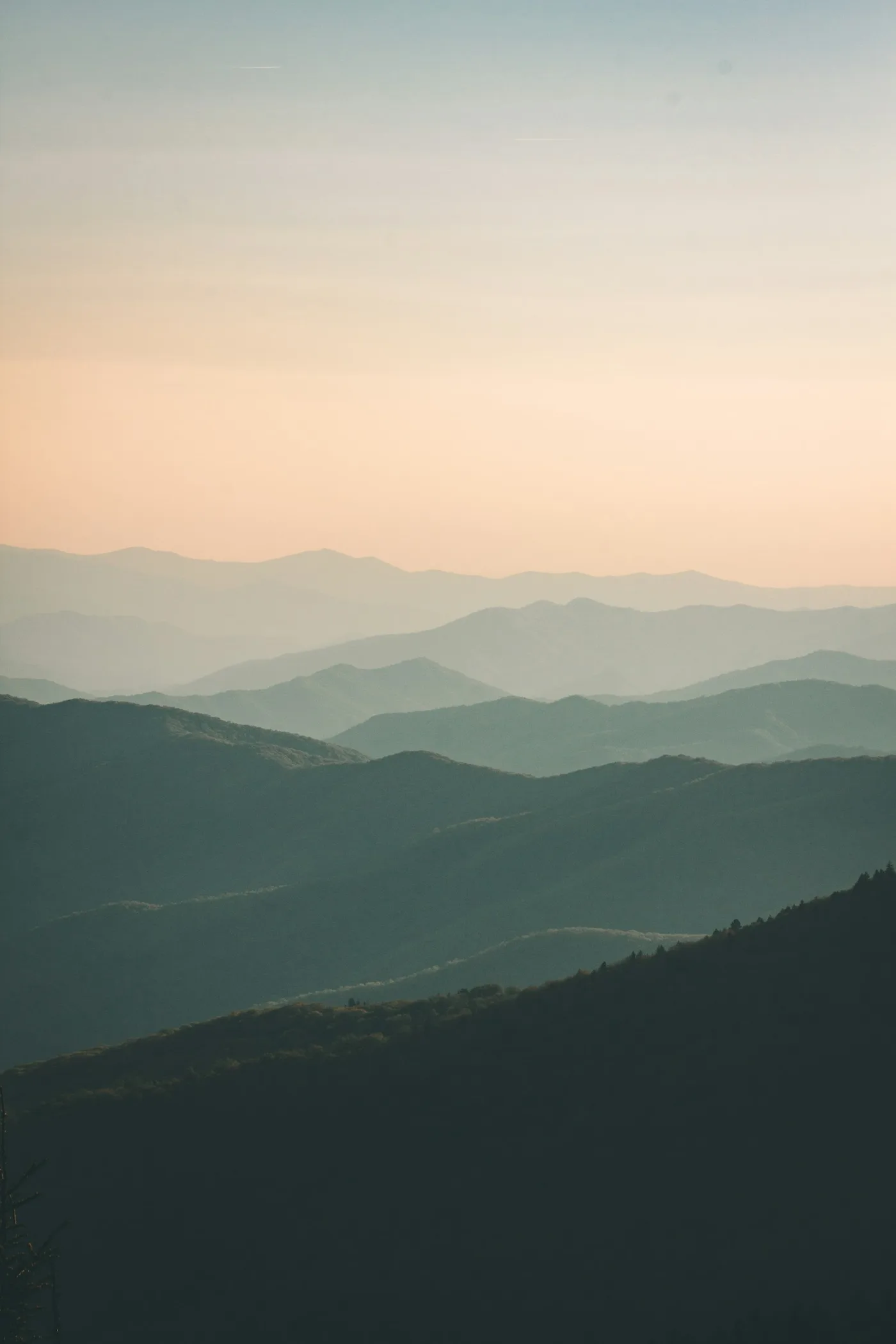
Cover photo: layered mountain ridges at dusk via Unsplash, used under the Unsplash License. It is a general mountain image, not a specific national-park photograph.


