Why Kaifeng Rewards Three Unhurried Days
Kaifeng's story is one of accumulation rather than display. Successive cities were built on the same ground, and floods and silt from the Yellow River buried much of what came before, so the Northern Song capital that travellers come looking for is largely below street level or preserved in fragments. That single fact changes how you should plan a visit. This is not a city of grand intact monuments; it is a city of layers, told through museums, a handful of surviving structures, and the habits of the people who still live inside the old walls.
The three-day structure that works best gives each mode of seeing its own day: one for Song history and heritage interpretation, one for old-city lanes and everyday neighbourhood life, one for food, evenings and unhurried wandering. It also keeps you out of the sun during the hottest hours, which matters more than most guides admit. If you only have one full day, choose the museum-plus-lanes combination and leave the large reconstructed parks for a return trip.
Arriving from Zhengzhou or Luoyang, and Getting Your Bearings
Most international visitors reach Kaifeng by high-speed rail, usually from Zhengzhou, the provincial capital and the region's main air gateway, or from Luoyang, whose grottoes and museums pair naturally with a Henan itinerary. Journeys are short enough to make Kaifeng an easy add-on rather than a separate expedition. Timetables, station pairs and journey lengths change with the season and with service adjustments, so confirm your train on an official booking app a few days before departure rather than relying on any fixed schedule you read online, including this one.
Kaifeng's stations sit in different parts of the city, and the high-speed station is not the one closest to the old town. Check which station your ticket uses and how far it is from your hotel before you book, and plan a taxi or ride-hailing transfer rather than assuming a short walk. Staying inside or just beside the old city, near the lake cluster or the Drum Tower area, will save you time and let you walk to most of what follows; set up a payment app linked to your home card in advance, and carry a little cash as backup.
Day One: Reading the Song Dynasty Slowly
Begin with context rather than spectacle. The city museum is the right first stop: its displays on the area's deep stratigraphy, Northern Song urban life and river history explain why so little of the old capital stands above ground, and they make everything you see afterwards legible. From there, move to the genuine survivors. The Iron Pagoda, clad in glazed bricks, is the city's most affecting old structure; the working Buddhist temple nearby gives you a living religious site rather than a display; and the Longting pavilion landscape sits on the footprint of the Song imperial palace. Verify opening days, passport requirements for entry and any advance booking rules before you set out.
Kaifeng's large reconstructed attractions need to be understood for what they are: heritage interpretation, not antiquity. The best known is built around a famous Song painting of riverside city life, with costumed performances, replica streets and evening shows. Approached as an immersive stage set, it can be enjoyable and genuinely useful for imagining the eleventh-century city; approached as a historic site, it will disappoint. Check performance times and seasonal closures, and decide honestly whether the crowds and theatricality suit you. Skipping it for a longer museum afternoon is a perfectly good choice.
Day Two: Old City Streets and Everyday Life
The second day belongs to the lanes inside the old walls, where Kaifeng feels least like a destination and most like itself. Historic shopping streets, courtyard houses, small hardware shops and the Hui neighbourhood around the old mosque reward unhurried walking, and small exhibits relating to the city's historic Jewish community add another layer to a story of long-distance trade and coexistence. A simple test separates authentic neighbourhood life from staged heritage: real streets have no ticket gate, weathered signage in Chinese only, and locals buying things rather than posing for photographs.
Plan your walking for morning and late afternoon. Midday heat in summer is punishing, and the light is unkind to both photographs and tempers, so use those hours for a long lunch, a museum or a teahouse. The city wall and the lake circuit make an easy, flat dusk loop with good orientation landmarks, and they are the best place to watch the city shift from working day to evening. Ask your hotel to mark a few lanes on a paper map as backup, since narrow alleys can confuse phone navigation, and carry rain protection from early summer onwards.
Day Three: Food, Evenings and a Sensible Finish
Kaifeng's food is the reason many Chinese travellers come at all, and it is best approached through breakfast. Soup dumplings, peppery beef broth, fried stuffed pancakes and sweet almond drinks are the morning staples, eaten quickly at crowded tables where the turnover is high and the menu is short. At night, the market streets around the Drum Tower area fill with grilled skewers, bucket chicken and snacks that change with the season. Vegetarian travellers should ask directly rather than assume, and everyone should check current evening hours locally, since market rhythms vary with weather and holidays.
Keep your final evening loose. A lakeside walk, a night market graze and, if timings allow, a short teahouse performance of regional opera make a better last impression than one more ticket queue. On your final morning, revisit whichever lane you liked most, then allow a generous buffer for the transfer to the station, whether you are heading back to Zhengzhou for a flight or onward to Luoyang. Verify your onward train and airport connection the day before, and keep the plan flexible if summer storms or holiday crowds intervene.
Planning links and cover photo source
For related planning, read Luoyang in 3 Days, Nanjing first-time itinerary, China food travel guide. Check each operator's current visitor notice before paying, because access, reservations, transport and weather procedures can change.
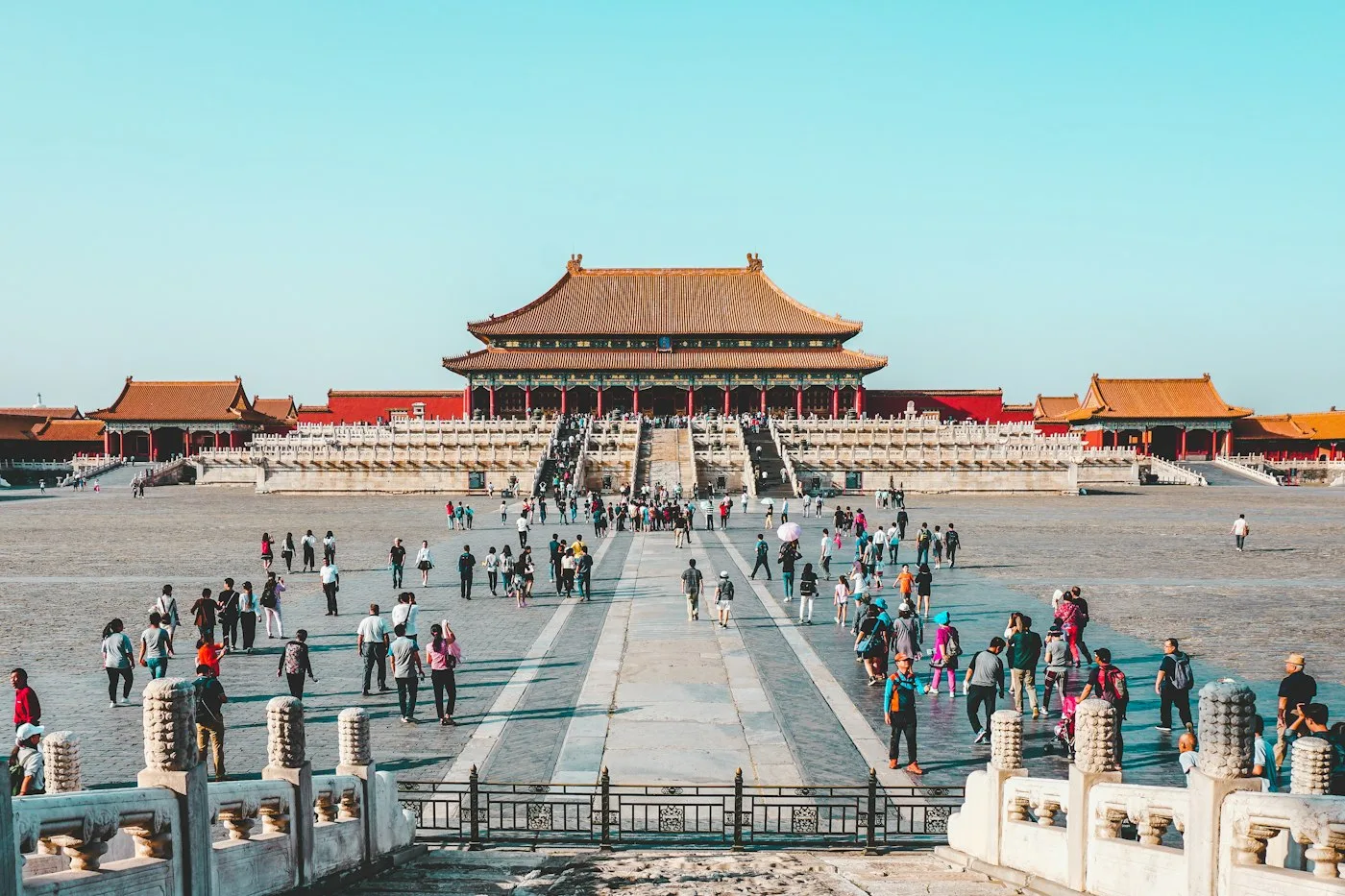
Cover photo: visitors crossing a courtyard in the Forbidden City by Unsplash, used under the Unsplash License. It is a neutral heritage image, not a photograph of Kaifeng.


