Reading the Light Across a Very Large Country
China runs on a single official time zone despite spanning a landmass comparable to the whole of Europe, so sunrise and sunset rarely line up with the clock the way they do at home. In the far west, summer evenings can stay bright long past dinner; in the northeast, daylight swings the other way with the seasons. Check sunrise and sunset for your specific dates and location rather than assuming, and build your day around the two hours after dawn and the hour before dusk, when the light gets low, warm and directional.
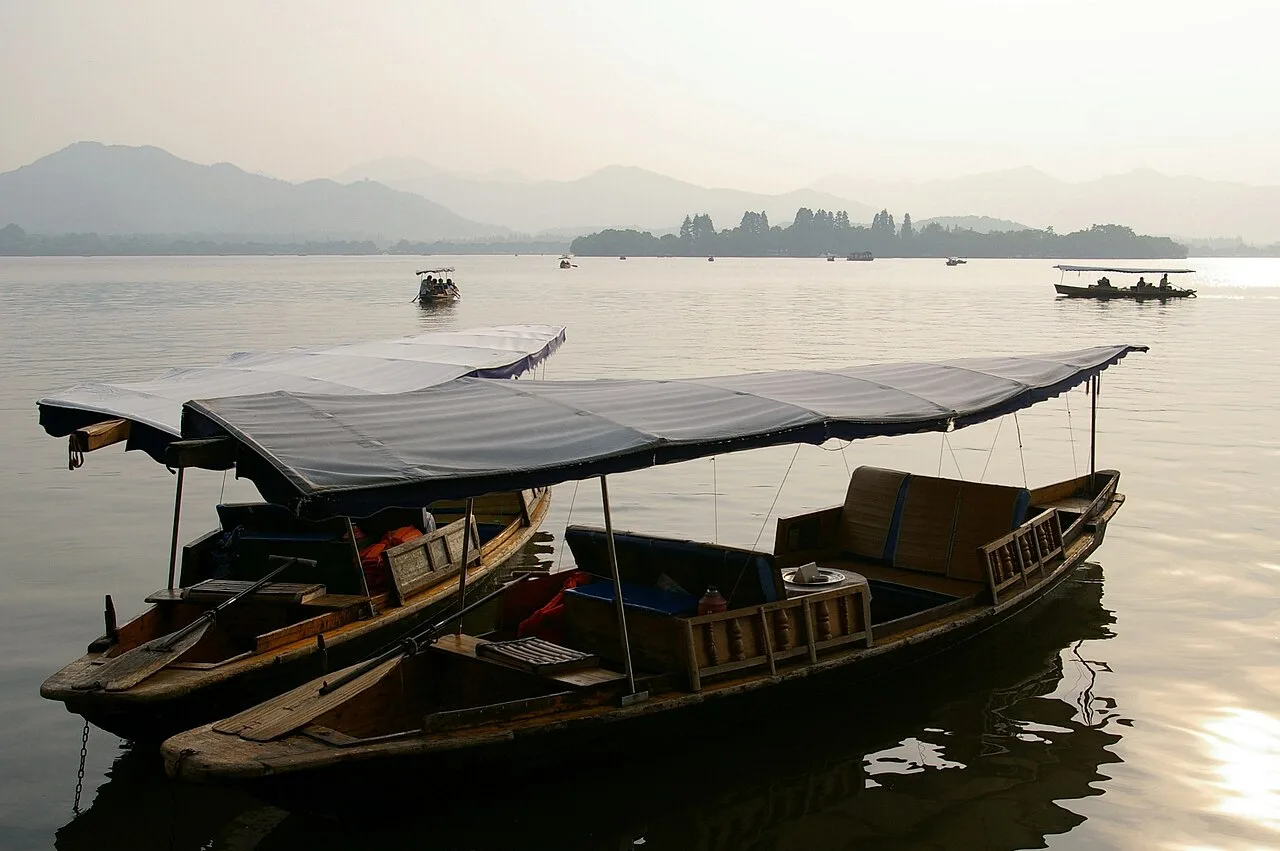
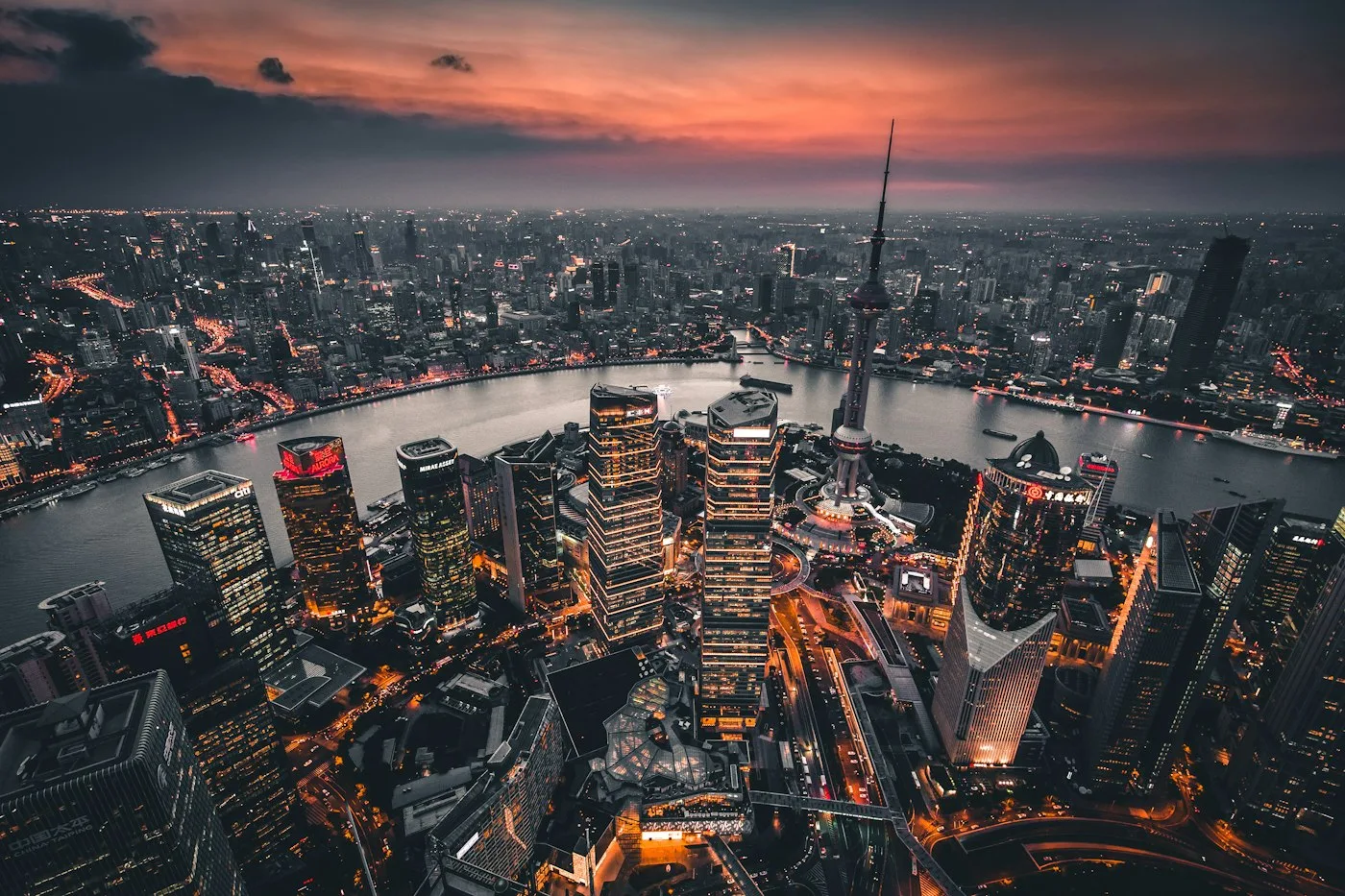
Midday is often harsh or hazy, but haze is not always the enemy. It separates ridgelines into layers, softens distant karst peaks into silhouettes, and gives temple roofs and city skylines a painterly depth that clean air cannot. City blue hour is reliably rewarding from rooftops, riverbanks and bridges, so carry a small tripod or learn to brace against walls and railings. Weather is unpredictable, so if a particular frame matters to you, leave buffer days rather than pinning the whole trip on one sunrise.
Crowded Landmarks: Patience Beats Confrontation
The famous sites draw crowds on predictable rhythms: tour groups mid-morning, local families on weekends and public holidays, queues that build earlier than you expect. Arriving at opening or staying into the last hour usually does more for your photographs than any lens. Popular attractions increasingly use timed entry or advance online booking, sometimes tied to ID, and these systems change — confirm current procedures on official ticketing channels before departure, and ask staff on site where tripods, flash or selfie sticks are restricted.
Composition is a better tool than patience alone. Shoot upward to trade the crowd for rooflines and sky, use doorways, corridors and tree branches as natural frames, and wait for the small gaps that always appear in a moving crowd. A neutral density filter and a slightly longer exposure can blur a plaza into something calm. What you should not do is block a path, stand in a queue line for a shot, or argue with a guard. If staff ask you to move or stop, comply immediately and without negotiation — their instruction outranks anything you read online.
Portraits, Consent and Minority Communities
It helps to separate two ideas that travelers often blur. A public view is something you can photograph from a public place: a street scene, a facade, the general activity of a market. Permission to photograph a specific person, a household or a ceremony is a different thing entirely, given by the people involved, and it is never implied by the fact that someone is visible. Ask with a smile and a gesture toward your camera, learn a simple phrase such as "keyi ma?" (may I?), and treat a no — spoken, gestured or simply a turned shoulder — as complete and final. Children, elders and people at work deserve the same courtesy you would extend at home.
Many regions of China are home to distinct ethnic minority communities whose dress, markets and festivals attract cameras, and the difference between a good photograph and a bad encounter is usually manners. Treat a village as someone's home rather than a set: hire a local guide, buy something, ask before photographing people, and skip ceremonies that are not open to visitors. Avoid paying strangers to pose in traditional dress, and avoid framing people as curiosities or props for a travel narrative. If you would not publish the image with the person's name and context attached, it probably should not be published at all.
Temples, Museums and Restricted Sites
Temples and monasteries often allow photography in courtyards while prohibiting it inside halls where images are consecrated or worshippers are praying. Read the signage, watch what local visitors do, and when in doubt, don't shoot. Do not photograph people mid-prayer, monks at study or active ceremonies without clear permission, and never use flash around painted surfaces, murals or sculpture. Dress modestly, keep your voice low, avoid stepping on thresholds, and do not point your feet toward altars while crouching for a low angle.
Museums vary widely: many permit non-flash photography of permanent collections while restricting special exhibitions, and tripods and selfie sticks are commonly banned for safety. Drones are the biggest trap. Rules differ by city, by site and by heritage area, and some locations require permits that are not available to short-stay visitors. Check official sources before you pack one, never fly near crowds, airports, military areas or historic structures, and accept that security staff may simply say no. Posted rules and staff instructions are the authority; treat any blog post, including this one, as background rather than permission.
Backups, Connectivity and Captions That Travel Well
A simple kit covers most trips: one camera body, two lenses, two memory cards rotated daily, spare batteries, a compact power bank, a card reader, a small SSD or laptop, a universal adapter, a lens cloth, an ND filter, a lightweight tripod if your sites allow one, and a rain cover. Back up every evening — card to drive first, then a second copy to cloud storage or a separate device when bandwidth allows. Keep one card untouched in your bag until you are home, so a single failure never costs you the whole trip. Practise restoring a file once before you leave, because an untested backup is only a hope.
Mobile coverage is generally strong in cities and towns, so buying a local data plan or setting up an eSIM before departure is straightforward, though some international apps and services may be unavailable or behave differently in China. Verify current guidance from official sources before you travel, and download offline maps, translations and your booking confirmations in advance. Captions deserve the same care as the images: name places accurately, describe what you actually saw rather than what you assume, credit guides and fixers who helped you, and avoid captioning people as anonymous scenery. A photograph that explains itself honestly will always travel further than one that simply looks exotic.
Planning links and cover photo source
For related planning, read China cultural etiquette guide, China SIM and eSIM guide, China attraction ticket guide. Check each operator's current visitor notice before paying, because access, reservations, transport and weather procedures can change.
Cover photo: Shanghai's Lujiazui skyline at dusk via Unsplash, used under the Unsplash License. It is a neutral city photograph, not a claim that every scene in the article is Shanghai.