Why this East China route works
The three cities are geographically close but emotionally different. Shanghai gives you dense urban energy, river views and a wide choice of museums and restaurants. Hangzhou makes room for water, hills, tea and long walks around a lake. Suzhou rewards patience with garden framing, narrow lanes and canals that are easiest to enjoy before the busiest part of the day. The contrast gives a first trip more texture than staying in one megacity for the whole week.
The route also works well by rail, but station transfers still take time. Read our Shanghai itinerary, Hangzhou guide and Suzhou garden route for city detail; this article focuses on the order, luggage and pace of a combined visit.
Before you book: bases, rail and luggage
Shanghai is usually the easiest arrival city because flights, hotels and transport choices are broad, but the best direction depends on your international ticket. Choose hotels near a useful metro corridor rather than assuming the most famous skyline area is the most convenient base. In Hangzhou and Suzhou, a hotel near a rail station may simplify the transfer while a lake or garden district may improve the evenings; compare the two trade-offs before booking.
Use China Railway 12306 for exact train and station details, and keep passport information consistent across every booking. Shanghai Hongqiao, Hangzhou East and Suzhou stations are major transport hubs, not attractions beside every hotel. Allow time for the hotel-to-station ride, security, waiting hall, luggage and the final metro or taxi transfer. The high-speed train guide explains why a short rail segment still occupies a meaningful part of a travel day.
Save each hotel's Chinese address and check foreign-passport registration before paying. Keep a small day bag with documents, medication, water and chargers during the transfers. If your luggage is large, ask the hotel about storage and avoid changing bases every night; a slightly longer taxi ride is often easier than dragging a case through a station and a garden lane.
Days 1-2: Shanghai's river, neighborhoods and museums
Use the first Shanghai day to understand the city through one connected area. The Bund and Pudong skyline can be a strong opening route, but check the weather and crowd conditions before committing to a long riverfront walk. Add one nearby museum, historic lane or meal rather than crossing the city for several unrelated stops. A skyline view is more satisfying when you have time to notice the river, bridges, architecture and changing light.
On day two, choose a neighborhood such as the former French Concession, a museum cluster or a market-focused route. Shanghai's appeal is scale, so the most practical plan is to select a district and explore it deeply. Use the metro for long transfers, save the Chinese destination name for ride-hailing, and keep a café or indoor gallery as a rain plan. Our getting around Chinese cities guide covers exits, pickup points and the details that maps often hide.
Shanghai food can be a gentle introduction to regional eating: noodles, dumplings, soup dishes and local specialties are easy to sample in small portions. Check ingredients, prices and queues, and do not assume a polished restaurant is automatically suitable for every allergy. The China food guide offers ordering and safety context before the route becomes more tea- and garden-focused.
Days 3-4: Hangzhou around West Lake and tea country
Travel to Hangzhou on day three and keep the arrival afternoon light. West Lake is not one single viewpoint; it is a large landscape of causeways, bridges, gardens, temples and changing shorelines. Choose a manageable section based on weather, mobility and hotel location. A slow walk with a tea break usually gives a better experience than attempting the full lake perimeter immediately after a station transfer.
Use day four for the part of Hangzhou that interests you most. You might pair a second West Lake route with a museum, a temple or a tea-growing area, but check current transport and entry arrangements before leaving the center. Hills and rural roads can make a short-looking trip surprisingly long. If rain reduces visibility, choose a confirmed indoor venue and return to the lake when the light improves rather than forcing a panoramic view.
Hangzhou is a good place to plan one unhurried meal and a tea experience, but do not treat a tea village or restaurant recommendation as a guarantee of current quality or access. Ask about prices before ordering, confirm the return route and carry a translated note for dietary needs. Use the Hangzhou first-time guide for neighborhood choices and the current official venue notice for final details.
Days 5-7: Suzhou gardens, canals and a flexible final day
Move to Suzhou on day five and choose one classical garden as the day's anchor. Gardens are compact on a map but dense in detail, and crowds can make a short visit feel hurried. Check the current entry process, arrive with enough time to pause in each courtyard, and avoid promising several famous gardens in one morning. A canal-side evening or a quiet local meal can complete the day without another ticketed attraction.
On day six, choose a second garden or historic neighborhood and pair it with a canal route, museum or silk-related visit. Suzhou's appeal comes from transitions: a framed view, a small bridge, a lane opening onto water. Respect residents, keep voices low in active communities and ask before photographing people. If you want a water town excursion, verify the road or rail transfer and return time rather than assuming it is a short add-on from the city center.
Use day seven as a weather and departure buffer. Repeat the garden or neighborhood you enjoyed, visit an indoor museum, shop for tea or silk through a traceable retailer, and keep luggage and station time separate from sightseeing. A final relaxed breakfast is better than adding a distant water town before a flight or a tightly timed train. The Suzhou first-time route has more detail on garden pacing and alternate plans.
Rain, accessibility, food and family pacing
Rain changes this route more than it changes a museum-heavy city break. West Lake paths, gardens and canals can be slippery, while the Bund and old lanes may become crowded under umbrellas. Wear shoes with grip, carry a compact rain layer and keep one confirmed indoor option in every city. Do not assume a boat, garden interior, tea village or evening cruise will follow an old timetable.
Visitors with limited mobility should ask about step-free entrances, garden paving, toilets, boat boarding, station lifts and the distance from a taxi drop-off. Historic gardens and water-town lanes can include thresholds, narrow passages and uneven stone. Families may prefer one major garden or lake section per day with a planned snack and rest stop. The accessible China travel guide gives a wider checklist, but each venue's current response is decisive.
For food, keep meals regional but flexible: Shanghai's lighter dishes, Hangzhou's tea and lake traditions, and Suzhou's noodles and sweets are all easier to enjoy when you order gradually. Show an allergy or dietary note, ask about stock, seafood and meat, and use clear-price restaurants. The China safety guide covers documents, transport, crowds and common pressure tactics.
How to change the route for six or eight days
With six days, keep two nights in Shanghai and choose either Hangzhou or Suzhou for three nights, adding the other only as a carefully planned day trip. Trying to give all three cities equal time can leave you with two station days and no slow lake or garden morning. With eight days, add a second Hangzhou tea or museum day, a Suzhou water town excursion or a more relaxed Shanghai departure rather than another city.
If you are continuing to Beijing, Xi'an or another region, check the next station or airport before buying the final ticket. Weather, crowds and luggage can make a late transfer more tiring than the map suggests. Use the China itinerary planner to balance the wider trip and keep one flexible block after every major intercity move.
Planning sources and cover photo note
Reviewed October 22, 2026. Use China Railway 12306 for current trains and station information, the Shanghai, Hangzhou and Suzhou municipal portals for public notices, and each garden, museum, park, boat operator or attraction's official notice for entry, opening, reservation and transport details. We avoid fixed prices and old schedules because these can change. Verify the complete route for your dates.
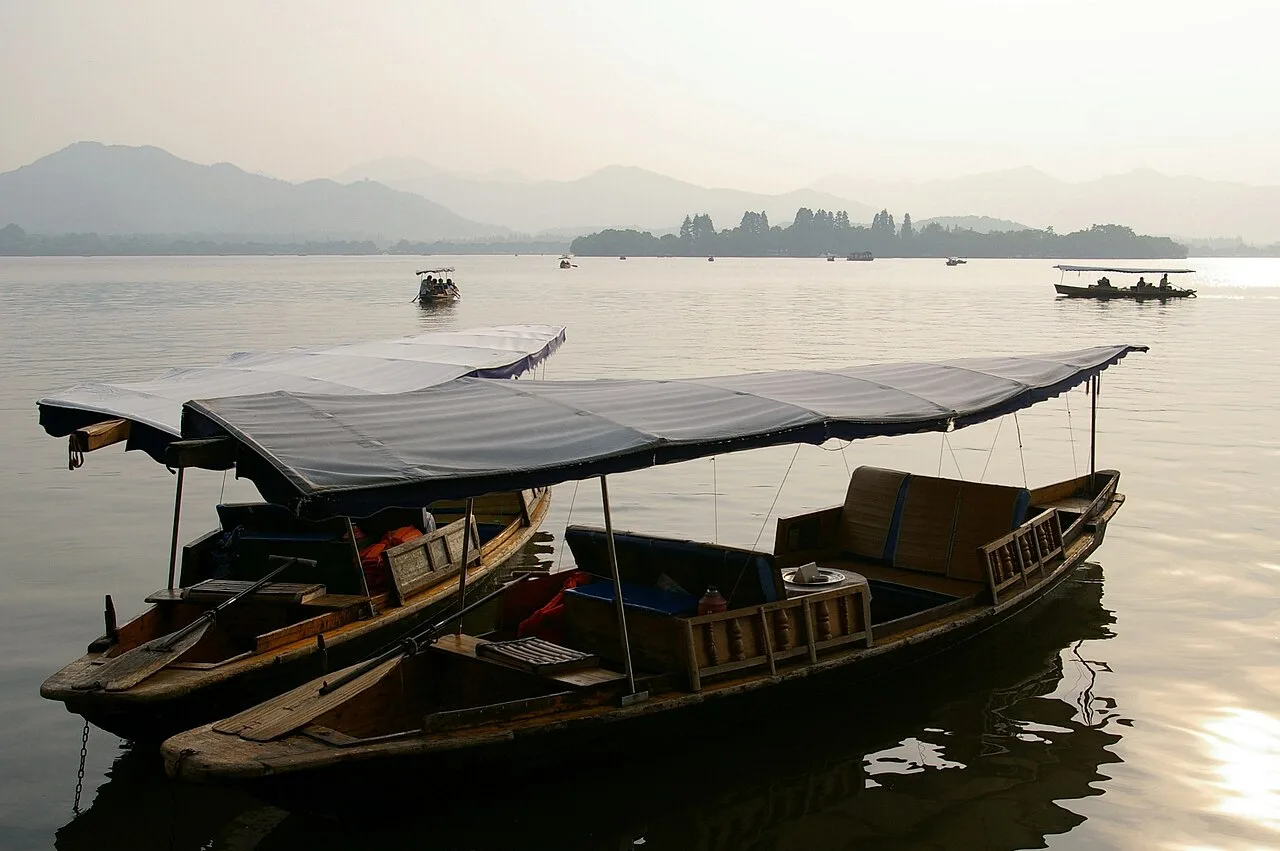
Cover photograph: Boats on the West Lake in Hangzhou before sunset by Jakub Hałun, via Wikimedia Commons, licensed under CC BY-SA 3.0. The real photograph was resized and converted to WebP for this site; the adapted image remains under the same license.