Why Chengdu and Chongqing work as one trip
The route works because the contrast is the point. Chengdu gives you flatter walks, parks, neighborhood breakfasts and time to sit with a cup of tea. Chongqing asks you to read the city in layers: a metro platform may be above a road, a building entrance may be on another level, and a riverfront viewpoint may require more stairs than a map suggests. Treating both places as generic food cities misses what makes the pairing memorable.
Six days is enough when you protect the transfer day and avoid adding a distant excursion to every afternoon. Read our Chengdu first-time guide and Chongqing first-time guide for deeper city-specific detail; this article focuses on how to connect them without exhausting yourself.
Before you book: direction, stations and where to stay
A simple direction is Chengdu first, then Chongqing, especially if you want a gentler start before the hillier city. The reverse also works if your international flight or wider route makes Chongqing the better arrival point. Compare the complete airport-to-hotel journey, not only the rail duration, and leave a real buffer around the train day. Our high-speed train guide explains passport details, station security, luggage and why a city name is not enough when several stations serve it.
In Chengdu, choose a hotel near a dependable metro corridor and decide whether you value a quiet neighborhood, easy access to the panda route or evening food nearby. In Chongqing, Jiefangbei and central Yuzhong are convenient for a first visit, while Jiangbei or Nan'an can suit travelers who prefer newer streets or a riverfront base. Confirm that the hotel accepts foreign passports, save its Chinese address offline, and keep the arrival route separate from sightseeing time.
Set up two payment methods, a working data plan and a small cash reserve before the first train. Save attraction names in Chinese characters, because a translated name and a ride-hailing destination may not match. The China payment guide and SIM and eSIM guide cover the preparation that makes small daily decisions easier.
Days 1-3: a slower Chengdu plan
Use the first morning for the Chengdu Research Base of Giant Panda Breeding or another current official panda venue that fits your dates. Arrive according to the venue's current entry instructions, expect walking between areas, and do not assume a short online queue means a short door-to-door visit. The pandas are the anchor, not a reason to fill the rest of the day with distant attractions. Carry water, follow staff instructions and keep your distance from animals.
After the panda visit, return to the city for a gentle afternoon around a park, tea house or one compact historic neighborhood. Kuanzhai Alley, People's Park and nearby streets can be combined selectively, but they do not need to become a race across every named lane. Sit down for tea, watch local routines and use the afternoon to recover from an early start. Rain, heat and crowd levels are good reasons to shorten the route.
Make the second Chengdu day about food and neighborhoods rather than another long transfer. Try Sichuan dishes gradually, ask about chili and numbing pepper, and order enough plain rice, vegetables or noodles for a balanced meal. Our China food guide covers ingredients, allergies, ordering and hygiene. A busy restaurant with clear prices is often easier for a first meal than a famous place where the menu and queue are difficult to understand.
Keep the third Chengdu day flexible. You might choose a museum, a second tea-house morning, a food-focused walk or a nearby cultural area after checking current access. If you want a short outing beyond the center, verify the entire return route before reserving it. Do not add a distant mountain, ancient town and panda visit to the same day; the value of Chengdu is its slower rhythm, and the next morning is a train day.
The transfer: Chengdu to Chongqing without losing a day
Treat the Chengdu-to-Chongqing train as a half-day travel block even when the rail segment looks short. Allow time to leave the hotel, reach the exact station, pass security, find the waiting area, board with luggage and make the final transfer to your Chongqing hotel. Check the Chinese station name on the ticket; Chengdu and Chongqing each have more than one important rail station, and the most convenient station for one route may not be the closest to your hotel.
Book through China Railway 12306 or another verified channel, enter passport details exactly as shown on the travel document, and keep the ticket information accessible. Pack a small cabin bag with passports, medication, chargers, water and the hotel address. After arrival, do not schedule Hongyadong, a museum and a cross-river trip immediately; check in, eat, and use the first evening to learn the street levels around your base.
Days 4-6: Chongqing by area, not by pin list
Begin day four in central Yuzhong with Jiefangbei and one nearby historic or riverside area. Shibati, Huguang Guild Hall, Chaotianmen and the riverfront can each take longer than their map distance suggests, so choose one main anchor and one supporting walk. Keep doorways clear, ask before photographing residents, and remember that a restored commercial lane is still part of a living neighborhood.
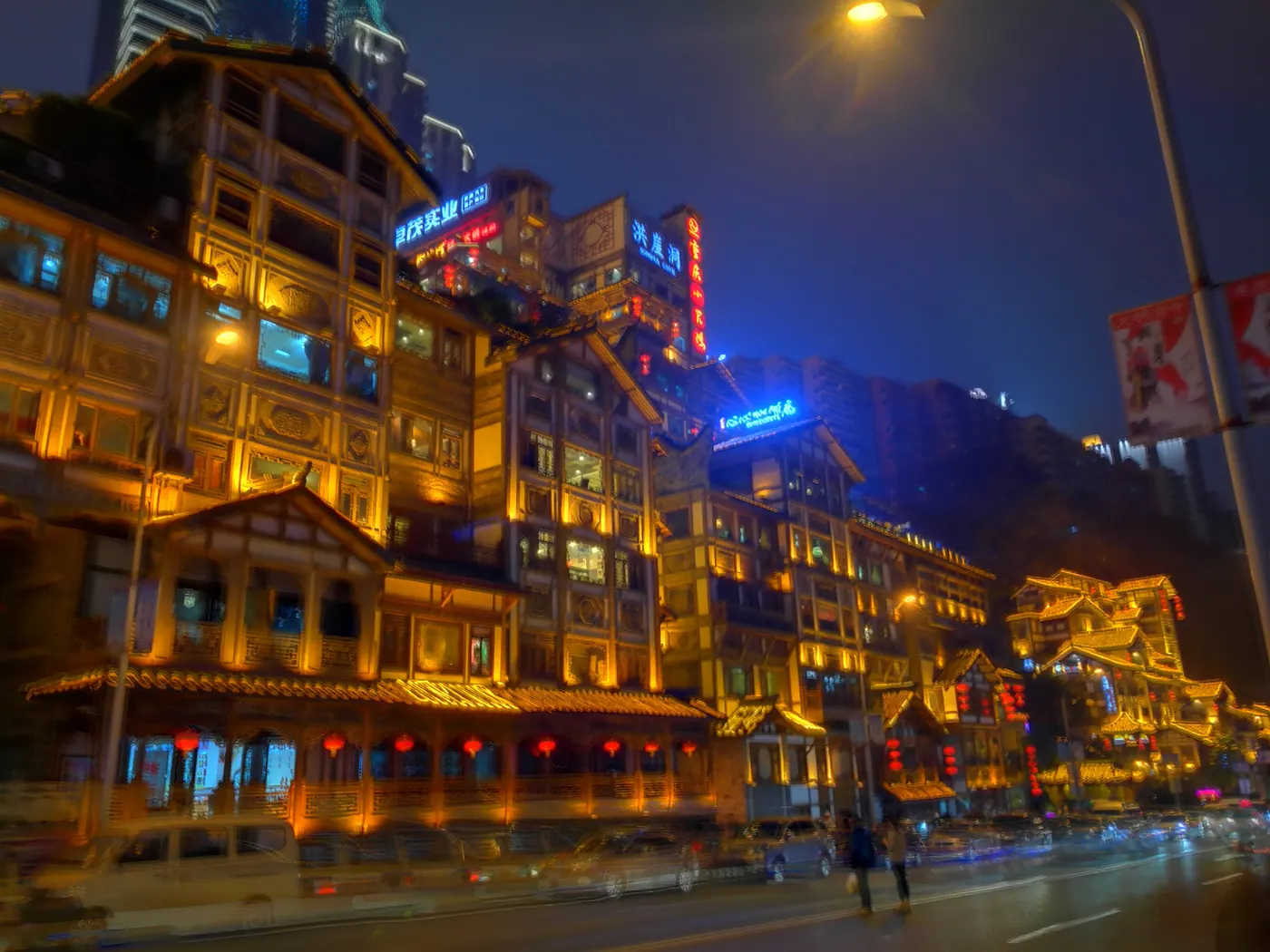
Use the evening for a verified public viewpoint of Hongyadong or the river rather than treating one crowded entrance as the whole experience. Hongyadong is a commercial riverside complex, not a natural cave, and its approaches, crowd controls and lighting can change. Keep valuables secure, stay off traffic lanes and choose a bridge or opposite-bank view if the main approach is uncomfortable. Finish with a hot-pot meal after checking broth, ingredients, spice level, minimum orders and allergen concerns.
On day five, pair Liziba with Eling or another nearby elevated viewpoint, then decide whether you still have the energy for Nan'an. Liziba is best treated as a short public viewing stop; use the designated area and do not block residents or stand in the road. Chongqing's hills, stairs and humid weather make a taxi or ride-hailing leg sensible. Our getting around Chinese cities guide explains why the correct metro exit and pickup point matter as much as the line itself.
For day six, choose either the Three Gorges Museum and a central indoor route or Ciqikou and a slower street day. They are alternatives, not compulsory same-day stops. Check opening days, reservation procedures, passport entry and current transport before leaving. Ciqikou's busy lanes are easy to enjoy when you arrive early and read prices before ordering; the museum is a useful weather backup. Travelers with a fourth day can consider Dazu Rock Carvings, but it deserves a separate excursion with confirmed return transport.
Food, weather and accessibility across both cities
Sichuan and Chongqing food can be spicy, oily, numbing or unfamiliar, but visitors do not need to treat every meal as a test of endurance. Ask whether dishes contain peanuts, seafood, beef, pork or animal organs, and explain allergies before cooking begins. Start with small orders, keep a translated dietary note and use separate serving utensils where appropriate. A serious allergy still requires a conservative plan because kitchen cross-contact may be difficult to verify.
Chengdu is generally easier for long, flat neighborhood walks, while Chongqing demands more attention to slopes, steps, elevators and station exits. Families, older travelers and anyone with limited mobility should ask hotels and attractions for the exact step-free entrance, toilet route and pickup point. The accessible China travel guide offers a planning checklist, but current station and venue staff remain the final source.
Spring and autumn are often comfortable, but both cities can change quickly with rain, humidity, heat or haze. Carry a compact rain layer, shoes with grip, water and a charged phone. Keep one indoor plan in each city and do not promise a skyline view when fog or rain has already hidden it. For wider seasonal decisions, compare the China travel-by-month guide.
How to adjust the route for seven days or less
With five days, keep three nights in Chengdu and two in Chongqing, but remove the optional Chengdu outing and choose only one Chongqing day-five viewpoint. With seven days, add a slower Chengdu food day or a separate Dazu excursion rather than squeezing another city into the rail transfer. The route becomes less enjoyable when every morning begins with luggage and every evening ends at a distant viewpoint.
If you are continuing to Xi'an, Kunming, Shanghai or Beijing, check the next station and flight connection before buying the Chengdu-Chongqing ticket. A late train, weather disruption or long station transfer can affect the following day. Use our China itinerary planner to keep the wider trip balanced, and our China travel safety guide for documents, transport and emergency preparation.
Planning sources and cover photo note
Reviewed October 22, 2026. Use China Railway 12306 for the exact train, station and passenger information; check the Chengdu and Chongqing municipal portals for public notices; and use each panda venue, museum, attraction or operator's current official notice for entry, opening, reservation and transport details. We avoid fixed fares, guaranteed queue times and old operating schedules because they can change. Verify the complete route for your dates.
Cover photograph: Hongyadong in Chongqing by Youyiy33, via Wikimedia Commons, licensed under CC BY-SA 4.0. The real photograph was resized and converted to WebP for this site; the adapted image remains under the same license. It is a Chongqing photograph, not a photograph of Chengdu.