A Sacred Mountain, Not a Backdrop
Mount Wutai, or Wutaishan, rises in northern Shanxi and holds a place among China's four great Buddhist mountains, long associated with Manjushri, the bodhisattva of wisdom. It is not one temple but a geography: the basin town of Taihuai, dense with halls, courtyards and incense smoke, ringed by five terraced peaks that pilgrims have walked for centuries. Travelers come for timber architecture, larch forest and ridgelines; worshippers come to prostrate, circumambulate and make offerings. Everyone shares the same stone paths, which is the first thing worth understanding.
The scale rewards a plan. Taihuai itself is walkable, but the sacred landscape stretches well beyond it, up to the summit terraces and out to older halls in the surrounding valleys. Before you arrive, decide whether you are here mainly for the temple core, for the high ground, or for a mix of both. Four days is enough to have a little of each without sprinting, and enough to leave space for a morning you did not schedule.
Arriving: Taiyuan, Datong and the Last Leg
Most international visitors approach from Taiyuan, the provincial capital, with the larger airport and high-speed rail connections, or from Datong in the north, which pairs naturally with the Yungang Grottoes and the Hanging Monastery. Either way, the final stretch is a road journey of a few hours, by bus or pre-arranged transfer, and it usually ends where the mountain's own shuttle arrangements begin. Those arrangements — which vehicles may enter, where you park, which ticket covers internal transport — are administrative details that shift with season, crowd-control measures and local policy, so confirm them with your accommodation shortly before departure and again on arrival. Build slack into the arrival day rather than chaining it to a tight onward booking.
Accommodation splits into two moods. Simple guesthouses and temple-adjacent lodgings in Taihuai put you inside the atmosphere, close to early-morning chanting and the first incense of the day. Larger hotels on the approach roads offer more reliable heating, easier luggage handling and parking. Neither is objectively better; pick according to how much comfort you need after cold, wet walks. Book ahead for festival periods, summer weekends and any major pilgrimage date, and ask directly whether your host can help with registration and shuttle questions.
Four Days, Balanced
Day one: arrive, settle, and walk the central cluster at an unhurried pace — Xiantong and the great white stupa at Tayuan, with the lanes between them. Day two: the long stair flights up to the Dailuoding shrines, where a cable option may run in season, plus Pusading nearby, then a genuine rest in the afternoon. Day three: either a half-day on one of the peaks if road and shuttle access allows, or a valley walk, or a drive out to the Tang-era timber halls that many visitors miss entirely. Day four: return to whichever temple you liked best at opening time, then travel onward.
The discipline is refusing to stack sites. Two or three a day, with sitting, tea and unhurried courtyards between them, matches the rhythm of the pilgrims around you and keeps the mountain legible. Keep one day deliberately loose — weather, shuttle queues and temporary closures will reshuffle any plan. If energy runs low, drop the high ground and keep the temple core plus a short forest walk; that combination still gives you the essentials of the place.
Weather, Altitude and the Reality of Stairs
Mount Wutai sits high and exposed, and it feels colder than its latitude suggests. Even in summer, mornings can be sharp and wind can arrive with rain in minutes; the summit terraces reach around 3,000 metres, which is moderate but noticeable, especially on your first day. The ground is the other variable: long stone staircases, worn thresholds, steep ramps and slick surfaces after rain. Bring grippy shoes, a windproof shell, warm layers, sun protection and a dry spare pair of socks. Take the first day gently, drink more than you think you need, and treat breathlessness on stairs as information rather than an obstacle to push through.
A lower-walking version of this trip is entirely worthwhile. Stay in the basin, use the flatter temple lanes, choose sites with gentle approaches, and take shuttles or the cable car where they are operating; skip the peaks without apology. For cold, wind, rain or altitude-sensitive travelers, a simple checklist helps: a warm mid-layer plus windproof outer shell, hat and gloves, waterproof footwear, spare socks, water and snacks, sun protection, any personal medication you normally carry, and a clear decision about when to turn back. If you feel unwell, descend and rest. Verify seasonal access and mountain weather forecasts before departure.
Etiquette, Photography and Staying a Guest
These are working monasteries and active pilgrimage sites. Some halls are for worship rather than touring, and some courtyards ask for silence. Dress modestly, keep your voice low, avoid blocking doorways, and follow signage about photography, which is often restricted inside halls. Where circumambulation is the custom, walk clockwise around stupas and pagodas as those around you do. With incense, follow local practice rather than improvising your own. If a space is full of prayer, put the camera down; a good photograph is not worth interrupting someone's devotion.
Ask before photographing monks or worshippers, and never photograph during a ceremony. Buying a ticket does not buy the right to direct the scene, and the most memorable images here tend to be quiet, incidental ones — wet stone, a passage of roof tiles, a figure crossing a courtyard at distance. Expect change, too: restoration work, festival closures and new one-way routes are normal at living sites. Check drone rules, opening arrangements and ticket details before departure, and hold your itinerary lightly enough that a locked gate becomes a detour rather than a disaster.
Planning links and cover photo source
For related planning, read Datong, Yungang and Hanging Temple, China autumn travel alternatives, China cultural etiquette guide. Check each operator's current visitor notice before paying, because access, reservations, transport and weather procedures can change.
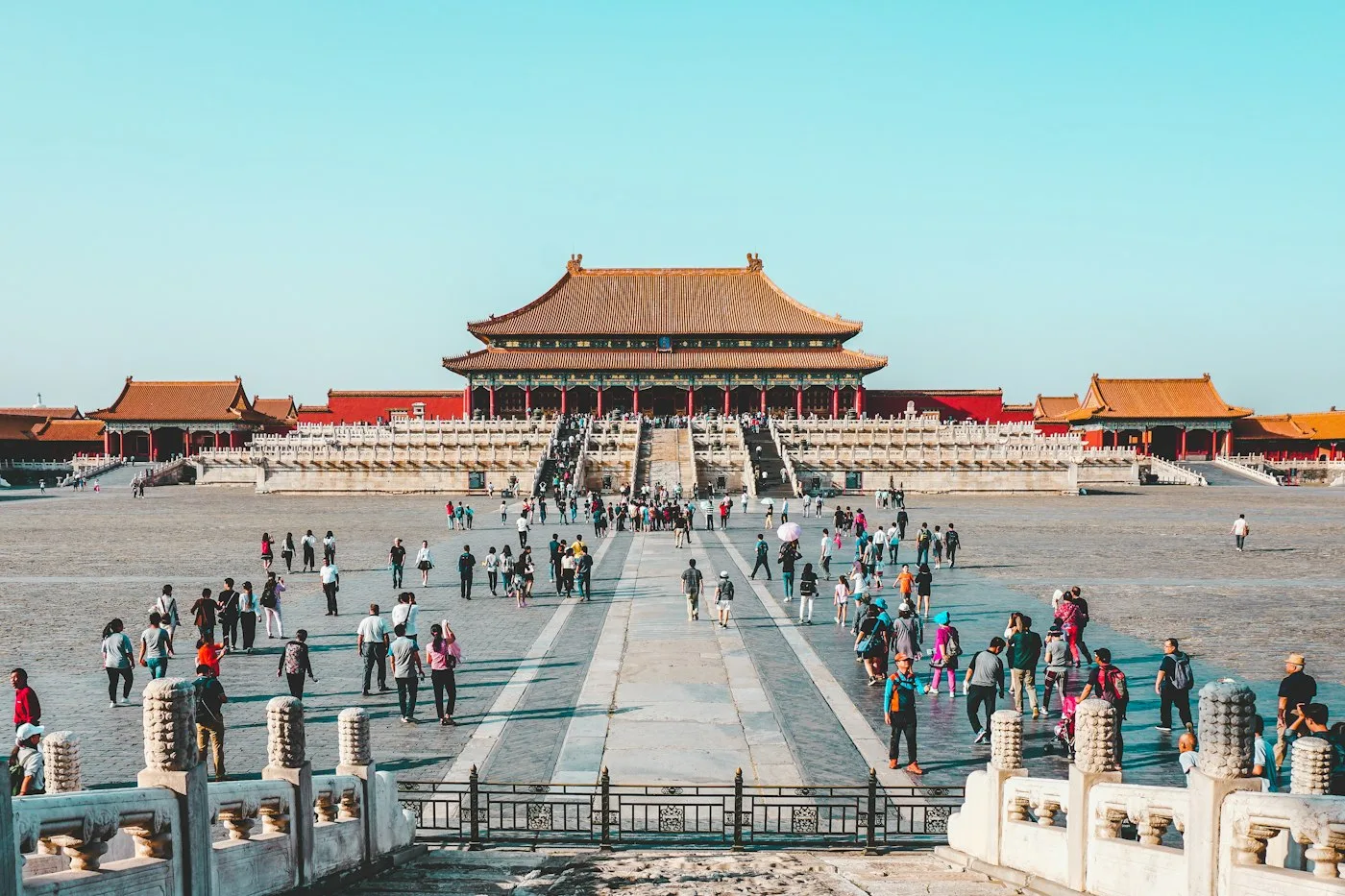
Cover photo: visitors crossing a courtyard in the Forbidden City by Unsplash, used under the Unsplash License. It is a neutral Chinese heritage image, not a photograph of Mount Wutai.