Why Datong deserves more than a quick stop
Datong brings together several very different chapters of northern China's architectural history. The old city is best explored on foot in short sections, Yungang is a major Buddhist cave complex on the city's western side, and the Hanging Temple and Yingxian Wooden Pagoda require separate journeys beyond Datong. These are not interchangeable photo stops: leave time to understand the religious, artistic, and structural context of each place.
Yungang's caves were carved in the fifth and sixth centuries and entered UNESCO's World Heritage List in 2001. The Yungang District government overview places the grottoes about 16 kilometers west of Datong. That geography is why this itinerary gives the site a dedicated day rather than squeezing it between old-city visits. For broader trip planning, compare regional rail connections in our China high-speed train guide.
Before you go: plan by district and verify access
Think of this as four full sightseeing days, not four calendar days including your arrival and departure. Day trips to Hunyuan and Yingxian involve county-to-county road logistics. A pre-arranged driver can make the sequence more predictable, while an independent rail-and-bus plan may need extra time and an overnight outside Datong. Do not assume that a train station is beside a scenic entrance or that a through-bus runs at a convenient time.
Check each attraction's current official channel for opening notices, entry rules, ticket availability, maintenance, and any limits on entering or climbing structures. The public government profiles are useful for background, but they are not live ticketing pages. Use China Railway 12306 for the exact date, departure station, and train, and leave a generous road-transfer buffer. Our attraction ticket guide for foreign travelers explains passport-linked booking basics without replacing each venue's own rules.
Save attraction names in Chinese, your hotel address, and the phone number of your driver or accommodation. Confirm whether a hotel accepts foreign passports before paying. If you have mobility needs, ask specifically about slopes, stairs, uneven stone, and accessible alternatives: the Hanging Temple and mountain areas are not easy substitutions for a flat city walk.
Day 1: Datong old city, temples, and an easy evening
Use your first day to settle in and explore Datong's historic center at a walking pace. Choose a central base that makes it easy to return for a rest, then group the sights you most want to see rather than trying to cover every gate and temple. Huayan Monastery, Shanhua Monastery, the old streets, and the Nine-Dragon Wall are possible anchors; check the current opening arrangements for each before building a fixed sequence.
Give the religious sites time and attention. Read the signs, keep voices low, follow photography instructions, and never touch painted surfaces or devotional objects. If one venue is closed or crowded, make the old streets and a meal the center of the afternoon instead of adding a distant attraction. Datong's local food is a good reason to leave an unplanned dinner block; ask about ingredients and spice before ordering if you have dietary restrictions.
If you arrive late or have a train connection on the same day, keep the evening modest. Save the full city walk for the next morning and avoid buying a non-refundable out-of-town transfer before you know your arrival time.
Day 2: spend a full day at Yungang Grottoes
Set aside most of a day for Yungang. The site is west of the city, so arrange the outbound and return journey before leaving your hotel; confirm the actual pickup point and the return plan rather than relying on a map estimate. A private car or a current, verified public-transport option can work, but do not assume a fixed frequency or last departure without checking for your date.
The caves are a sequence of distinct spaces, not one single hall. Start with the official site map and interpretive material, then choose a pace that lets you notice how sculpture, cave design, and surrounding rock change from one area to another. Some caves may have separate preservation or photography rules. Follow signs and staff instructions, and do not use flash or touch the carvings where prohibited.
Bring water, comfortable shoes, sun protection, and a light extra layer. Outdoor paths can feel different from sheltered cave interiors, and crowd levels or access can vary. If you are particularly interested in Buddhist art, consider an official guide or a reputable guide whose credentials and itinerary you have confirmed in advance. Return to Datong for the evening rather than trying to combine Yungang with a long county transfer.
Day 3: Hunyuan, the Hanging Temple, and optional Hengshan
Give Hunyuan its own full day. Make the Hanging Temple the main objective and confirm from the scenic area's official channel whether visitors can enter or climb the structure on your date. A view from outside and access to the temple itself are different experiences; weather, conservation work, crowd management, or other operating notices may affect what is possible.
The temple's cliffside setting makes it visually striking, but it also means narrow stairs, exposed approaches, and limited space can be part of the visit. Check the current route and physical requirements before booking, especially if anyone in your group has difficulty with heights, balance, or steep steps. Never treat an online photograph as proof that a particular platform or upper level will be open.
Hengshan can be an additional option, not an automatic second attraction. The mountain area has its own access, weather, and time requirements, so decide only after checking the current scenic-area notice and your group's energy. If conditions or transport do not support both, spend the day on the Hanging Temple and Hunyuan rather than rushing through two places. Arrange the return to Datong in advance, or consider an overnight in the county if the verified connections suit your plan.
Day 4: Yingxian Wooden Pagoda as a separate excursion
Reserve a separate day for Yingxian Wooden Pagoda, in Yingxian County rather than Datong city. The Yingxian County government profile describes it as a nationally rated scenic attraction and one of the most notable surviving pavilion-style wooden pagodas. Its history and timber construction deserve a slower visit than a brief stop on a long transfer day.
The county profile notes rail service in Yingxian, but that does not establish a convenient station-to-pagoda connection or a suitable return train for your itinerary. Check 12306 for current trains and arrange the local road leg separately. If you use a hired driver, agree the pickup location, waiting plan, and return journey before departure. Do not book a tight onward connection until the complete route is verified.
Confirm which areas are open to visitors and whether climbing or interior access is permitted. Conservation restrictions can change, and the exterior remains architecturally significant even when access is limited. If a same-day return to Datong would make the day stressful, add a night in the region or make Yingxian a reason to extend the trip to five days.
Transport, timing, and late-autumn packing
For a four-day route, the simplest plan is usually a central Datong base for the first two days and confirmed road transport for the county excursions. Travelers who prefer public transport should research every leg independently: rail, local taxi or ride-hailing, bus, and the final attraction transfer may be separate pieces. Build in time for waiting, station security, passport checks, and traffic. Recheck the exact station name on each ticket before leaving your hotel.
If you are visiting in the second half of October, pack layers for a sunny afternoon, a colder evening, and wind on exposed sites. These are planning precautions, not a weather forecast. Check the local forecast for Datong and each county shortly before travel, and keep an indoor or city-center alternative in case rain, wind, or a closure changes an outdoor day. Do not plan the whole trip around a guaranteed foliage color or a particular sunset.
A fifth day is worthwhile if you rely on public transport, want to spend longer in the old city, or need a less demanding schedule. The best version of this trip is not the one with the most pins on a map; it is the one that leaves enough time for four very different places and a safe return. For seasonal route choices across the country, see our China travel-by-month guide.
Planning sources and photo credit
Reviewed on October 18, 2026. Start with the Yungang District government overview and the UNESCO World Heritage listing for Yungang Grottoes. For local notices, check the Datong government portal, Hunyuan County government, the Hengshan Scenic Area Management Center, and the Yingxian County government profile. Use 12306 only for rail schedules and tickets. None of these background pages guarantees current ticket rules, entry to upper levels, or same-day transport; verify each detail with the relevant attraction immediately before departure.
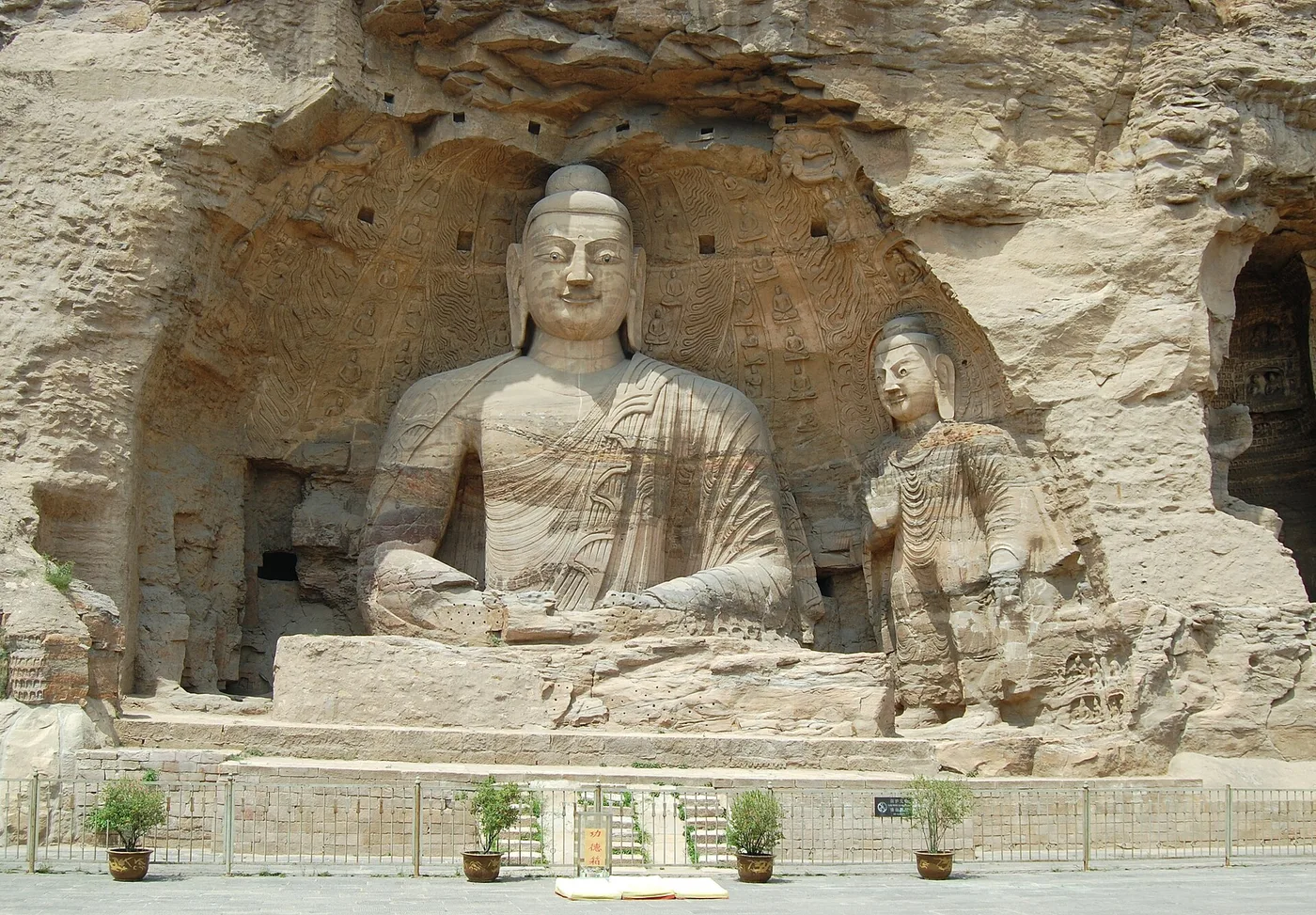
Cover photograph: Cave 20 at Yungang Grottoes by Marcin Białek (Sfu), via Wikimedia Commons, licensed under CC BY-SA 4.0. The photograph was resized and converted to WebP; the adapted photograph is shared under the same license. The license applies to the image, not the article text.


