Why Three Days Suits Mount Sanqing
Mount Sanqing is a cluster of granite towers and forested ridges in the northeast of Jiangxi, recognised by UNESCO for its natural values and layered with centuries of Taoist heritage. It is also, unavoidably, a mountain of stairs. The scenery — vertical stone pillars rising out of cloud, pines gripping ledges, boardwalks pinned to cliff faces — is genuinely dramatic, but very little of it is served by gentle paths. Knowing that before you arrive changes how you plan the trip.
Three days is the honest minimum for a first visit. The high trails sit on a plateau ringed by cliff walkways, and the weather moves through quickly: a morning can be a white-out of fog and the afternoon clear enough to pick out ridges far into the distance. Visitors who compress everything into a single day tend to gamble on one window and lose it. Two full walking days, bracketed by arrival and departure, gives you a second chance at the views — and at your own energy.
Arriving Through Jiangxi and Choosing Where to Sleep
Most international travellers approach Mount Sanqing through Jiangxi's rail corridor, arriving at Shangrao or Yushan and continuing by road to the scenic-area gateway. Rail services, bus frequencies and the exact transfer point do change, so confirm the current arrangement with your accommodation or the official scenic-area channels before you set out, and build in more slack than the map suggests. If you are carrying full luggage, the last thing you want is a tight connection at the end of a long travel day.
There are two sensible lodging strategies. Staying in the gateway town at the foot of the mountain is cheaper, more flexible and far kinder to luggage: you leave your bags in your room and ride up with a day pack. Staying up on the mountain puts you closer to sunrise and to the quieter early trails, but rooms are limited, should be booked well ahead, and you will be hauling your suitcase up the same stairs you came to walk. For a three-day first visit, base at the foot and go up twice.
How the Cable Cars, Shuttles and Trails Fit Together
The scenic area works on a hub-and-spoke system. You pass through an entrance gate, board an internal shuttle to the cable-car station, ride up to the high trail level, and then walk a network of stone stairways and cliff boardwalks that links the main viewing areas. Tickets are often sold as bundles combining entry, shuttle and cable car, sometimes with options for one-way or return. Treat all of this as variable: routes, cable cars, shuttle operations, ticket bundles and temporary closures change with season, maintenance and weather, so check official notices shortly before you travel.
The key mental adjustment is that the cable car does not deliver you to a summit. It delivers you to the beginning. Everything worth seeing above that point is reached on foot, mostly upwards, and signposted in a mix of Chinese and English that is helpful but not exhaustive. Download an offline map, photograph the trail board at the top station, and note the last descent times — they are the one detail you genuinely cannot improvise around.
Matching Each Day to Your Legs
The classic scenic day follows the cliff boardwalks and connecting stairways around the main circuit, stringing together the viewpoints that most postcards are taken from. Expect a full morning and much of the afternoon rather than a quick lap: the drama is concentrated, but the stone steps between each set piece are relentless, and there are few flat stretches to recover on. This is the day to take slowly, stop often, and let the cloud do what it does.
The strenuous day is a different proposition. Reaching the highest ground involves long flights of steep stairs, sections where the path narrows along exposed edges, and in places metal ladders or handrails rather than gentle gradients. It is rewarding and entirely doable for fit walkers, but it is not the day to attempt in driving rain, high wind or low cloud, and it is not the day to persuade a reluctant companion along. Decide on the morning forecast, not on ambition.
Weather Buffers, Stairs and Low-Impact Options
Mount Sanqing is famous for its sea of clouds precisely because it is often inside the weather. Bring a proper rain shell rather than an umbrella, wear soles with real grip, and pack layers — the plateau can feel considerably colder and windier than the valley where you slept. Wet boardwalks and wet stone stairs demand attention on the descents, and electrical storms should send you down rather than onward. Above all, never plan around a guaranteed view: build in the assumption that one of your two walking days may show you nothing but white, and be pleasantly surprised when it doesn't.
There is a genuinely good lower-walking option. Ride both directions of the cable car, stay on the gentler boardwalk sections near the top station, use the benches, and skip the summit entirely — the granite pillars are arguably more spectacular from below anyway. This suits older relatives and anyone nursing a knee, and it works best when the group splits for the afternoon and reunites at the station. Leave luggage at your base, carry water and snacks, and confirm current conditions, closures and ticket arrangements through official scenic-area notices before departure rather than relying on any guide, including this one.
Where the Three Days Actually Go
A workable shape looks like this. Day one is arrival: travel through Jiangxi, settle into your base, sort tickets and check the forecast and the cable-car schedule for the morning. Day two is your classic scenic circuit, starting early to stay ahead of the tour groups and finishing before the light goes. Day three is either the strenuous high route if the weather cooperated and your legs held up, or a second, slower pass at the boardwalks if it didn't — then an afternoon descent and onward travel.
That structure is deliberately loose. If day two dawns in thick fog, swap the days; if the cable car is down for maintenance, adjust rather than abandon. The mountain rewards patience more than efficiency, and the travellers who enjoy Sanqing most are the ones who accept that the stairs are the price of admission and that the cloud is part of the ticket.
What to Verify Before You Go
Anything operational on this mountain is a moving target. Cable-car operating hours and scheduled maintenance, shuttle frequency, which trail sections are open, whether a ticket bundle is required or optional, and whether the summit route is temporarily closed can all change between seasons and even between weeks. None of it is something a blog can reliably settle for you, and any guide quoting exact prices or timings should be read with suspicion.
Check the official scenic-area channels, your accommodation and, once you arrive, the noticeboards at the entrance gate and top station. Ask a staff member to confirm the last cable car down, and photograph the schedule. Fifteen minutes of verification at the base is worth more than an hour of guesswork on a cliff.
Planning links and cover photo source
For related planning, read Huangshan mountain itinerary, China national parks comparison, Accessible China travel guide. Check each operator's current visitor notice before paying, because access, reservations, transport and weather procedures can change.
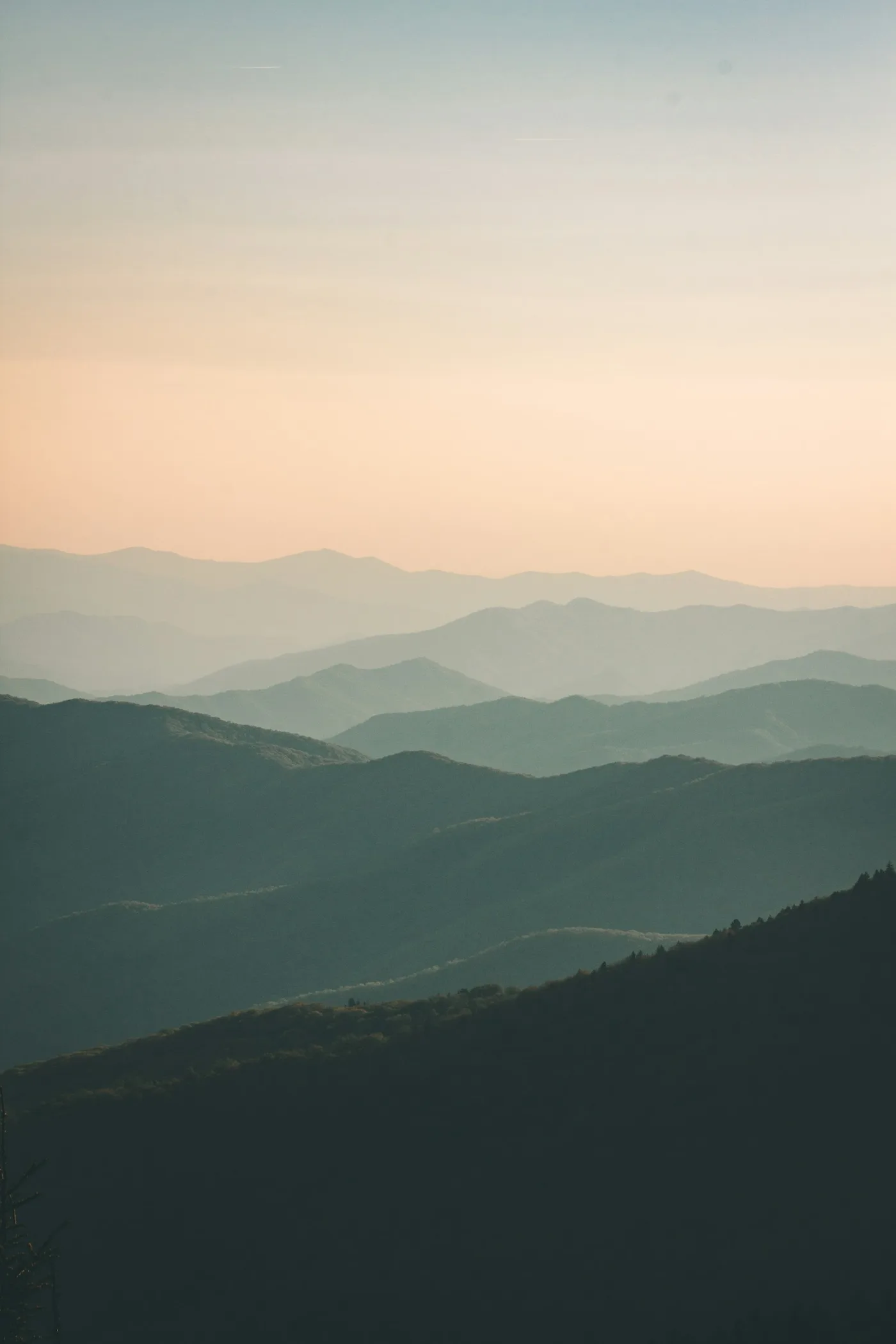
Cover photo: Layered mountain ridges at dusk via Unsplash, used under the Unsplash License. This is a general mountain photograph, not a photograph of Mount Sanqing.


