Why Chongqing feels different from other China city breaks
Chongqing is often introduced through its neon skyline and hot pot, but its real appeal is the way different levels of the city overlap. A street that looks flat on a phone map may turn into a long stairway; a building entrance can be on a different floor from the road; a station exit may lead to a bridge rather than a sidewalk. Allowing extra time for these small surprises makes the city much more enjoyable. Compare it with the route choices in our China city comparison guide before deciding how many large cities your itinerary can handle.
The city sits at the meeting of the Yangtze and Jialing rivers and has a humid, hilly climate. That combination creates spectacular viewpoints but also long wet-weather walks, slippery steps, and sudden changes in visibility. Bring shoes with grip, keep a rain layer accessible, and plan one indoor alternative each day. Chongqing rewards curiosity more than speed, so a route with three strong areas is usually better than a checklist of ten pins.
Before you arrive: choose a base and prepare the essentials
Jiefangbei and the central Yuzhong district are convenient for a first visit because many classic viewpoints, food streets, and metro lines are nearby. Jiangbei suits travelers who prefer newer malls, restaurants, and a broad skyline view, while Nan'an can be useful for riverfront stays and access to Nanshan. Wherever you stay, confirm that the hotel accepts your passport and can register every foreign guest. Save its Chinese address, phone number, and late-arrival instructions offline. Our China hotel booking guide explains what to confirm before paying.
Set up at least two payment methods before landing, plus a small cash reserve and a working data plan. Alipay or WeChat Pay can make daily travel much easier, but foreign-card verification, phone numbers, or app updates can fail unexpectedly. Read the China payment guide and China SIM and eSIM guide in advance. Save attraction names in Chinese characters because ride-hailing drivers and station staff may not use the same English spelling.
Day 1: Jiefangbei, Shibati, and the river at night
Start in Jiefangbei before the busiest part of the day. The square and surrounding streets are useful for orienting yourself, finding breakfast, and seeing how commercial Chongqing meets older lanes. Then walk toward the Shibati Traditional Style Block or another current heritage area that fits your route. Restored streets can be busy and commercial, while nearby working lanes reveal a more ordinary city. Keep doorways clear, ask before photographing residents, and do not assume every stairway on a map is a shortcut.
After lunch, keep the route within the Yuzhong peninsula. Choose either a visit to Huguang Guild Hall for architectural history or a walk around Chaotianmen, where the Yangtze and Jialing meet. They are alternatives, not two compulsory stops. Riverfront roads, bridges, and large developments can separate places that look close on a map, so check the walking route and use a taxi if the heat or stairs become tiring. Save the Three Gorges Museum for day three or use it as an indoor replacement.
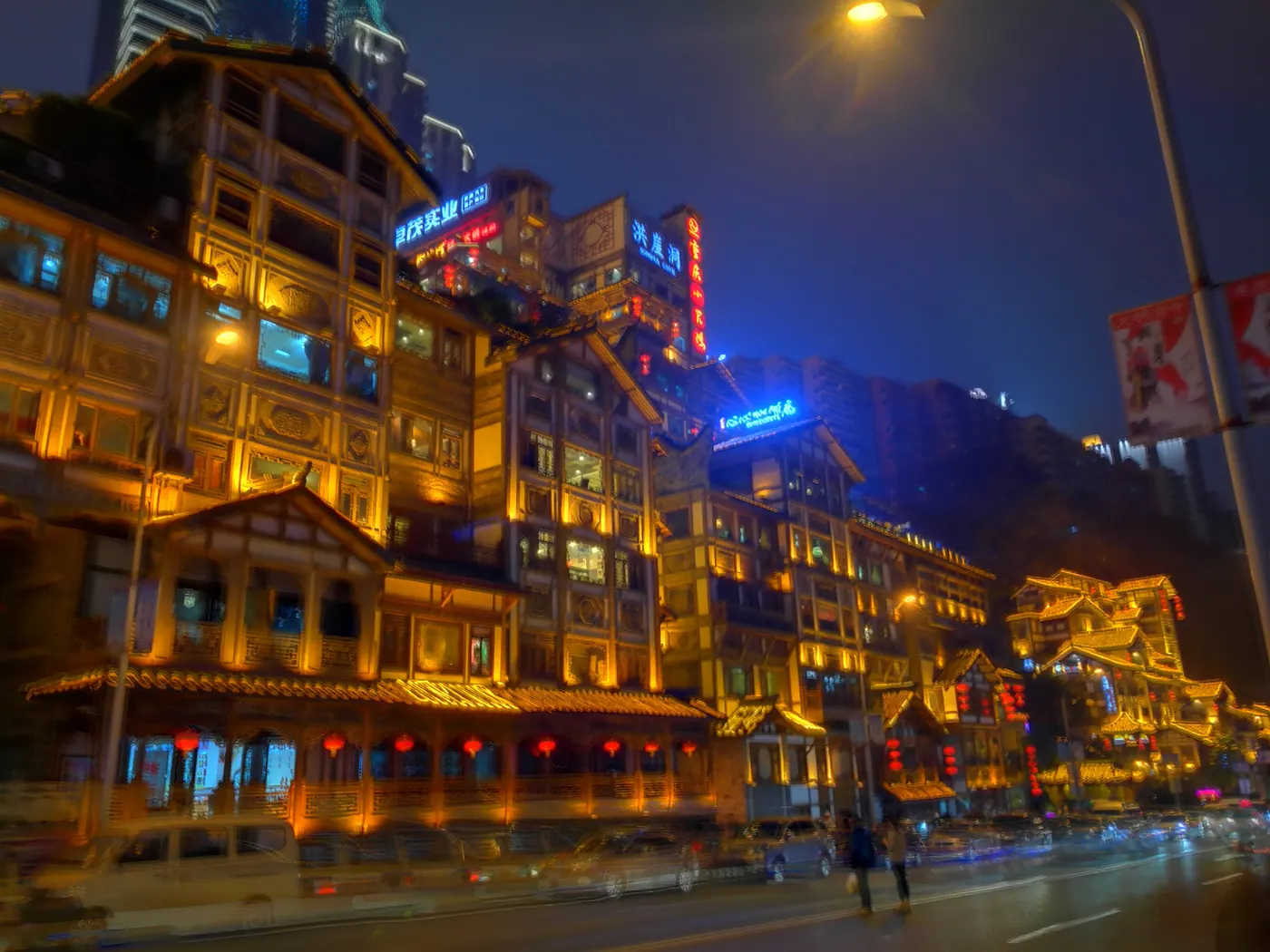
At dusk, head toward Hongya Cave, also called Hongyadong, and check the public approach before joining a crowd. The iChongqing Hongya Cave guide provides background on its traditional-style riverside architecture. It is a commercial complex, not a natural cave: do not expect a geology tour or pay someone promising a secret entrance. Choose one safe public viewpoint, keep valuables secure, and avoid standing in traffic. A view from across the river is an alternative evening route, not a quick detour from every entrance.
Day 1 dinner: learn how to order Chongqing hot pot
Make your first hot pot meal a planned experience rather than choosing the first restaurant with a long queue. Look for a menu with clear prices, a visible cooking area, and a spice level you can discuss. Chongqing hot pot is often served in a divided or shared pot with beef tallow, chili, Sichuan pepper, and a wide range of ingredients. Ask about broth, offal, seafood, allergens, and whether a minimum order or service fee applies. Diners who do not eat beef, pork, or animal organs should say so before the pot is prepared.
Order gradually and keep a translation note on your phone. Popular choices include beef, duck blood, tofu, mushrooms, vegetables, noodles, and tripe, but you do not need everything at once. Cook meat and offal thoroughly, use serving utensils, and remember that a divided pot does not prevent allergen cross-contact. Use the China food guide for ordering phrases. For a gentler meal, try noodles with chili on the side or non-spicy dishes at a different restaurant; a mild request does not make every hot pot suitable for a serious allergy.
Day 2: Liziba, Eling, and the south bank
Begin at Liziba on rail Line 2 for the train-through-building view, treating it as a short stop rather than a full morning. Use the designated public viewing area and never stand on a road or obstruct residents. The iChongqing explanation of Liziba Station gives context for the building and railway. Continue toward Eling Park or the nearby TESTBED 2 creative area; these are uphill from Liziba, so use transport rather than assuming the climb is a flat stroll.
After lunch and a rest, decide whether to cross to Nan'an for Nanbin Road and river views. The Yangtze River Cableway is an optional paid crossing with queues and possible operational changes, not a required part of this itinerary. Check the current ticket channel, departure terminal, boarding arrangements, and last service; reach the north terminal as a separate transfer from Eling. If the queue or weather is unsuitable, take a verified taxi or use the metro and walk the final stretch.
Spend the late afternoon on one accessible section of the south-bank riverfront, allowing time for dinner and the return journey. Choose a safe pickup point away from busy viewpoints before calling a car. The getting around Chinese cities guide helps with metro exits and ride-hailing. Do not add Ciqikou to this day: it is a separate western outing, whereas Eling and a Nan'an evening already involve a substantial climb and cross-river transfer.
Day 2 evening: Nanshan views or a local food route
From Nan'an, choose either a riverside dinner or a Nanshan viewpoint, not both by default. Nanshan can provide a broad view across the city, but the hill approach involves traffic and weather exposure. Confirm the viewpoint's current hours and return transport before going, and use a verified taxi for the steepest section. On humid nights the skyline may disappear into haze; a restaurant near the river gives you a satisfying evening without chasing a view that is not visible.
Another good evening is a deliberate food route through two or three small stops: noodles, grilled dishes, a dessert or fruit drink, and a final tea. Busy restaurants are not automatically safe or good, so check prices, ingredient labels, and hygiene conditions. Do not accept unsolicited invitations to private rooms, clubs, or tea houses. Our China travel safety guide covers pressure tactics, transport, emergency contacts, and payment habits.
Day 3: the Three Gorges Museum or Ciqikou
For a history-focused finish, visit the Chongqing China Three Gorges Museum near the People's Great Hall. Check the current opening day, reservation procedure, and passport entry arrangement before traveling. Choose a few galleries on the river region, Chongqing's history, and the Three Gorges rather than promising to see every display. If you already used the museum as a rain plan on day one, choose a different neighborhood or a shorter return to the river.
For a more street-focused day, choose Ciqikou instead. Reach it by Line 1 and check the final walking route. The historic visitor district is known for lanes, tea houses, and snacks, but its most prominent streets are busy and commercial. Arrive early, read prices before buying, and respect nearby residents. Ciqikou and the museum are alternative half-day anchors; leave the afternoon flexible rather than traveling between them simply to complete a list.
Travelers with a fourth day can consider Dazu Rock Carvings, but it deserves a separate, carefully timed excursion. Confirm transport, ticket availability, return connections, and weather before booking. Do not put a long-distance day trip before an international flight or a tight train connection. If you have only three days, stay in Chongqing and use the final afternoon for a favorite meal, a local market, or a return to the river at a different time of day.
Families, older travelers, and anyone with limited mobility should plan around elevators, slopes, and rest stops. Chongqing's metro is useful, but station exits and historic streets can still involve stairs. Ask staff for the most accessible route and keep an indoor backup. The accessible China travel guide gives general planning principles, while each station and attraction remains the final source for current conditions.
Practical Chongqing details: transport, weather, and respectful travel
Metro Line 1, Line 2, Line 6, and the wider network are useful, but station names and exits matter more than line color on a map. Confirm the exit nearest your destination, save Chinese characters, and allow extra time for underground passages and escalators. Ride-hailing helps with luggage, rain, and hillside approaches; verify the plate and pickup point before entering. Use the China high-speed train guide if Chongqing is part of a wider rail route, and check whether you are using Chongqing North, West, or another station.
Spring and autumn are often the easiest seasons for walking, while summer brings heat, humidity, storms, and slippery steps. Winter can be cool and damp even when temperatures look moderate. Check the forecast each morning, carry water and a compact rain shell, and take a break before you are exhausted. The China travel by month guide helps compare regional conditions, but local weather should guide the day's final decision.
Chongqing's historic neighborhoods are living places. Avoid blocking stairways, touching memorial displays, entering private compounds, or treating residents as scenery. Ask before photographing people, keep voices low in temples and museums, and dispose of food waste responsibly. A considerate visitor sees more: locals are more likely to help when you show that you understand the city is their home as well as your destination.
Planning sources and cover photograph
Reviewed on October 8, 2026. Use the Chongqing municipal English portal and iChongqing attraction directory for local background, then confirm reservations and service notices with the attraction or operator. This guide does not promise fixed fares, opening times, or entry eligibility.
Cover photograph: Hongyadong in Chongqing by Youyiy33, via Wikimedia Commons, licensed under CC BY-SA 4.0. The real photograph was resized and converted to WebP for this site; the adapted image remains under the same license. The license applies to the photograph, not the article text.