Plan Qingdao by district and coastline
Qingdao can look compact on a phone map, but the old city, eastern waterfront, railway stations and Laoshan sit in different parts of a large urban area. A good three-day visit groups nearby stops and leaves a buffer for traffic and weather. Put the old town and coast together, reserve a separate day for one mountain area, and keep the final day flexible enough to change plans if sea wind or a trail notice affects access.
The city is a particularly good place to slow down. Historic facades, sea views, hills and food markets reward short walks with pauses rather than a checklist of distant attractions. For practical advice on metro, taxis and changing urban connections, see our guide to getting around Chinese cities.
Before you go: stations, airport and a realistic base
Qingdao Railway Station is close to the historic center and coast, while Qingdao North Railway Station is farther from the old-town walking area. Jiaodong International Airport is outside the central districts. Check the exact station printed on your ticket and plan the final transfer separately; do not book a hotel based only on the word Qingdao in a station name.
Use China Railway 12306 for date-specific trains and check the airport's current transport information for your arrival time. Metro, taxi and ride-hailing may all work, but traffic, weather and luggage change the practical choice. Leave a generous buffer when an attraction visit is followed by a train or flight.
Before each day, check the current notice for the destination, weather at the coast and mountain, reservation instructions, and the last practical return option. Save your hotel address and each attraction name in Chinese. Do not assume a scenic-area shuttle, cable car, trail, ferry or museum gallery will operate exactly as described in an older blog post.
Day 1: Qingdao old town and the open coast
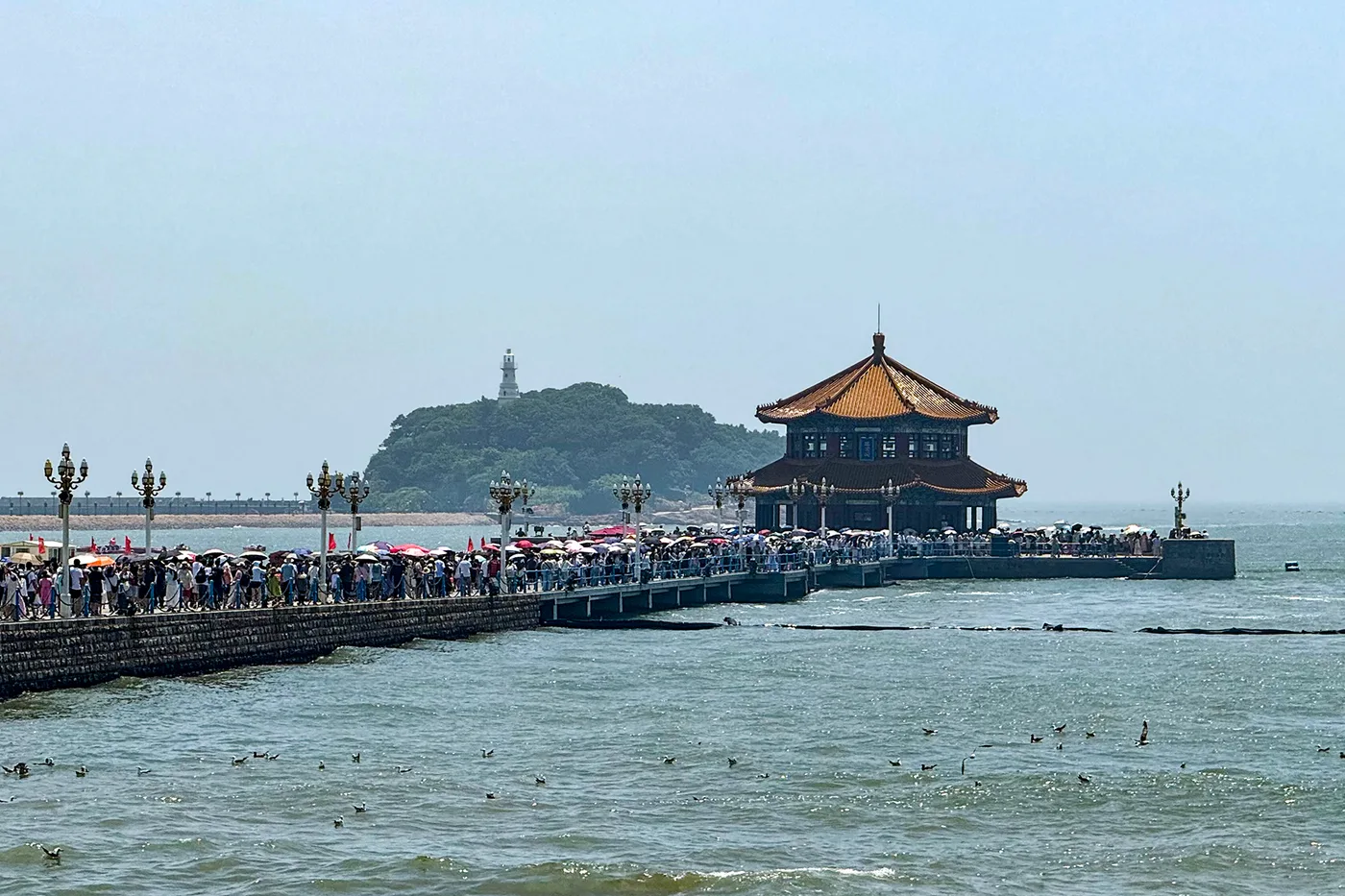
Start around the old city and let the coastline set the pace. Zhanqiao Pier is a natural orientation point, but crowds, wind and shoreline conditions can change the feel of the visit. Continue through a small number of nearby historic streets and viewpoints rather than trying to cover every hill in one morning. The former European-influenced architecture is most rewarding when you look at doorways, rooflines and the changing street grades instead of treating the district as a single photo backdrop.
Choose one or two additional anchors after the pier, such as a church exterior, a hilltop viewpoint or a market street, and verify whether interiors require a current ticket or notice. Zhongshan Road and nearby lanes can make a useful food break; ask about ingredients and spice if you have dietary restrictions. If the wind rises, shorten the exposed shoreline walk and spend more time in the old city.
Finish with a coastal view only if conditions are comfortable. Rocks, wet steps and sea spray are real hazards near the water, especially after rain. Keep your evening close to your hotel instead of adding a cross-city excursion after a full walking day.
Day 2: choose one open Laoshan area
Treat Laoshan as a choice among separate scenic areas, not one attraction that can be crossed in an afternoon. The official scenic-area site currently lists areas including Jufeng, Taiqing, Jiushui, Yangkou and Huayan, but access changes with weather, maintenance and safety notices. Check Qingdao Laoshan Scenic Area immediately before booking and again on the morning of the visit.
Select one route that matches your group's fitness, the announced opening status and the time you have for the return journey. Do not assume a cable car or a particular trail will be running: current notices may suspend the Taiqing cableway or close parts of the Taiqing and Erlongshan paths. A currently accessible Jufeng, Yangkou, Jiushui or Huayan area may be a better plan, but only the official notice for your date can decide.
Mountain weather can differ from the city. Wear shoes with reliable grip, bring water and a light layer, and keep your schedule loose around stairs, steep sections and shuttle transfers. If the selected area is closed, do not force a substitute from an unverified map pin; return to the city for a museum, brewery or indoor food plan instead.
Day 3: beer culture, bays and a weather backup
Use the third day to explore a different side of Qingdao's identity. The Tsingtao Beer Museum is a useful indoor or partly indoor anchor for learning how the city's best-known beer brand became part of its modern history. Check its official site for current opening, ticket and visitor information before traveling; do not rely on a fixed schedule copied from a guidebook.
After the museum, choose a manageable eastern waterfront walk or a shorter beach stop based on the forecast. Qingdao's sea views are not interchangeable: a sunny, calm day supports a longer promenade, while cold wind or rain calls for a compact route with warm indoor breaks. Leave time for a proper meal and try local seafood only where hygiene and ingredient information are clear.
If day two was shortened by a mountain closure, use this day for the old-town streets you skipped, a museum or a second city neighborhood. This is a strength of the itinerary: the urban plan remains worthwhile even when the mountain or coast is not cooperating.
Food, accessibility and pacing
Qingdao is associated with seafood, beer and casual market eating, but a good food plan is more than ordering the most famous dish. Confirm preparation, allergens and portion size, and be cautious with raw or undercooked seafood if you are not used to it. A sit-down meal between walks is also useful because hills, wind and uneven old-town pavement can make a day more tiring than its map distance suggests. Our China food travel guide covers ordering and dietary communication.
Travelers with limited mobility should ask about slopes, steps, cobblestones, mountain paths, shuttle boarding and accessible toilets before paying for an attraction. The old city has uneven streets, the coast can have slippery surfaces, and Laoshan is not a flat substitute. A city museum or shorter waterfront section may be a better day than forcing a route with stairs. Families should carry a layer, water and a backup indoor plan.
A fourth day and final transport checklist
Add a fourth day if you want a longer Laoshan route, a slower old-town photography day, or enough time to move between the museum, coast and food neighborhoods without rushing. It also gives you a useful weather buffer in a coastal city where wind can change outdoor comfort quickly. For seasonal route choices across China, compare our China travel-by-month guide.
Before departure, confirm the station or airport, ticket time, luggage plan and last transfer. Recheck the Laoshan notice, museum or brewery visitor rules, local forecast and any road or trail closure. Keep offline copies of your hotel address and booking details. A flexible itinerary is more valuable than a promise to visit every named viewpoint.
Official planning sources and photo credit
Reviewed October 19, 2026. For current destination notices, check Qingdao Laoshan Scenic Area, the Tsingtao Beer Museum, the Qingdao municipal government and 12306 for rail. The Laoshan site currently carries temporary closure notices, so verify the open area, trail, cableway and shuttle status for your exact date. These sources do not replace same-day weather and safety checks.
Cover photograph: Zhanqiao Pier and Little Qingdao Isle in Qingdao by Windmemories via Wikimedia Commons, licensed under CC BY-SA 4.0. The photograph was resized and converted to WebP; the credit and license apply to the photograph, not the article text.