Why Wuyuan Deserves Four Days, Not a Photo Stop
Wuyuan is famous for one photograph: yellow rapeseed fields lapping against whitewashed villages under a soft spring haze. That image is real, but it is also seasonal, crowded and only a fraction of what the county offers. Wuyuan is a large, hilly region of river valleys, tea slopes, terraced fields and hundreds of settlements built in the Huizhou style — white walls, dark tiles and stepped gables rising above narrow lanes. Arriving with four days instead of a single sunrise gives you room to see it as a working rural place rather than a backdrop.
A slower itinerary also solves a practical problem. The villages are scattered across a county that takes hours to cross, and the most photographed spots absorb the heaviest crowds. By choosing fewer stops, staying in one or two places and keeping a day free for weather, you trade a tick-box list for the thing most travelers actually remember: quiet lanes, tea drying on bamboo trays and an unhurried afternoon in a village square. This guide is written for that pace, and for visitors who want to understand what they are walking through.
Arriving by Rail and Choosing the Right Base
Wuyuan is served by rail, with a station on the high-speed network linking it to cities in Jiangxi, Anhui and Zhejiang. Timetables, journey times and which through-trains stop here shift with each schedule period, so confirm your connections on an official booking channel before you commit to a plan. The station sits outside the main town, not in the villages, so the final leg is a road transfer. Arrange a driver in advance through your guesthouse or a reputable local operator, and agree the pickup point and the price in writing before arrival.
The base you choose shapes the whole trip. The county town has the widest range of hotels, the most reliable dining options and the easiest access to transport, which makes it a sensible landing point for a first night. Village guesthouses offer atmosphere and early-morning light, but vary widely in comfort, heating and English-language support. A good compromise is two bases: one night near town for convenience, then two or three nights in a village cluster — ideally the one whose lanes and fields you most want to walk at dawn.
Lived-In Villages vs Ticketed Scenic Areas
Two very different kinds of place share the name Wuyuan. The first is the lived-in village: alleys where people still dry vegetables on bamboo trays, keep chickens, repair roofs and hang washing across the lane. The second is the ticketed scenic area — a gated site with an entrance fee, a visitor centre, timed entry or shuttle transport, and in some cases a cable car. Both can be excellent. Ticketed sites concentrate the architecture and the interpretation; lived-in villages give you the texture of ordinary rural life. Plan for a mix, and be honest about which one you are walking into.
Not every village is open to visitors, and some are open only in part. Before setting out, check current visitor notices from local official tourism channels, or simply ask your host which sites are receiving guests, whether tickets are required and whether anything is closed for restoration. Inside villages, treat homes and ancestral halls as private or semi-private space: ask before entering, keep voices low, avoid photographing people and interiors without permission, and never move produce, tools or furniture for a better shot.
The Four-Day Route: Two Anchor Days, Two Flexible Ones
Day one is a travel day with a soft landing: arrive by rail, transfer to your base and spend the late afternoon on foot — a riverside lane, a teahouse, an early dinner. Day two is your architecture day. Pick a single cluster rather than sprinting between them — the eastern valleys around Jiangwan and Xiaoqi are a manageable start — and set off early, because tour groups build through the middle of the morning. A morning among strong Huizhou houses, a simple lunch, then an afternoon walk through farmland gives you depth without exhaustion.
Days three and four are deliberately loose. Use one for a second area: upland villages and terraced fields, or a classic hillside settlement where the famous drying-rack displays appear in autumn, reached by shuttle or cable access. Keep the other day as a weather buffer. If it rains, shift to covered lanes, a historic covered bridge, a teahouse or a long lunch; if the light is good, return to the fields you liked most. Booking your most weather-dependent outing for day three, with day four free, is the single most useful decision in this plan.
Practicalities: Transfers, Rain, Surfaces and What to Verify
Transport is the main logistical constraint. Sites sit along a few rural roads, connections between them are limited and seasonal, and you should not assume a bus will appear at the hour you need it. Most visitors hire a driver for one or two full days, or ask their guesthouse to arrange specific hops, then walk within each village. Agree the route, an approximate duration and a price in advance, and confirm whether waiting time is included. Rather than trusting old blog posts, verify current transport options locally on arrival.
Weather and crowds deserve equal respect. Spring brings blossom-season crowds and changeable rain; summer is hot, humid and vividly green; autumn offers clear light, drying-rack displays and a calmer mood; winter is quiet and cold. Rain falls in most months, so pack a rain shell, shoes with grip for wet stone and mud, and a dry bag for electronics. Field paths are narrow and uneven, some lanes are steep, and many villages are explored entirely on foot — travel light and expect to walk more than you planned.
Planning links and cover photo source
For related planning, read Huangshan three-day mountain itinerary, China autumn alternatives guide, China travel by month and region. Check each operator's current visitor notice before paying, because access, reservations, transport and weather procedures can change.
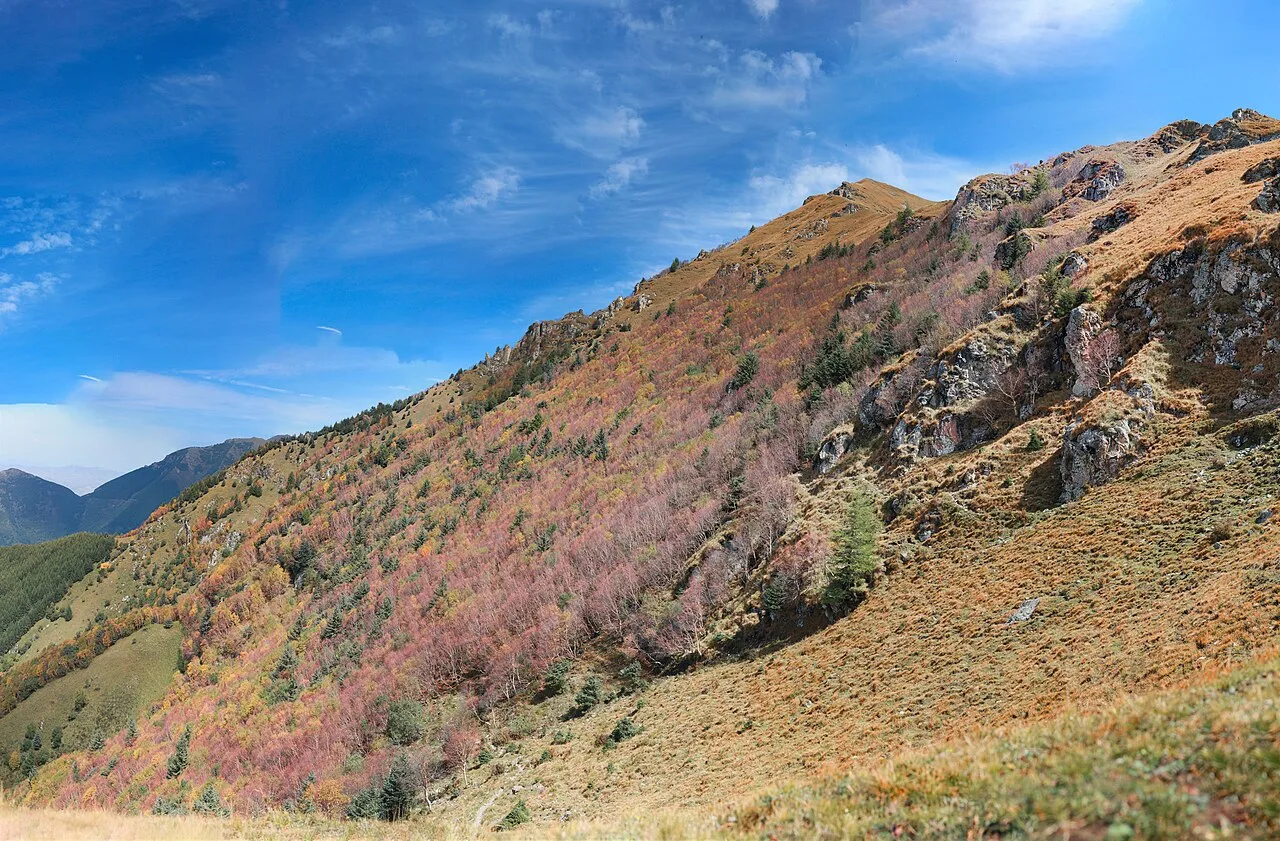
Cover photo: Autumn landscape in Xitai Mountain of Xiaowutai Mountain by Sun Jiao (Interaccoonale), via Wikimedia Commons, licensed under CC BY-SA 4.0. This is a real mountain photograph, not a photograph of Wuyuan or its villages; the adapted image remains under the same license.