A Candid Fit Check: Who Taining Suits
Taining suits travelers who like their scenery geological and their days unhurried. The county's headline attractions sit in farmland and along reservoir shoreline, so a typical day mixes a short drive, a boat or a trail, and a late lunch. Photographers, geology-curious walkers, couples and families with older children tend to enjoy it most. You do not need specialist knowledge — but you do need patience with logistics, a tolerance for plan changes when it rains, and an interest in landscape rather than nightlife or shopping.
Skip Taining if you want a compact city break where everything is walkable, or a destination with guaranteed boat departures and step-free paths. It is also a poor fit for anyone with only one clear day, or for travelers who measure a trip by ticked-off monuments: the town's attractions are distinct places, and not all of them carry World Heritage status. If you need reliable public transport between sights, or accessible facilities at every stop, this is a county that will frustrate you.
Arrivals, Stations and a Base That Saves You Hours
How you arrive shapes your first afternoon. Most independent travelers reach the wider Sanming area by rail or by road, then finish with a road transfer into Taining. Sanming's stations are spread out, and the one printed on your ticket may sit some distance from the city center, so check the exact station before you book a pickup. Ask your accommodation which arrival points they can realistically collect from, and treat the drive as part of the trip rather than dead time.
Base yourself in Taining's county town for all three nights. Splitting your stay between a lakeside lodge and a town hotel usually costs more in transfers than it returns in novelty. From town, the lake piers and canyon trailheads are reached by road. A prearranged driver, or a transfer arranged by your guesthouse, makes the days far simpler; confirm the route, the pickup time and how long the driver will wait. Do not assume ride-hailing or local buses reach every trailhead.
Day One: Land, Check In, Then Walk the Old Town
Keep arrival day deliberately light. After the transfer, drop your bags, drink tea, and walk the old town lanes in the late afternoon, when the light softens on tiled roofs and the day's heat eases. Taining's old town is small and rewards a slow circuit: riverfront, alleys, a temple or two, a bridge, the edge of a market. It is the right introduction to the county's scale, and it leaves you daylight to sort out tomorrow's boat and driver.
Use the evening for logistics rather than heroics. Confirm your boat ticket type and which circuit is actually operating, ask what happens if a service is cancelled for weather or water levels, and agree a meeting point with your driver — in writing or with a screenshot. If you are traveling with older family members, ask now about boarding steps and walking distances at the pier, and whether a vehicle can drop closer to the entrance. Eat early and sleep early.
Day Two: Golden Lake and the Danxia Story in Plain English
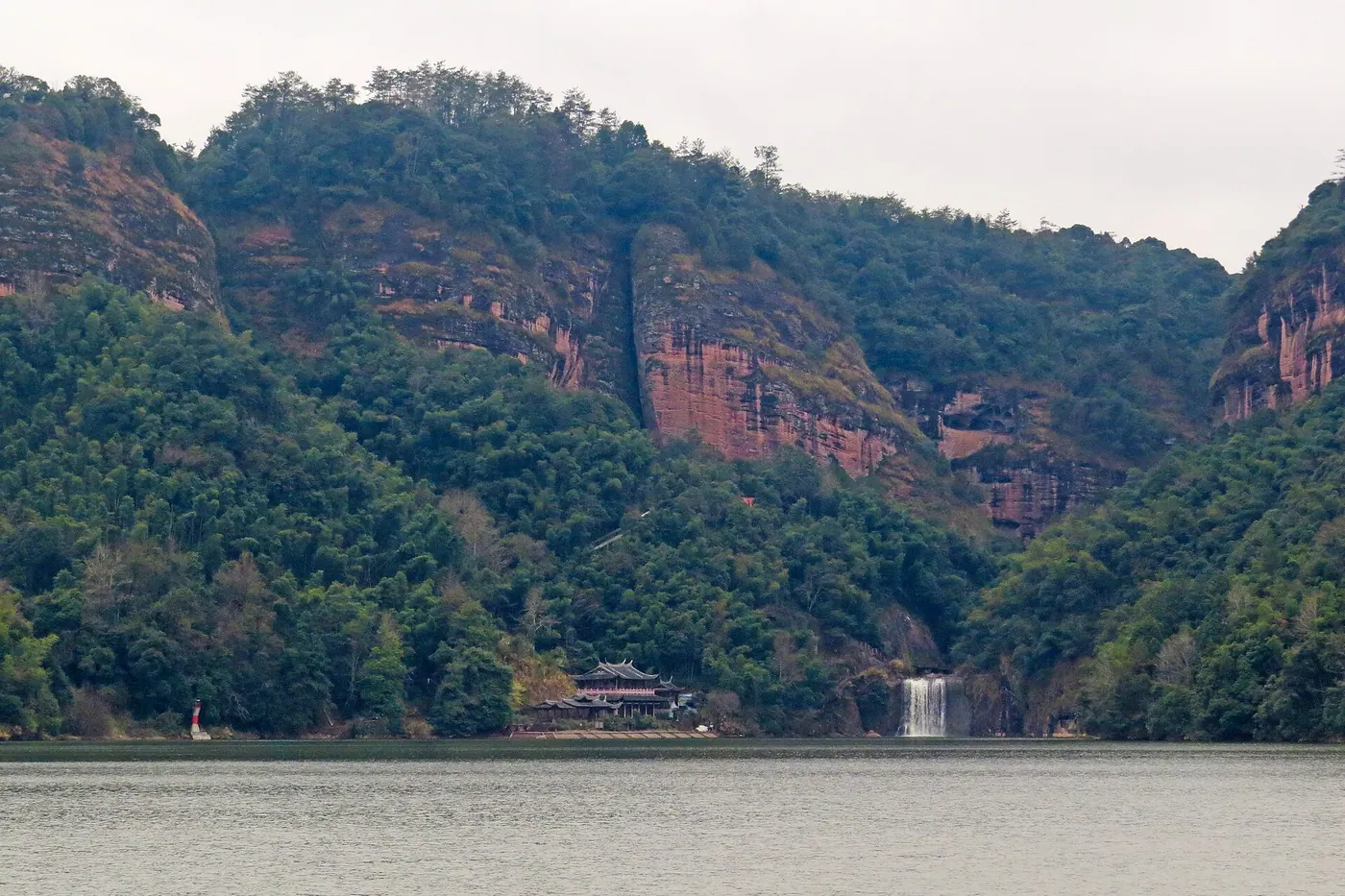
Golden Lake is the county's signature day: a reservoir among forested hills, where red cliffs rise straight from green water and the boat itself becomes the viewpoint. Visits usually follow a ticketed boat or shore itinerary rather than free wandering. Because seasonal services and circuits change, confirm which cruise currently operates, where it boards and how long it takes, instead of assuming a standard loop exists. Wind, storms and high water can suspend or shorten operations, so keep the day flexible.
China Danxia is a UNESCO World Heritage serial property of six separate areas in humid southern China, recognized for red sandstone and conglomerate landscapes shaped by uplift, weathering and water erosion into cliffs, mesas, caves and pillars. Taining is one of those six components, and the county is also a UNESCO Global Geopark with geosites and geohazard education. Being in Taining, however, does not make every attraction World Heritage: Golden Lake, the canyons and the old town are distinct places with different status and access.
Day Three: One Canyon, Chosen for Your Legs and the Forecast
Day three is a walking day, and one walking site is enough. Zhaixia Grand Canyon is the usual choice: a trail between red rock walls and green shade, with steps and boardwalk sections. Choose the site by your fitness and the forecast, and resist adding a second canyon walk to a boat day. Stone steps get slippery in rain, and humidity saps energy quietly. Carry water, wear grippy soles, start early, and turn back if a section looks wet or crowded.
If rain sets in, or the steps feel like too much, swap the canyon for a gentler day. Options include a longer old-town morning with tea shops, market browsing and any exhibits that happen to be open, a short riverside walk between showers, or a driver-assisted circuit of viewpoints that need minimal walking. For travelers who prefer to limit stairs, the boat should be the main activity, with boarding steps checked in advance. Never treat any route as guaranteed open.
Tea, Mountain Cooking and the Mistakes That Cost a Day
Eating here is mountain Fujian cooking with a serious tea culture behind it: bamboo shoots, freshwater fish, taro, mushrooms, leafy greens, rice wine, red yeast rice and fermented or brined vegetables. Meals are modest, town-based and seasonal, and portions are generous. If you avoid pork, peanuts, shellfish, chili or heavy broths, ask before ordering rather than after. Preserved vegetables can be very salty and freshwater fish carry fine bones. Eat foraged mushrooms only where the kitchen is established and trusted.
The most common planning mistakes are structural. Travelers assume the sights are walkable together, assume a boat will run, or squeeze three sites into one day and see none of them properly. Others book a single night, forget to confirm driver waiting time, or pack sandals for wet stone steps. A few arrive expecting one ticketed heritage site and find separate attractions instead. Build slack into the middle day, confirm arrangements twice, and treat the itinerary as a shape rather than a schedule.
Further reading and onward planning
For background and current visitor notices, consult UNESCO World Heritage Centre: China Danxia and UNESCO Global Geoparks: Taining and Fujian Provincial Government: Taining Global Geopark. This guide was prepared on November 5, 2026. Background pages do not establish current entry hours, reservations, transport or weather-related access; confirm those with the venue and your accommodation for your dates. Cover photograph: Along the Dajinhu (20170119094814).jpg by N509FZ, via Wikimedia Commons, licensed under CC BY-SA 4.0. This adapted photograph is shared under the same licence.
To extend the trip, compare Wuyishan's tea and mountain route and Fujian's coast and tulou itinerary. For railway planning, see China by high-speed train, and always match station names to the ticket you actually book.