Start with three realistic daily budget levels
All figures in this guide are in Chinese yuan (RMB) and are per person. They cover ordinary on-the-ground spending, not your international flight, visa fees, travel insurance, or shopping. As a broad planning range, a value-focused traveler can work with about RMB 350-650 per day, a comfortable mid-range traveler with RMB 800-1,500, and a premium traveler with RMB 2,000 or more. These bands are not promises: Beijing, Shanghai, Shenzhen, and popular resort towns can cost more than a smaller inland city, and a holiday week can lift both rooms and transport.
A useful first calculation is to split the trip into fixed and flexible costs. Fixed costs include long-distance trains or domestic flights, prepaid accommodation, attraction reservations, and airport transfers. Flexible costs include local transport, meals, coffee, tips where appropriate, laundry, and spontaneous activities. Put the fixed numbers in a spreadsheet, estimate a daily flexible amount, and add a 10-15 percent buffer. That simple separation makes a ten-day route easier to adjust when one hotel night or train fare is higher than expected.
Accommodation is usually the biggest daily variable
In a smaller city, a clean budget hotel or well-reviewed guesthouse may be around RMB 150-350 per room, while a reliable three- or four-star room in a central district often falls near RMB 350-800. In Beijing, Shanghai, Shenzhen, or during a major holiday, the same standard can cost considerably more. Hostels can reduce the room cost for solo travelers, and a twin room shared by two people often gives a better per-person value than two separate single rooms. Check recent reviews for foreign guest registration and the exact address before paying.
For a fair comparison, include the location and the time it saves. A cheaper room far from a metro station can add two taxi rides and an hour of transfers each day. Ask whether breakfast, laundry, luggage storage, and early check-in are included, and confirm the cancellation rule. Our China hotel booking guide for foreign travelers explains how to check registration, address details, and payment before arrival. A slightly more central room can be cheaper overall when it reduces daily transport and protects your sightseeing time.
Plan intercity transport before you set the daily total
City buses and metro rides are often inexpensive, commonly costing a few RMB per journey, and short ride-hailing trips may be roughly RMB 15-60 depending on traffic and distance. The large swing comes from moving between cities. A second-class high-speed train can be excellent value on a planned route, while a last-minute flight, peak-season ticket, or long taxi transfer can add hundreds of RMB. List every city change first, then choose transport and only afterwards finalize the hotel sequence.
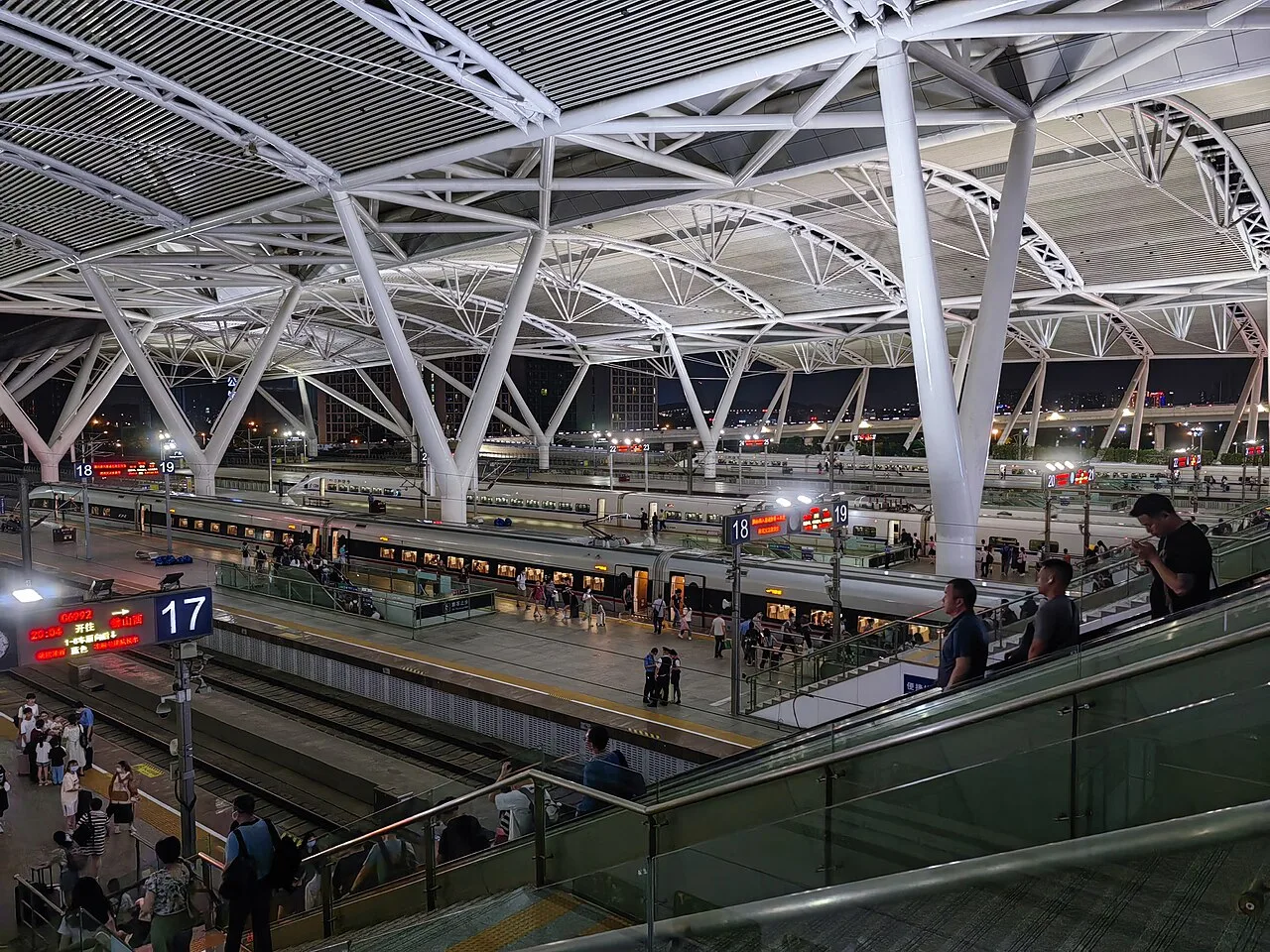
Use the official railway channel or a reputable booking service, and check the station name rather than assuming a city has one central station. Leave a buffer for the trip from your hotel to the station, security, and platform access. The China high-speed train guide covers seat classes, station timing, and passport details. For a slower itinerary, choosing two neighboring cities instead of crossing the country every other day can save money while giving you more time in each place.
Food can be inexpensive without making the trip feel basic
A local breakfast such as congee, baozi, noodles, or jianbing may cost around RMB 5-25. A filling casual meal is often RMB 20-60 per person, while a popular regional restaurant may be RMB 80-200 per person depending on dishes and group size. Coffee, imported snacks, and hotel breakfasts can quietly add more than the main meal. Travelers who mix one local meal, one simple meal, and one planned restaurant meal can eat well on roughly RMB 80-220 per day in many cities.
Menus, portion sizes, and ordering customs vary by region. Ask whether a dish is priced per portion, bowl, or 100 grams, and use a translation tool to check ingredients if you have allergies. Keep a little flexibility for a food market, tea house, or cooking class rather than treating every meal as a cost to minimize. In Chengdu or Guangzhou, the regional food experience is part of the reason to visit; setting aside RMB 100-250 for one special meal can be more rewarding than adding another paid attraction.
Price sightseeing by experience, not by headline ticket
Parks, public squares, historic streets, temples, and many neighborhood walks are free or low cost. Major museums may use free timed reservations, while landmark sites, cable cars, river cruises, performances, and special exhibitions can range from RMB 40 to RMB 300 or more. A city pass is worthwhile only if the included attractions match your route and opening days; buying it because the advertised discount looks large can create a rushed and more expensive itinerary.
Reserve high-demand sights early and leave a flexible activity beside them. The China attraction ticket guide explains passport-linked reservations, sold-out dates, and arrival preparation. When estimating a day, count the ticket, transport to the correct gate, a possible audio guide, and a meal nearby. A free riverside walk after a museum can balance a paid morning without making the day feel like a compromise.
Budget for connectivity, payments, and small essentials
A local SIM or eSIM, depending on your phone and route, is usually a small line in the total but a large help when you need maps, translation, ride-hailing, or a booking confirmation. Add an allowance for laundry, bottled water, lockers, luggage storage, and occasional taxi changes. These items may each be inexpensive, yet together they can add RMB 30-100 on a busy day. Keep the estimate visible instead of letting it disappear into a vague miscellaneous category.
Set up at least one mobile wallet and carry a backup international card plus modest yuan in cash. The China payment guide for foreign visitors explains where Alipay, WeChat Pay, cards, and cash fit. Check your bank's foreign-transaction and ATM fees, and avoid relying on an airport exchange counter for the entire trip. A payment backup is part of the budget because a failed transaction can lead to an unplanned taxi, a second booking, or a missed reservation.
Three sample budgets you can adapt
A value-focused solo traveler might plan RMB 450 per day: RMB 220 for a hostel or shared room, RMB 100 for meals, RMB 50 for local transport, RMB 40 for attractions averaged across several days, and RMB 40 for small extras. Add long-distance trains separately. This style works best with early booking, a slower route, local restaurants, and a willingness to choose free city activities when a paid sight is not available.
A comfortable couple sharing a room might plan RMB 1,000 per person per day: RMB 400 for that person's half of a mid-range room, RMB 220 for meals, RMB 100 for local transport, RMB 180 for attractions and occasional experiences, and RMB 100 for connectivity and contingency. A premium traveler may spend RMB 2,000-3,500 per person each day once central five-star rooms, private transfers, fine dining, and guided experiences are included. These are planning examples, not a required spending target.
Reduce cost without making the trip fragile
Book the expensive, date-sensitive pieces first: international flights, high-speed trains on a tight route, and rooms in a popular city during a holiday. Keep the flexible pieces flexible: one market meal, a neighborhood walk, a public park, or a museum with free entry. Traveling one day earlier or later, staying near a metro line rather than the most famous landmark, and replacing one domestic flight with a train can often save more than cutting every meal to the cheapest option.
Track actual spending for the first two days, then adjust the rest of the trip. If transport is below your estimate, move the difference to a special meal or a guide; if accommodation is high, use free sights and local food rather than skipping the experience that brought you to the city. Keep the emergency buffer untouched unless the situation genuinely requires it. Check official prices and travel notices shortly before departure because exchange rates, entry rules, and seasonal demand can change.
A simple checklist before you book
Write the route in order, price every intercity move, and mark which attractions need advance reservations. Choose a daily budget band for each city rather than applying one national average. Record whether hotel prices are per room or per person, whether breakfast is included, and whether a booking can be cancelled. Then add the 10-15 percent buffer and keep a separate amount for shopping so souvenirs do not quietly consume money intended for transport home.
Finally, prepare the payment and access details that protect the plan: verify a mobile wallet, carry a second card, keep some yuan, save hotel and attraction names in Chinese, and store confirmations offline. With those basics ready, the most useful question is not whether China is cheap or expensive. It is whether each part of your budget supports the pace, comfort, food, and experiences you actually want from the trip.