Check the holiday calendar before choosing dates
The October holiday peak is often described by travelers as China's Golden Week, but the exact public-holiday dates, rest days, and adjusted working days are set by the official calendar for each year. Do not build an international flight, train chain, or hotel sequence from a generic date range copied from an old blog post. Check the State Council General Office holiday notice and then confirm the operating dates shown by your airline, railway, hotel, and attractions. The calendar can create a long travel rush even when the official public-holiday label looks shorter than the actual period of heavy movement.
If your dates are flexible, compare the days immediately before the peak, the middle of the official break, and the days after the return rush. The shoulder days can still be busy, but they may offer more accommodation choice and less pressure on the most famous museums and viewpoints. For a first visit, it is usually better to spend more nights in fewer cities than to cross the country every other day. Our China attraction ticket guide explains why a reservation should be treated as one part of a wider plan rather than as a guarantee that the whole day will run to the minute.
Choose one region instead of chasing every highlight
Long-distance travel is possible during the holiday, but the busiest stations and airports can turn a simple transfer into a full-day event. Choose a geographic theme that fits your available time: Beijing and nearby heritage for imperial history, Shanghai and the lower Yangtze for city life and water towns, Chengdu and Xi'an for food and ancient culture, or Guangzhou and the Pearl River Delta for Cantonese food and southern architecture. These are planning frameworks, not fixed packages; use current transport times and attraction notices to decide what is realistic.
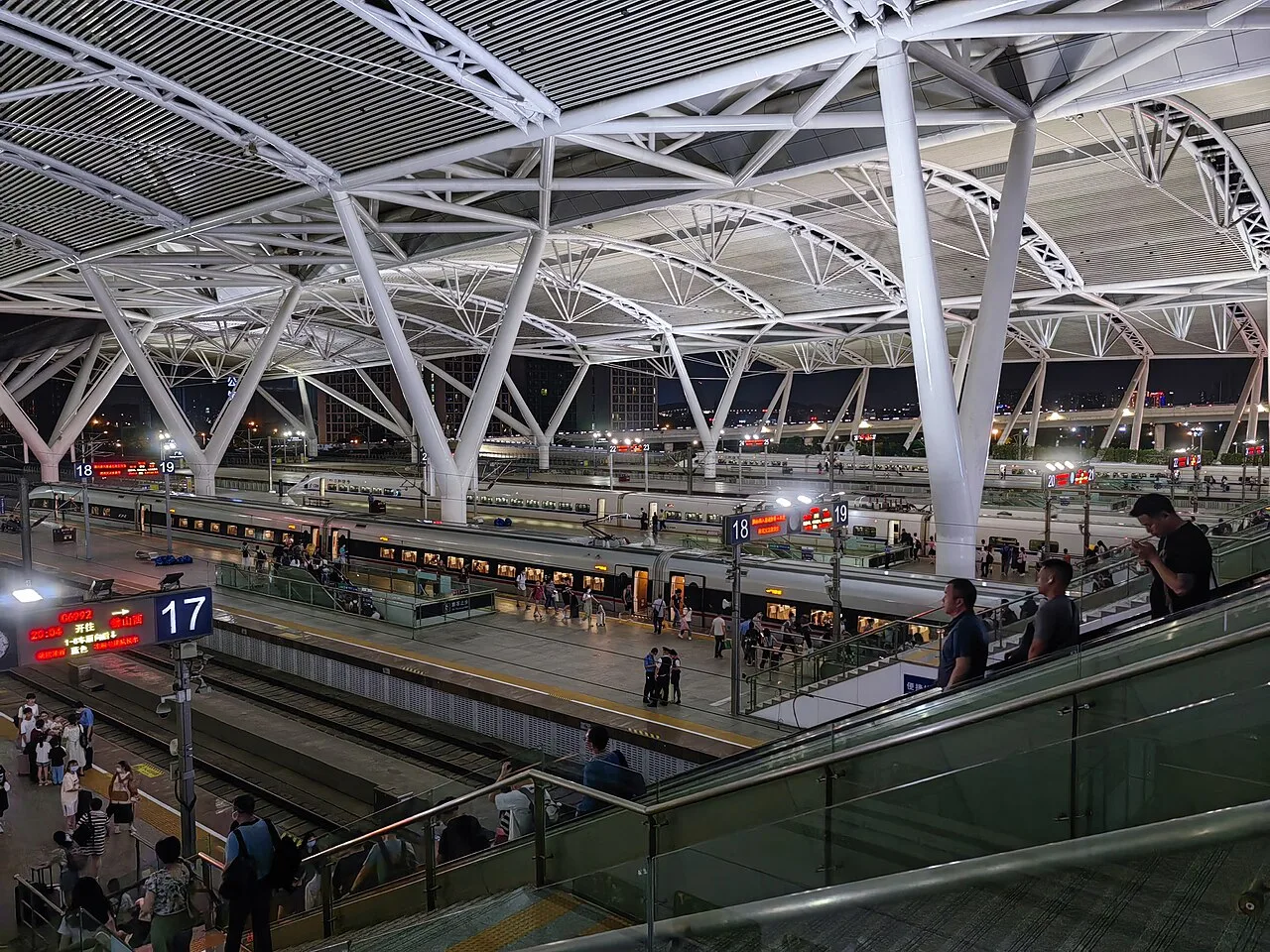
Build a route with a clear base city, a small number of day trips, and at least one low-pressure day. A two-hour high-speed train ride still includes getting to the right station, identity checks, security, platform time, and the final connection to your hotel. The China high-speed train guide covers station names, passport details, and transfer buffers that are easy to underestimate. If a destination requires an overnight transfer or two separate bookings, ask whether the extra landmark is worth losing a slower morning in the city you already chose.
Book trains and flights with a practical buffer
Transport demand rises sharply around the holiday, especially on the first major departure wave and the final return wave. Watch the official ticket-release schedule for the railway route you need, and use the current official booking channel or a clearly identifiable service that supports foreign passport details. Enter your name and passport number exactly as shown on the document you will carry. Save the booking reference, departure station in Chinese characters, and a screenshot that works offline. Ticket rules and release timing can change, so recheck them instead of relying on a previous trip's routine.
Do not schedule an international flight immediately after a long-distance train unless you have a generous overnight buffer. Large cities may have more than one railway station, and a station with the same city name can be far from the airport or your hotel. For domestic flights, allow time for the road, airport security, baggage, and a possible weather delay. A slower itinerary with one spare connection is less expensive and less stressful than rebuilding a whole trip after a missed departure.
Reserve accommodation that can check in foreign guests
During a peak travel week, a low nightly price is not enough reason to book a property you cannot verify. Before paying, check that the hotel or apartment is currently permitted to host foreign guests, has recent reviews from international travelers, and can provide a clear Chinese address for a driver or railway station. Policies and registration procedures can differ by city and property type, so ask the property directly if the listing is vague. Keep the confirmation, contact number, and check-in instructions in an offline note.
Location matters more than a room with a famous view. A hotel near a useful metro station can save repeated taxi journeys and make it easier to return for a rest when crowds become tiring. On arrival, allow extra time for reception, passport registration, deposits, and translation. The China hotel booking guide has a checklist for checking addresses, room policies, and arrival communication before you commit to a busy-period stay.
If the itinerary includes an early train, compare the hotel's route to the exact station rather than just the city name. Ask whether the building has an elevator, luggage storage, late check-in, and a reliable way to call a car. These details are ordinary on a quiet week but valuable when roads, lobbies, and nearby restaurants are crowded.
Reserve the sights that can genuinely sell out
Popular museums, historic compounds, national parks, observation decks, and performances may use dated tickets or free timed reservations. Start with the attraction's official website, verified account, or official mini-program, and read the current instructions for foreign passports, entry windows, cancellation, and special exhibitions. A free reservation can still require identity verification, and a paid ticket may cover only one section of a larger site. Save the confirmation number and the attraction's Chinese name together.
Do not fill every day with timed entry. Choose one or two high-demand visits, then pair each with a neighborhood walk, local market, public park, or meal that does not depend on a particular slot. If your first date sells out, check official returned-ticket rules and alternative entry windows before considering any reseller. Avoid offers that ask for an unnecessary passport scan or promise a name transfer that the attraction does not allow.
Arrive early enough for the route from the metro or drop-off point, security screening, bag checks, and the walk to the main building. A huge palace, park, or mountain attraction can have several gates and long internal distances. Keep the passport used for the booking accessible, follow staff instructions, and leave room for a queue even when your ticket has a timed window.
Plan for crowds, weather, and better daily pacing
The busiest attraction is not always the best use of the busiest day. Use early mornings for a landmark with a timed opening, then move to a museum, tea house, or long lunch during the middle of the day. A public waterfront, historic lane, temple exterior, or city park can provide a satisfying experience when an indoor site is sold out. Ask your hotel about the quietest entrance and avoid blocking residential doorways while waiting for a car or taking photographs.
Autumn weather varies widely across China. Northern cities can feel crisp while southern cities remain warm and humid, and rain can alter mountain paths, river cruises, and visibility. Pack layers, comfortable walking shoes, sun protection, and a compact umbrella. Check the local forecast and official attraction notice each morning, especially before a cable car, boat, or scenic-area visit. Have one indoor alternative ready instead of treating a weather change as a trip failure.
Crowd management is also an energy decision. Keep water and snacks available where permitted, take a break before someone in the group is exhausted, and agree on a meeting point if a station or entrance becomes difficult to navigate together. The holiday is a chance to experience the country at a lively moment, but it does not require you to stand in every famous queue.
Prepare payments, connectivity, and offline information
Set up more than one way to pay before the first crowded travel day. Many visitors use a mobile wallet linked to an international card, but acceptance, verification, and network access can vary. Carry a backup card and some Chinese yuan for small vendors, transport disruptions, or a phone battery problem. The China payment guide explains the setup steps and the practical reasons to keep a second option.
Download or prepare the tools you rely on before leaving reliable Wi-Fi. Save hotel addresses, train stations, attraction names, reservation numbers, emergency contacts, and any dietary or medical phrases in both English and Chinese. A local SIM or eSIM can make maps and translation easier, but do not assume that every app, roaming plan, or foreign card will work without additional verification. The China SIM and eSIM guide covers the questions to check before departure.
Keep your phone charged during transfer days. A small power bank, a paper or offline copy of the hotel address, and a screenshot of the next booking can be more useful than a perfect itinerary stored in one online account. Share the key details with a travel companion so one lost phone does not remove every reservation and route from the group.
A flexible sample route for a five-to-seven-day visit
For five to seven days, choose one arrival city and one nearby cultural contrast instead of trying to cover several provinces. A Beijing-based plan could combine the Forbidden City area, a quieter hutong walk, the Great Wall on a separate day, and a museum or park day with flexible timing. A Shanghai-based plan could pair the historic center and waterfront with one water-town or Suzhou day trip, leaving an indoor museum day as a weather and crowd buffer. Check current booking rules and transport times before treating either outline as fixed.
A Chengdu and Xi'an combination can work when you accept a longer transfer and protect the travel day from extra sightseeing. Spend one day on local food and neighborhood life, one on a major historic site, and one on a reserve list of smaller museums or parks. Guangzhou and the Pearl River Delta suit travelers who prefer food, architecture, and urban evenings, with day trips chosen only after checking holiday transport demand. In every version, leave the final day close to the departure airport or railway station.
Use the first evening to recover from the journey and the final morning to confirm the next connection. Write down the exact station or terminal, not just the city, and check the route again when the departure date is close. This approach gives you a meaningful holiday experience while preserving the flexibility that busy-season travel requires.
Safety, etiquette, and what to do when plans change
Keep passports, phones, wallets, and medication secure in crowded stations and scenic areas. Use official staff, clearly identified counters, and reputable accommodation when you need help. If a tout offers a shortcut, a last-minute ticket, or a private transfer, ask for the full price and credentials before agreeing. Do not hand over your passport or payment card as a deposit to an unverified person.
Public holidays can bring temporary road controls, changed museum hours, sold-out trains, and long queues even when the weather is perfect. If a booking fails, pause before purchasing a replacement from an unknown seller. Check the official notice, contact the original provider, and use your flexible activity while you work out the next step. A clear written record of confirmations, receipts, and support messages makes disputes easier to resolve.
Be a considerate guest in residential streets, temples, markets, and crowded public spaces. Follow photography signs, dress appropriately for religious sites, wait your turn, and avoid turning a family meal or private home into a photo backdrop. The most memorable holiday moments often come from a quiet breakfast, a conversation with a shopkeeper, or a walk that was not on the original list.