Why the Hexi Corridor Rewards Five Days
Most travellers meet this stretch of Gansu in transit — a window view from a Lanzhou-to-Dunhuang train, a photo stop, a night in a hotel near the station. Slowing to five days changes the experience considerably. You get Zhangye's Danxia landforms in late light rather than midday glare, a full morning at Jiayuguan's fort before the tour buses build, and enough slack to absorb a sandstorm, a closed road or a train you decided not to take.
The corridor also makes historical sense in a way that individual stops do not. Zhangye was an oasis of water, agriculture and Buddhist learning; Jiayuguan was the gate that regulated movement between the Chinese interior and the western regions. Seeing them a day apart lets you read the landscape as a system rather than a checklist, and it keeps the trip physically gentle — short rail hops, short drives, no altitude concerns and no need for specialist gear.
The Route: How to Sequence Zhangye and Jiayuguan
The cleanest planning logic is to arrive in Zhangye, spend three nights there, then move west to Jiayuguan for two. Zhangye's highlights are spread out, so two full days of sightseeing plus a travel day works better than trying to squeeze the geoparks into a half-day. Jiayuguan is more compact and can be covered comfortably in a day and a half, with the extra time reserved for the fort at an unhurried pace and a slow evening in the old-town quarter.
If you are coming from Lanzhou, take the high-speed line west; if you are continuing to Dunhuang afterwards, Jiayuguan is the natural handover point. Book the Zhangye-to-Jiayuguan leg for early morning so the middle of the day stays free, and keep the final afternoon loose for the possibility of a delayed or rescheduled service. Arriving in Zhangye by rail puts you at the city's west station, which is a short taxi ride from the centre — useful when you land in the evening with luggage.
Zhangye: Danxia Colour, Cliffs and Oasis Heritage
Zhangye Danxia National Geopark is the headline, and it earns the attention — layered sandstone ridges in rust, cream and grey that shift noticeably as the sun moves. Go late in the day if you can, when the low light deepens the colour and the boardwalks empty out. The wider Zhangye landscape is just as rewarding: Binggou Danxia's sculpted gullies, the cliffs and river narrows of Pingshan Lake Grand Canyon, and the wetland edges around the city that explain why this oasis mattered in the first place.
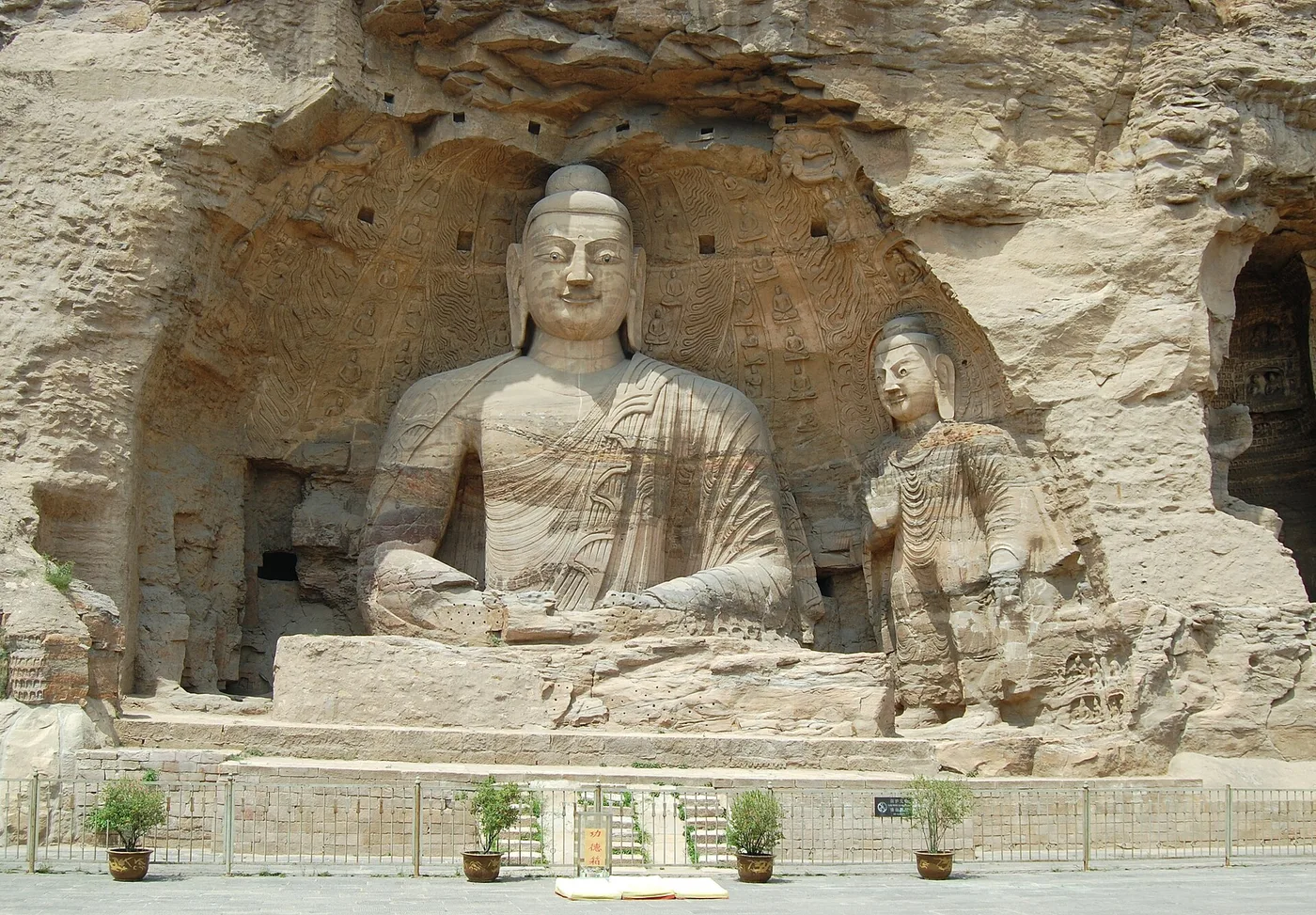
Build in a buffer day for Zhangye rather than committing to a single fixed order. Desert weather here is decisive: clear mornings can turn hazy, and summer afternoons bring hard light and heat that flattens the very colours you came for. If the forecast looks poor for the geopark, swap it with an indoor or semi-indoor morning at the Giant Buddha Temple, whose reclining Buddha and quiet courtyards give the trip its historical counterweight, then take the geopark the following afternoon.
Jiayuguan: Frontier Walls and Desert Light
Jiayuguan Fort is the reason most people stop here, and it is best approached as a place of administration and anxiety rather than pure spectacle. Walk the ramparts, look out at the bare hills beyond, and consider that this was the Ming dynasty's western gate — a checkpoint for merchants, envoys and exiles. Pair it with the Great Wall Museum for context, then take a separate half-day for the Overhanging Great Wall, a steep reconstructed stretch that climbs a ridge, and the First Beacon Tower outpost standing alone in the Gobi.
The pleasure of Jiayuguan is the emptiness between sites. Distances are short but the terrain is stark, so plan two or three stops rather than five, and let the light do the work in the late afternoon when the fort's earth-coloured walls glow and the desert cools. An evening in the old-town area, with its converted courtyards and street food, is a good counterpoint before a long rail day.
Rail, Weather and Respectful Travel
High-speed rail is the backbone of this route: fast, comfortable and far more reliable than road when the corridor's winds pick up. The Zhangye-to-Jiayuguan hop is short enough to treat as a morning errand, which frees you from over-planning. Book seats a few days ahead in peak season, keep your passport with you for ticket checks, and allow generous transfer time — stations on this line sit outside town centres, and taxis are the practical way in. Independent travel is entirely feasible; a local driver for the geopark and canyon days simply saves time.
Weather contingencies matter more than most guides admit. Spring can bring dust and strong wind, summer means intense sun and real heat on exposed boardwalks, and late autumn arrives with sharp cold nights. Carry layers, sun protection and more water than feels necessary. Just as important is tone: these are living towns, not dioramas. Ask before photographing people, follow boardwalk and restricted-area signs at the geoparks and fort, and treat the fort's military history as heritage rather than entertainment.
Further China Planning
For a wider route, compare this itinerary with China by high-speed train and China travel by month. Keep the order flexible when weather, reservations or transport conditions change.
Before departure, review the China entry guide and China travel safety guide. Confirm current opening hours, ticket rules and local transport through official channels.