Why Jingdezhen Rewards Three Unhurried Days
Jingdezhen's identity was built on three ordinary things: good clay nearby, dense pine forests for fuel and a river system that could move heavy pots to markets far away. That practicality still shapes the city. You will find workshops in former state factories, small studios in converted houses and kilns tucked behind residential lanes, all mixed into everyday neighbourhood life rather than fenced off in a tourist zone. The result is a city that rewards curiosity and unhurried walking more than ticking off attractions.
The most common mistake is treating four different things as one. The historic kiln landscape tells you about fuel, clay and industrial organisation. The museum collections tell you about taste, dynastic patronage and technical ambition. The contemporary studios tell you what makers are doing right now. The commercial markets tell you what sells. Each needs its own pace and its own questions. Spread them across three days and you will leave with a coherent picture instead of a blur of blue-and-white.
Arriving and Getting Around a Spread-Out City
Most international visitors arrive by high-speed rail, often connecting through a larger hub such as Shanghai, Hangzhou or Nanchang, or by air into the city's own airport, which handles a limited domestic network. Rail routes, flight frequencies and station-to-hotel transfer options change, so confirm your connection and journey time on official railway or airline channels shortly before booking rather than relying on older guides. Once you arrive, ride-hailing and taxis are the practical way to move between districts, since the museums, the old town, the studio clusters and the outlying villages are not comfortably walkable as one continuous route.
Build your days around clusters, not a single loop: one area in the morning, one in the afternoon, with a real lunch in between. Save addresses in Chinese characters on your phone, because romanised names can be ambiguous to drivers. Summers here are hot and humid with heavy rain periods, and spring can be wet; a light rain shell, quick-drying shoes and a foldable bag for damp weather matter more than a heavy coat. Mobile payment is widely used, but keep a physical card and some cash as backup, and check current payment and visa-entry requirements before departure.
Day One: Museum Collections and the Historic Kiln Landscape
Start with a museum, because context makes everything afterwards legible. The city's main ceramics museum gives you the long arc from early wares to imperial production and modern studio work, while the imperial kiln site and its striking contemporary museum building put you directly above excavated ground, with kiln foundations and shard deposits still in place. Reservation systems, ticketing and closure days are subject to change, so check the official museum channels before you travel and carry your passport, since identification is commonly required for entry.
In the afternoon, shift to the historic kiln landscape rather than another display case. Reconstructed kilns, old workshop buildings and riverside lanes show the physical logic of the industry: where fuel was stacked, where clay was settled, how heavy pieces were moved. Read the site as an industrial landscape rather than a set of picturesque old buildings. If you want to see a more traditional cluster outside the centre, the older ceramic districts and nearby villages make a good half-day, but confirm transport and whether sites are open before setting out.
Day Two: Studios, Artists and How to Visit Respectfully
Studio life is concentrated in a few recognisable areas: the former factory district now given over to design studios and galleries, the older sculpture-factory and long-established workshop neighbourhoods, and the valley villages where ceramicists have settled among bamboo and streams. Arrange visits in advance. The realistic routes are an introduction through a gallery or a maker you already know, or a short, polite message well ahead of your trip explaining who you are and asking whether visits are possible, when is least disruptive, and whether anyone is comfortable working in English. Do not assume a studio is a shop you can drop into.
Etiquette is simple but genuinely important. Ask before touching anything, before photographing, and before stepping into a work area, and accept a no without negotiation — an unfired piece can be ruined by a thumbprint, and a kiln area can be genuinely hazardous. Ask what is in progress, what stage a piece has reached, and how long the maker has worked in the medium; questions about process are almost always welcome, while questions about price in the first five minutes rarely are. If you plan to publish photos, ask about that specifically, and be careful not to photograph other people's unfinished designs.
Day Three: Markets, Buying Well and a Slower Alternative
Markets are where Jingdezhen gets loud and enjoyable, and where you need to slow down. Mass-produced wares, studio production and pieces that were made elsewhere and simply decorated here can look similar under market lighting. Rather than assuming everything on a stall is locally made, ask directly: where was this made, who made it, is it handmade or cast, and what kind of firing was used? Many sellers answer honestly and appreciate the interest. Ask about packing and international shipping before you commit, keep receipts for customs, and remember that the safest place for a small fragile piece is padded in your carry-on rather than in checked luggage.
If a full day of stalls and bargaining sounds exhausting, take the slower alternative instead. Spend the morning in a valley village walking between small studios, or book a half-day hands-on session and try throwing, trimming or glazing yourself — it recalibrates your eye for everything you see afterwards. A quiet afternoon in the old lanes with a notebook does more for your understanding of the city than a fourth market hall. It also reduces the odds of overbuying, which is the most common regret among ceramics visitors. Either way, keep your final afternoon light, since packing takes longer than you expect.
Planning links and cover photo source
For related planning, read China cultural etiquette guide, China attraction ticket guide, China food travel guide. Check each operator's current visitor notice before paying, because access, reservations, transport and weather procedures can change.
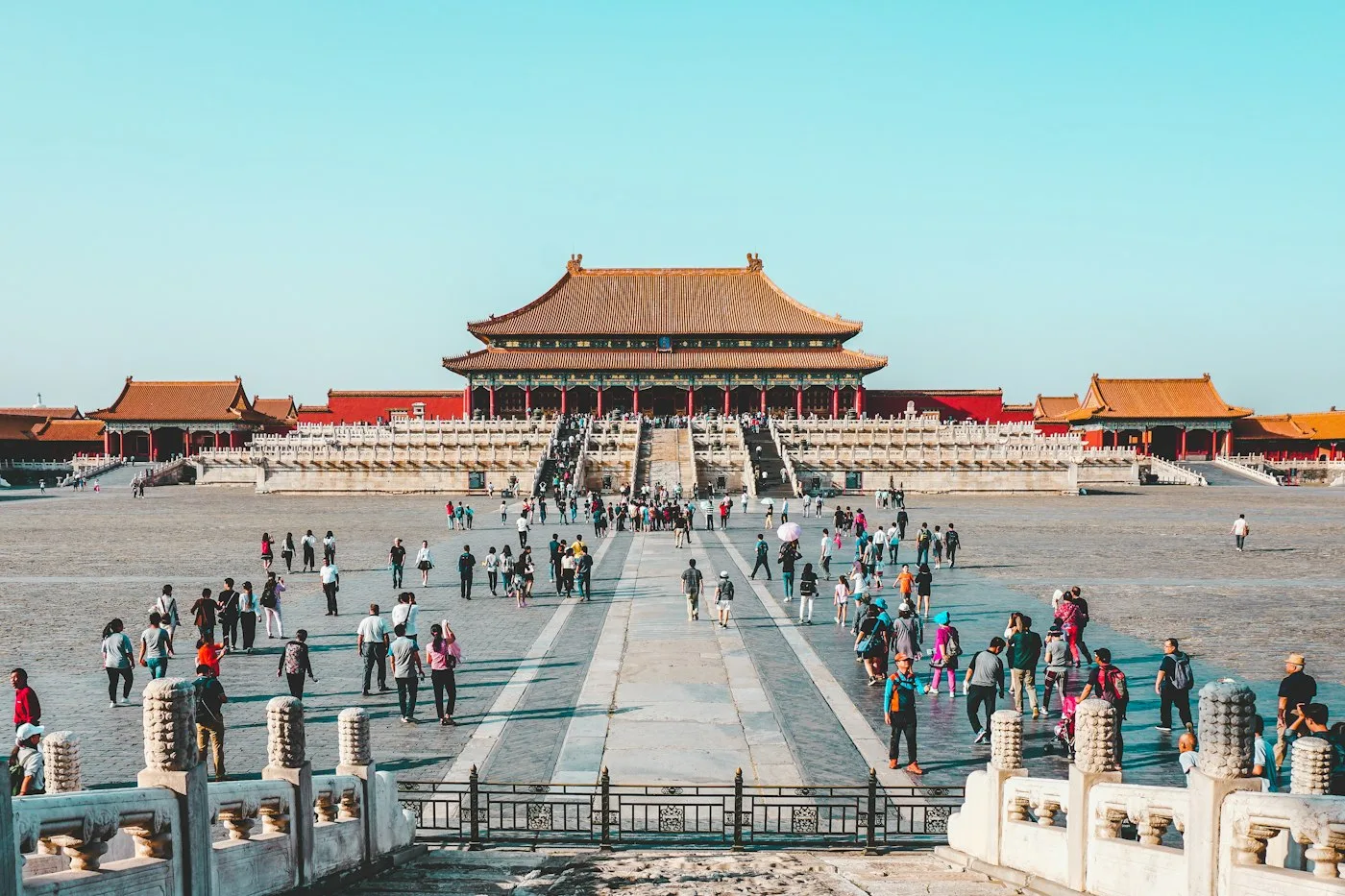
Cover photo: visitors crossing a courtyard in the Forbidden City by Unsplash, used under the Unsplash License. This is a general Chinese heritage photograph, not a photograph of Jingdezhen or a ceramics workshop.