Why Changde and Taohuayuan Belong on the Same Itinerary
Northern Hunan rewards travelers who connect a working river city with a landscape that exists because of a poem. Changde spreads along the Yuan River, its embankment lined with a long wall of engraved Chinese verse and its edges given over to the reed-fringed shallows of Liuye Lake. An hour or so southwest, in Taoyuan County, Taohuayuan reimagines the Peach Blossom Spring — the hidden valley of Tao Yuanming's celebrated fable, where a fisherman follows falling blossom upstream, slips through a narrow grotto and finds a community untouched by dynasties, war and tax.
The pairing works because the two halves ask different things of you. Changde is ordinary urban China at a comfortable pace: breakfast noodles, riverside joggers, evening crowds buying fruit on the way home. Taohuayuan is self-consciously literary, a composed landscape built around a fifth-century text. Three days lets you arrive, acclimatise, make the excursion properly and come back for the meal you are still thinking about — which is roughly the correct order of priorities here.
Day One: The Yuan River and Changde's Poetry Wall
Start where the city starts, on the water. The Yuan River promenade and its poetry wall are best walked early, when the light is soft and the embankment belongs to tai chi groups, swimmers and people carrying breakfast home. The engraved calligraphy runs for a remarkable distance — you will not read all of it, and you do not need to. Treat it as a portrait of a place that has always defined itself through writing, then keep walking until the traffic noise thins out behind you.
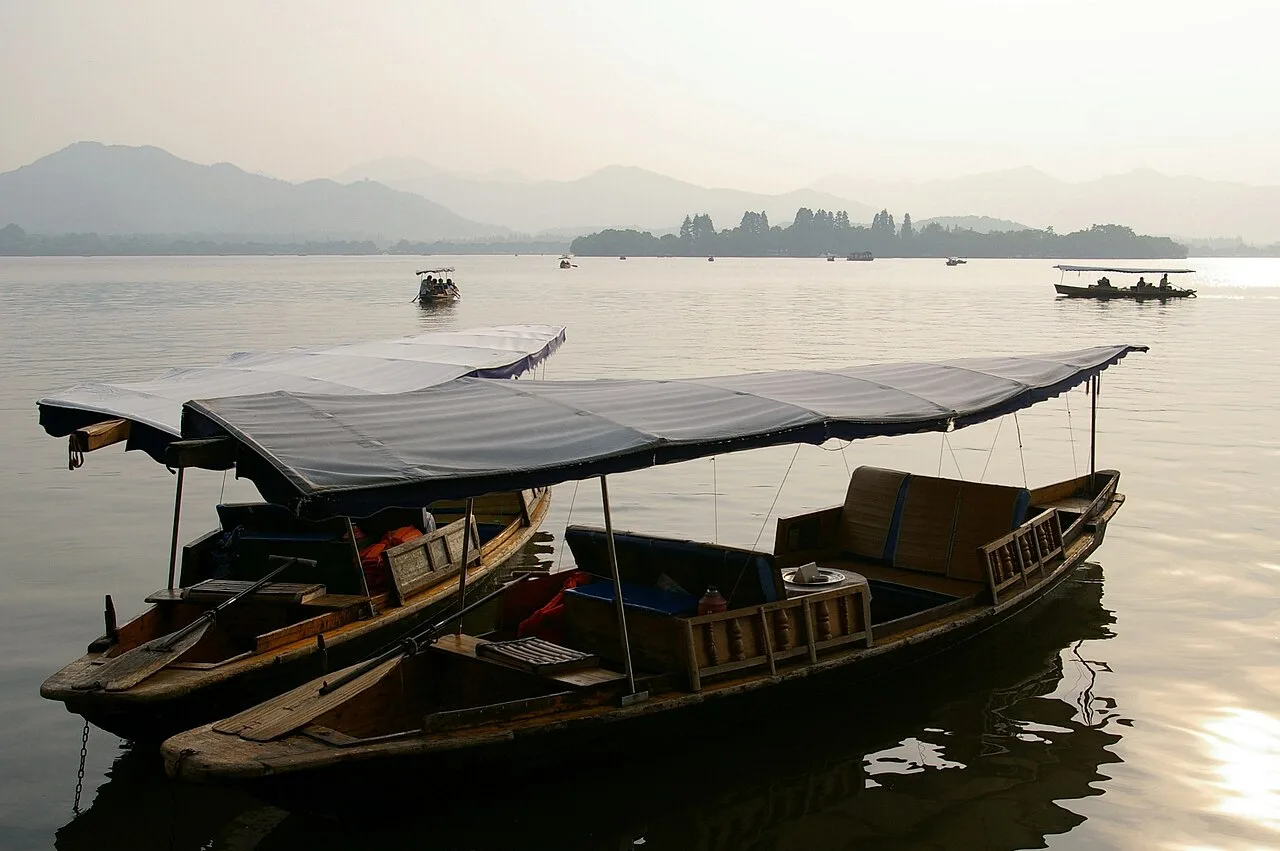
The afternoon belongs to Liuye Lake, a broad, shallow expanse of water with cycling paths, boardwalks and a slower rhythm than the centre. It is a good place to shake off a flight or a long train. Come evening, eat: Changde rice noodles are sold at all hours but taste best at breakfast, and the city's clay-pot stews — simmered, chilli-forward and built for sharing — are the kind of unpretentious meal that makes a modest itinerary feel generous.
Day Two: Taohuayuan and the Peach Blossom Spring
Taohuayuan is easier to enjoy if you understand it before you arrive. The fable tells of a fisherman who drifts downstream past a grove of peach trees into a valley whose inhabitants have escaped centuries of upheaval. The scenic area stages that story across reconstructed dwellings, shrines, bridges and orchards, with a grotto as its hinge. Purists should know this is an interpretive landscape rather than an archaeological site; accept that framing and it becomes quietly affecting, especially in mist or light rain.
Arrive early, because the site is large and most of the pleasure is in the walking. Paths climb, cobbles are worn and uneven, and several stretches are fully exposed to sun or weather, so build in time and carry water. Peach blossom generally peaks somewhere between late March and early April depending on the year's weather; outside those weeks the valley is greener, quieter and far easier to photograph without a stranger's shoulder in the frame.
Day Three: Markets, Noodles and the Road Back
Give the third day to the ordinary texture of Taoyuan County rather than another ticketed attraction. A wet market in the morning is the most useful hour you will spend: pickles, dried chillies, freshwater fish, bamboo shoots and whatever the orchards are sending in that week. Taoyuan's pounded tea, leicha, whisked with rice, nuts, herbs and ginger, is the local thing to seek out — a savoury, faintly bitter brew rather than the sweet drink the name might suggest.
Then drift back toward Changde with the afternoon in hand. If you have a train or flight to catch, keep the return loose: road travel in this part of Hunan is not always quick, and a missed connection costs more than a relaxed hour in a teahouse. Buy whatever small edible souvenir appeals — tea, preserved fruit, chilli paste — and spend the last evening on the river, which is the right way to finish.
Getting There, Getting Around and Where to Sleep
Most international travelers reach Changde by high-speed rail from Changsha, which is itself well connected to the rest of the country, or by flying into Changde Taohuayuan Airport. From the city, Taohuayuan is a straightforward road trip into Taoyuan County. The real decision is where to base yourself: Changde offers restaurants, a wider choice of hotels and easier onward transport, while a night in Taoyuan or near the scenic area buys you an earlier start and a slower morning.
Book accommodation and any scenic-area tickets ahead if you are traveling during blossom season or a public holiday, when domestic visitors arrive in numbers. English signage thins out quickly outside major hotels, so a translation app and screenshots of addresses in Chinese are worth the effort. Rain is always possible in spring; keep one indoor-leaning alternative — a museum, a market, a long lunch — in reserve for each day of the plan.
Season, Sensitivity and the Practicalities
March to May and September to November are the sweet spots: mild, green or golden, and comfortable for walking. Spring brings blossom and humidity in equal measure, so pack a light rain layer and shoes with grip. Autumn is drier and clearer, which suits both the riverfront and the valley paths. Summer is hot and sticky, winter grey and damp; both are manageable, but neither shows these places at their best.
Taohuayuan is a literary shrine as much as a park, so match its mood: quiet voices inside halls and shrines, no picking blossoms, and a question before photographing people. Accessibility is the honest caveat — expect steps, worn stone, slopes and long walking distances, with step-free routes limited and not always clearly signposted. Travelers with limited mobility should plan shorter visits, use any internal shuttles on offer and confirm access with their hotel before setting out.
Further China Planning
For a wider route, compare this itinerary with China by high-speed train and China travel by month. Keep the order flexible when weather, reservations or transport conditions change.
Before departure, review the China entry guide and China travel safety guide. Confirm current opening hours, ticket rules and local transport through official channels.