How to use four days in Beijing well
Beijing is too large for a checklist approach. The Palace Museum, the Temple of Heaven, the Great Wall, and the old hutongs each need a different pace, so the most satisfying route gives every day one main destination and one nearby cluster of smaller experiences. You will walk, pass through security, and cross long distances inside attractions; leaving space is part of the itinerary, not wasted time.
This plan assumes three nights in a central neighborhood with metro access and a fourth day that can end at the airport or railway station. It also works as the Beijing chapter of a longer route. Our practical first-time China itinerary explains how to connect Beijing with Xi'an, Chengdu, and Shanghai without turning every day into a transfer day.
Prepare the details before you arrive
Check the entry rules that apply to your passport, passport-validity requirements, travel insurance, and any registration instructions with an official Chinese embassy or consulate before you book non-refundable plans. Attraction opening days, identity checks, reservation windows, and holiday crowds can change. Save hotel addresses, reservation confirmations, and important phone numbers in both English and Chinese characters, and keep offline copies for the first hours after landing.
Book the Palace Museum and any other timed-entry sight through its current official channel when required. For the Great Wall, choose one section before arranging transport: Mutianyu is scenic and usually needs a longer road transfer, while Badaling is often simpler by rail. Do not book two distant wall sections in one day. A local data plan or eSIM, a supported payment option, a backup card, and a small amount of yuan will make ordinary errands much easier.
Day 1: Tiananmen Square and the Palace Museum
Start early at Tiananmen Square and follow the current visitor route and security instructions. The square is a formal public space with controlled entrances, so carry the same passport used for any reservation and allow time for screening. Afterward, enter the Palace Museum, commonly called the Forbidden City, for the main north-south route through imperial courtyards, halls, gates, and galleries. A timed ticket does not mean the complex will feel quick; the distances inside are substantial.
Keep your first evening deliberately light. Walk toward Jingshan Park if the current opening hours and your energy allow, or choose a nearby restaurant and an early night. Northern Chinese noodles, dumplings, and roast duck are good ways to begin, but ask about ingredients if you have allergies. Avoid adding another major museum after the Palace Museum; the best first-day memory is often a quiet meal and a short neighborhood walk after the crowds.
Day 2: One Great Wall section, done properly
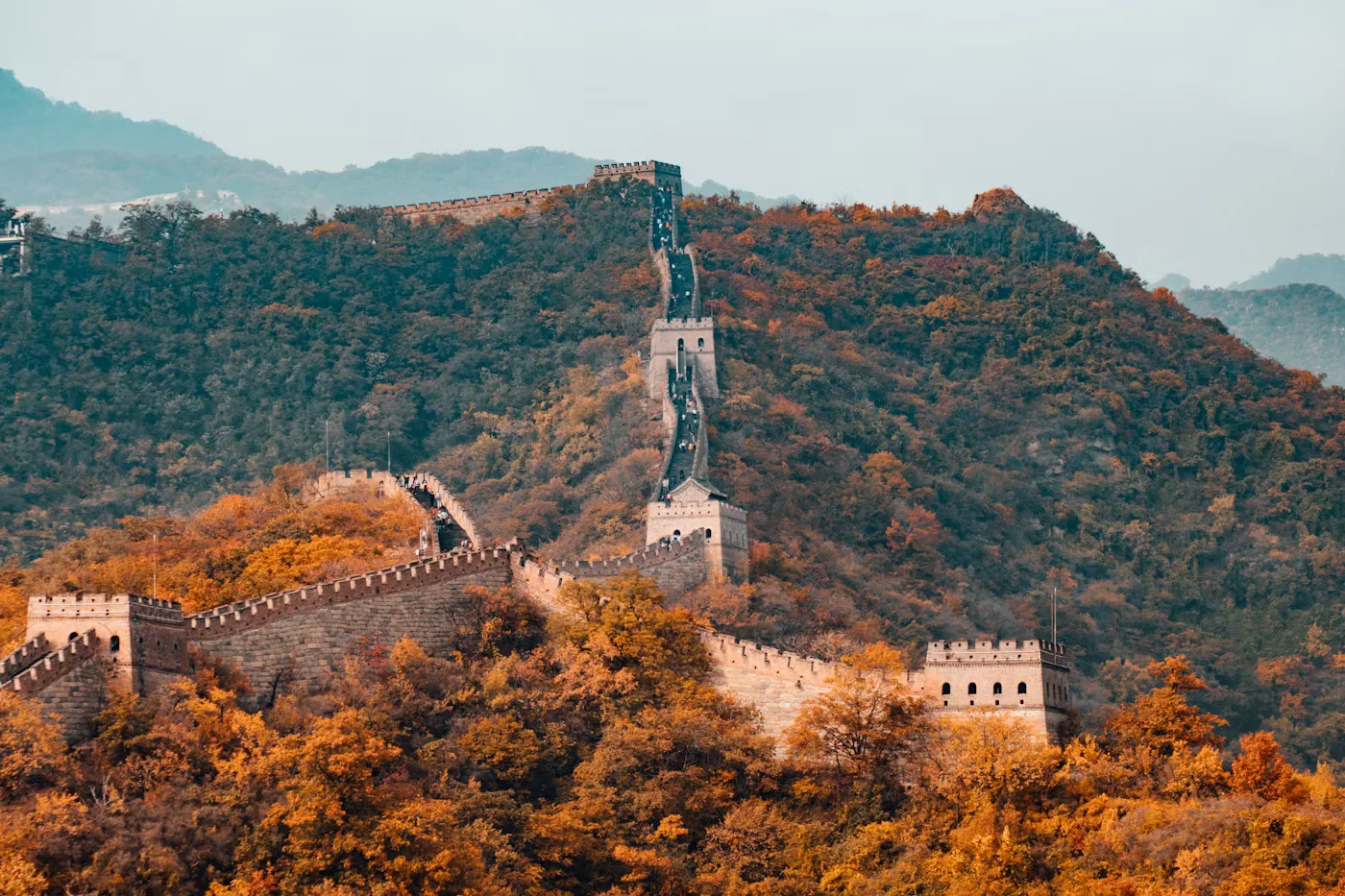
Treat the Great Wall as a full day rather than a quick photo stop. Mutianyu offers restored battlements and mountain views, but the journey requires a planned car, shuttle, or tour and a return-time buffer. Badaling can be more straightforward by rail and may suit travelers who prefer a clearer connection. Check the official ticket process, weather, cable-car or shuttle arrangements, and the last practical return before leaving Beijing.
Wear shoes with reliable grip and take water, sun protection, and a light layer. Even a restored section includes steep steps, and rain, heat, wind, or fog can change the experience. Eat an early dinner after you return instead of scheduling a late city attraction. If you are building the wider journey around rail, the first-timer's China high-speed train guide covers the station and passport details that matter for your next city.
Day 3: Temple courtyards, hutongs, and an unhurried afternoon
Visit the Temple of Heaven early, when the park is cooler and local residents are often exercising, practicing tai chi, or meeting for conversation. Follow signs around the ceremonial buildings, then slow down in the surrounding park rather than racing straight to the next landmark. The site is large, and the rhythm of the park explains as much about Beijing's daily life as the architecture does.
Spend the afternoon around the hutongs near Shichahai, Yandai Xiejie, or the Drum and Bell Towers, choosing a route that matches your hotel and current crowd levels. The lanes are living neighborhoods, not an open-air set, so keep voices low, ask before photographing residents, and step aside for bicycles. Stop for tea, a small meal, or a courtyard café. At night, try a local dish you have not ordered before and leave one hour with no destination at all.
Day 4: Choose the ending that fits your departure
Use the final day for one flexible priority rather than another cross-city challenge. The National Museum, the 798 Art District, the Lama Temple area, or a second hutong walk can each work, but check current opening and booking rules and calculate the door-to-door journey from your hotel. If you are continuing by train, confirm the exact departure station; Beijing has several large stations and the city name alone is not enough.
For an evening flight, keep luggage and passport details accessible, eat close to your route, and leave a generous airport buffer for traffic and terminal transfers. For a morning departure, replace sightseeing with a nearby breakfast and a short walk. A final morning should feel calm, not like a test of how many attractions can fit before check-out.
Food, transport, and etiquette that make the plan smoother
The metro is usually the most predictable way to cross central Beijing, while ride-hailing helps with early starts, luggage, or a station that is far from your hotel. Save destinations in Chinese characters because drivers and station staff may rely on Chinese signage. Leave extra time at security checkpoints, major stations, and museum entrances. Keep a payment backup because large hotels and malls may accept foreign cards more readily than small restaurants or market stalls.
Beijing rewards curiosity and restraint. Dress respectfully at temples, do not touch displays, follow photography signs, and ask before taking close portraits. The city can be dry, crowded, and physically tiring, so drink water and keep one flexible block each day. Recheck official attraction, transport, weather, and entry information shortly before each visit; this itinerary is a planning framework, not a substitute for current instructions.